

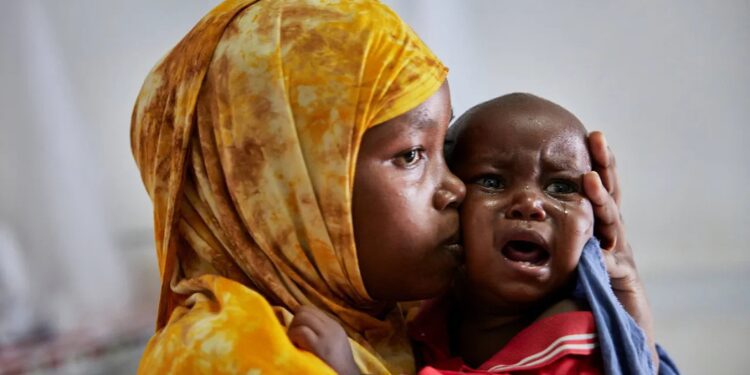
The New Republic/Additional Files from Africa News
Somalia’s malnourished children are facing a worsening humanitarian crisis as a combination of aid cuts, supply chain disruptions, and rising global tensions pushes lifesaving services to the brink.
For families already grappling with drought and hunger, the situation has become increasingly dire, with health workers warning that shortages of critical therapeutic foods are now a matter of life and death for hundreds of thousands of children.
Across parts of Somalia, clinics treating severe malnutrition are struggling to maintain operations as supplies dwindle and delivery timelines stretch.
Nearly half a million children under the age of five are currently suffering from severe acute malnutrition. The situation is being compounded by delays in the arrival of essential nutrition products, including specialised milk and nutrient-dense peanut-based paste used in treatment programmes.
According to reports, health workers in cities such as Baidoa and Mogadishu have been forced to ration limited supplies in order to treat as many children as possible.
Hassan Yahye Kheyre, a health professional, indicated that, “Since the needs are large and we don’t have a lot of supplies, we have had to keep reducing the amount we give children.”
An estimated 6.5 million people, or about one in three Somalis, are already experiencing acute hunger as a result of the protracted drought that is causing this disaster. Funding shortages and logistical difficulties brought on by disruptions in international shipping are impeding aid agencies’ urgent efforts to close crucial gaps.
Per the report, one significant setback was when a shipment of peanut paste meant to feed more than 1,000 children became stuck at the Indian port of Mundra for two months because of traffic jams brought on by diverted cargo. Aid organisations’ already scarce resources were further taxed when they had to cancel the order and look for substitute supplies due to the delays.
At the same time, the cost of delivering humanitarian aid has surged. According to CARE International, the price of a single carton of therapeutic peanut paste has risen sharply from $55 to $200, significantly reducing the number of children that each shipment can support. These rising costs are limiting the reach of aid programmes at a time when demand is increasing rapidly.
Rising Costs, Delays and Shrinking Aid Deepen Humanitarian Emergency
The challenges facing Somalia’s nutrition programmes have been intensified by longer shipping times and broader geopolitical disruptions. Deliveries of therapeutic food that once took between 30 and 35 days from Europe have steadily increased in duration, first to 40–45 days due to security threats in the Red Sea, and now to between 55 and 65 days following the escalation of conflict involving Iran.
These delays have created a critical bottleneck in the supply chain, leaving clinics without the essential resources needed to treat severely malnourished children. Health officials warn that the extended timelines are not only delaying treatment but also increasing the risk of complications and mortality among vulnerable populations.
Meanwhile, the humanitarian situation continues to deteriorate on the ground. According to global hunger monitoring systems, more than 2 million people in Somalia are now classified in the “Emergency” phase, one step below famine.
Admissions of severely malnourished children to health centres supported by Action Against Hunger have risen by 35% in the first quarter of the year compared to the same period last year, highlighting the accelerating pace of the crisis.
At Daynile General Hospital, staff treating 360 children for wasting reported in April that they had only enough supplies to last for a week. Health workers say the consequences are already becoming visible, as children’s conditions deteriorate due to inconsistent or insufficient treatment.
Compounding the crisis further are significant reductions in international aid. Somalia was not included among a group of 17 countries selected to receive funding from the United Nations Office for the Coordination of Humanitarian Affairs(OCHA) under recent allocations by the United States, which has implemented some of the most substantial cuts among global donors. As a result, more than 200 health facilities have been forced to close, and mobile medical teams have been disbanded.
According to OCHA, over 60,500 severely malnourished children had already gone untreated as of December due to funding gaps a figure that could rise to 150,000 if additional support is not secured. The agency has appealed for $852 million to prevent a full-scale famine, but has so far received only a fraction of the required funding.
Furthermore, economic impact of global instability has also been felt locally, with fuel prices in Somalia rising by 150% following the escalation of conflict involving Iran.