

By Philip Antoh
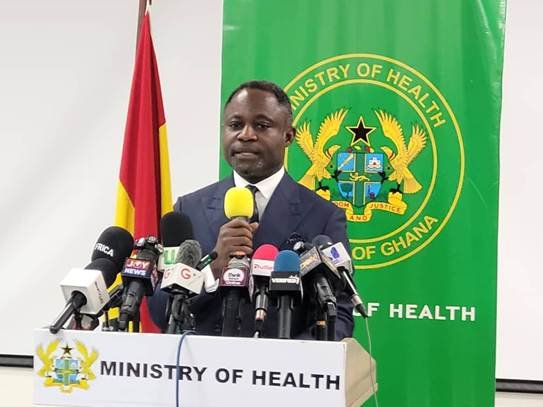
The Minister for Health, Kwabena Mintah Akandoh, has embarked on a working visit to the Upper East Region to oversee the rollout of the government’s flagship Free Primary Healthcare (FPHC) programme.
The visit is designed to evaluate the progress of the initiative on the ground, interact with healthcare personnel and community members, and identify any bottlenecks that might hinder the delivery of quality and accessible primary care services.
As part of his itinerary, the Minister is touring selected health facilities and communities to gauge the success of the programme and engage directly with key stakeholders.
The FPHC is a priority for the government, aimed at decentralizing essential healthcare services to make them more accessible at the community level.
Engagement with Traditional Authorities
During the tour, Hon. Akandoh paid a courtesy call on the Navro Pio, Pe Denis Aneakwoa Balinia Adda Asagpaare II, at his palace.
The Minister briefed the traditional leadership on the objectives of the FPHC and outlined other ongoing health interventions targeted at improving residents’ well-being.
The Navro Pio commended the Minister for his efforts to bolster the health sector and urged residents, particularly those within his jurisdiction, to take full advantage of the FPHC initiative.
He also used the platform to advocate for urgent upgrades to the Navrongo War Memorial Hospital, noting that the facility requires significant expansion and improvement to adequately serve the region’s growing population.
All Districts Captured in Phase One
The Minister also held discussions with opinion leaders and party communicators in the region, announcing a major milestone: all districts within the Upper East Region have been captured under the first phase of the FPHC implementation.
He emphasized that the policy is designed to ensure equitable access to essential healthcare at the primary level, irrespective of a resident’s location or economic status.
Assurance on Staffing and Public Support
Addressing concerns about human resources, Akandoh assured stakeholders that the government is committed to the equitable distribution of healthcare professionals across the region to prevent any community from being underserved due to staff shortages.
He called on opinion leaders and communicators to support the government by aiding public education efforts.
The Minister stressed the importance of ensuring that every resident understands the policy and utilizes the opportunities it provides for better health outcomes.