

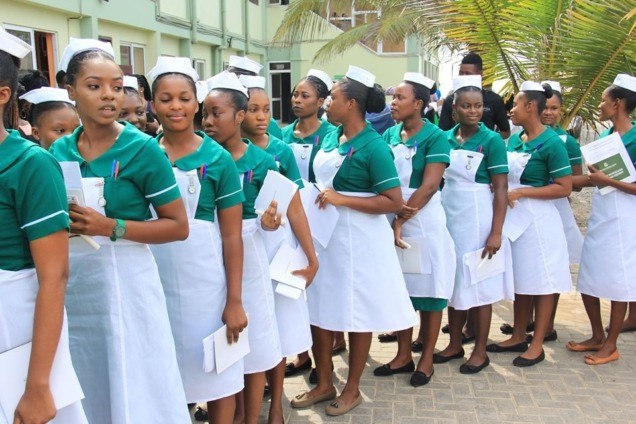
Ghana’s health sector is facing a deepening crisis as over 10,000 nurses and midwives have reportedly emigrated from the country in search of greener pastures, largely in Europe.
This alarming wave of brain drain is not only weakening the foundations of the country’s healthcare system but is also worsening the already dire working conditions for the few healthcare professionals who have chosen to stay behind.
According to the National Public Relations Officer of the Ghana Registered Nurses and Midwives Association (GRNMA), Joseph Krampah, the mass exodus of health workers has become a disturbing trend, with the numbers increasing by the day.
Krampah lamented that the strain this migration has placed on the remaining professionals is leading to burnout syndrome — a condition he says is now pervasive among nurses and midwives, directly affecting the quality of care delivered to patients across various health facilities.
Krampah did not mince words in expressing his disapproval of the government’s handling of the crisis. He accused successive governments, especially the immediate past NPP administration, of showing indifference to the plight of health workers.
In his view, this apathy is reflected in the underreporting of the scale of the migration and the failure to implement effective policies to stem the tide.
“You know that most of the nurses and the midwives are leaving the country for greener pastures, and it is still ongoing. The pressure on the few that remain in the country is increasing day in, day out.
“When President Kufuor noticed this brain drain years ago, he took steps by introducing incentives like the car waiver and market premium. These helped in keeping nurses and midwives here. But after him, the momentum was lost.”
Joseph Krampah further bemoaned that the immediate past Akufo-Addo and the New Patriotic Party administration scrapped these initiatives, disregarding repeated calls for their reinstatement.
“We told them to reintroduce these incentives. They didn’t do it. It’s a major thing the government must take seriously. If they act, it will reduce the brain drain. People will still leave, but not at the alarming rate we’re witnessing now,” he lamented.
He warned that the government’s inaction is pushing the health sector into a dangerous zone, where overstretched health workers suffer chronic fatigue, leading to a breakdown in communication and empathy between nurses and patients.
“There’s a burnout syndrome among nurses and midwives. When someone works under extreme pressure without adequate support, they can break down. That’s why people complain that nurses and midwives are rude to patients — it’s often a symptom of stress and exhaustion, not indifference.”
To support his claims, Krampah revealed that as of June 2024, over 10,000 nurses had applied for clearance to emigrate through the GRNMA, even as the then government insisted the number was merely 3,000. “They can downplay it all they want, but the reality is there for us all to see,” he declared.
Efforts to curb the continuous loss of trained nurses and midwives have also been articulated by the Union of Professional Nurses and Midwives, which recommended a comprehensive set of policy interventions, including accelerating the recruitment and deployment of trained personnel to under-resourced health facilities, especially in rural areas.
They also propose improved working conditions, better access to medical supplies, and fair remuneration. A key suggestion has been the reintroduction of competitive salary structures, including reinstating the car import duty waivers. These measures, they argue, would reduce the allure of foreign employment opportunities and encourage retention.
In addition, the union urges the government to provide decent housing, particularly in underserved areas, and to ensure the timely implementation of rural incentive packages to encourage professionals to accept postings in hard-to-reach communities.
The health sector’s troubles underscore the urgent need for policy continuity and long-term investment in human resources for health.
For Joseph Krampah and many like him, the solution lies not only in restoring old incentives but also in adopting a forward-looking approach that makes health workers feel valued and essential to national development.
Stakeholders like Krampah are optimistic that as the Mahama-led administration adapts to its governance role, it will follow President Kufuor’s example of proactively addressing brain drain and reexamine the incentives that previously assisted in keeping qualified nurses and midwives on staff.
Ghana runs the risk of dismantling one of the most vital sectors required to support its public health requirements and development agenda if decisive action is not taken.