By Leo Nelson
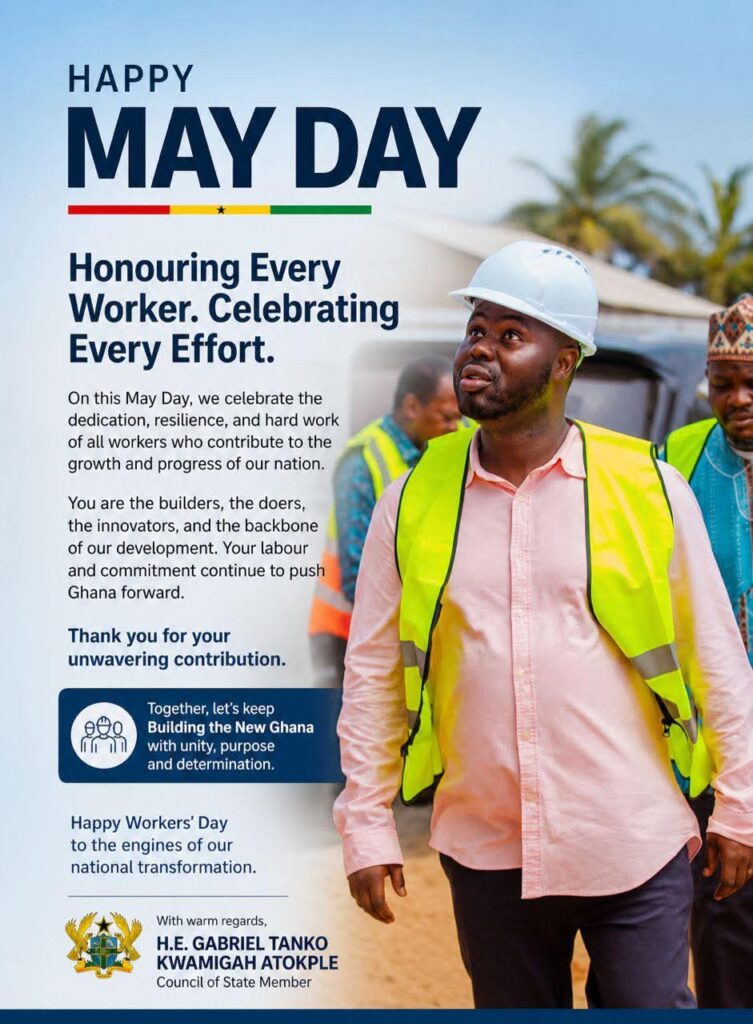
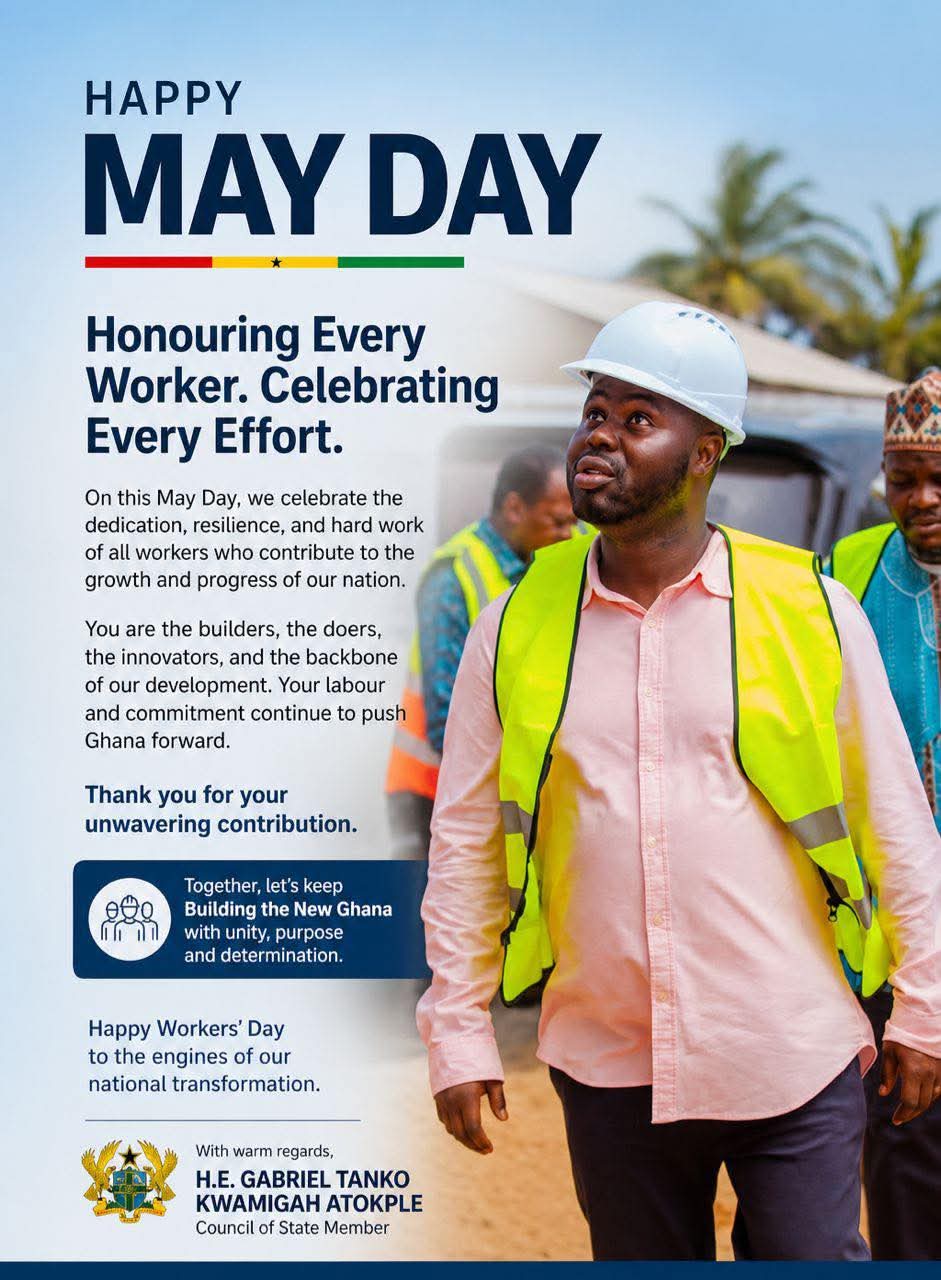
Council of State member, Dr. Gabriel Kwamigah-Atokple Tanko, has paid glowing tribute to Ghanaian workers for their resilience, dedication and immense contribution to national development as the country marks this year’s International Workers’ Day celebrations.
In a short May Day message released on Thursday, Dr. Kwamigah-Atokple Tanko praised workers across all sectors of the economy for their sacrifices and commitment despite prevailing economic challenges.
He described Ghanaian workers as the “backbone of the nation’s progress,” stressing that the country’s development agenda could only be achieved through hard work, discipline and patriotism.
“Today, we celebrate the industrious men and women whose sweat and sacrifices continue to sustain our economy and keep our nation moving forward,” he stated.
The Council of State member commended workers in the health, education, agriculture, security, transport and informal sectors for their invaluable contributions to national growth and stability.
He urged employers and policy makers to prioritise the welfare of workers by ensuring fair remuneration, improved working conditions and opportunities for professional growth.
According to him, empowering the workforce remains critical to accelerating productivity and national transformation.
Dr. Kwamigah-Atokple Tanko also called on workers to remain committed to excellence, integrity and professionalism in the discharge of their duties.
He further encouraged the youth to embrace hard work, innovation and entrepreneurship as tools for national advancement.
International Workers’ Day, also known as May Day, with the 2026 edition swirling around the theme: “Ensuring a Healthy Psychosocial Working Environment,” is celebrated globally on May 1 each year to honour the contributions of workers and promote labour rights.
This year’s celebration in Ghana is seen as one of reflection by organised labour groups, government officials, trade unions and workers from various sectors on the achievements and challenges confronting the country’s labour force and how to navigate these challenges going forward.