

Torgbiga Amenya Fiti V Says Minister’s Statement Lacks Appreciation of Historical Realities
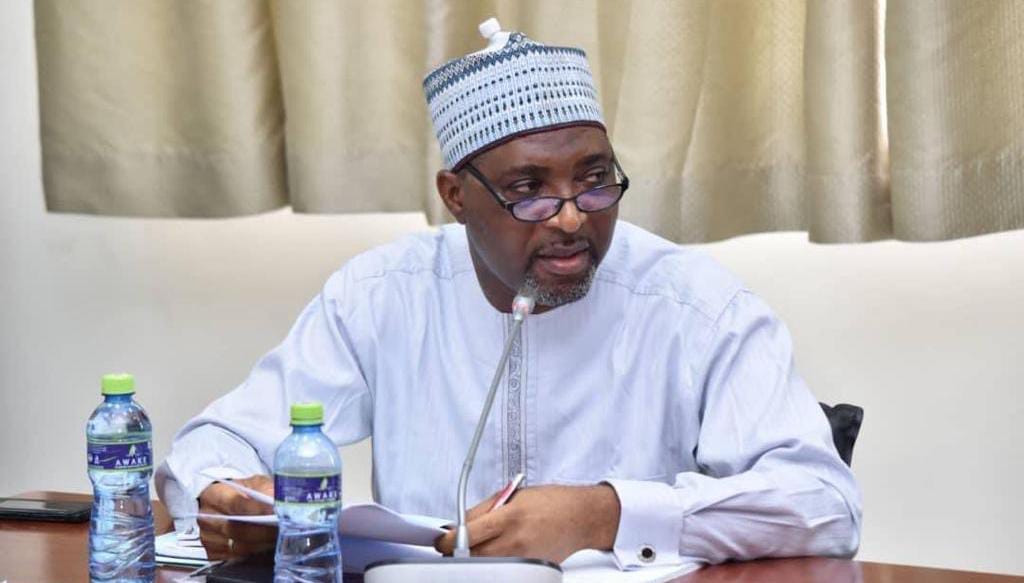
During a two-day working visit to the Volta region on Monday, June 1, 2026, Interior Minister, Mohammed Mubarak-Muntaka made a statement: over one hundred illegal entry routes have been discovered in the Volta Region, a situation he alleged was responsible for the influx of foreign nationals into the country.
In a scathing response to the Minister’s claims, Torgbiga Amenya Fiti V, Paramount Chief and President of the Aflao Traditional Council, who minced no words, described the claims as both troubling and disappointing.
He asserted that the statement demonstrates a lack of appreciation of the historical realities, geographical peculiarities, and socio-economic circumstances of Ghana’s border communities.
“What makes this declaration particularly disturbing is the fact that only a few years ago, under the previous administration, similar accusations were recklessly levelled against Chiefs and people of the Volta Region. Distinguished traditional leaders, including myself, Togbui Adzonugaga Amenya Fiti V, Paramount Chief of Aflao, Togbe Afede XIV, then President of the Volta Regional House of Chiefs, and several respected Chiefs were falsely accused of facilitating the entry of foreigners through unapproved routes for political purposes,” Torgbiga Amenya Fiti stated.
Those accusations, according to the Paramount Chief were never substantiated. Instead, “they served to stigmatize an entire region and portray innocent border communities as criminals in their own homeland.”
“At the time, the Standing Committee of the Volta Regional House of Chiefs was summoned to the seat of government, where we challenged the authorities to establish a Border Re-demarcation Committee to address the recurring misconceptions surrounding our borders and the persistent insults directed at our people. Unfortunately, little attention was given to the root causes of the problem,” Torgbiga Amenya Fiti clarified.
The Aflao Paramount Chief stressed that the Minister must understand that many of the so-called “illegal routes” existed long before the creation of modern Ghana and Togo. These routes were not created by criminals. They were ancestral pathways connecting families, farms, markets, shrines, and communities long before colonial authorities arbitrarily drew lines across our lands and divided one people into two states.”
“It is therefore intellectually dishonest and historically inaccurate to reduce centuries-old community access routes to mere criminal corridors without understanding the context in which they exist.
The people of Aflao, Ketu, and other border communities did not create these borders. Colonial powers did. Our people merely inherited them.
As our elders wisely teach, “The rat may be seen outside, but its true chamber and treasure remain underground.” Border communities function in a similar manner. Beneath the political maps are deep family, cultural, and economic networks that sustain life on both sides of the border. Through these same networks, foodstuffs, agricultural produce, and essential commodities move daily, supporting thousands of families and contributing significantly to the economies of both countries.”
Torgbiga Amenya Fiti observed that vegetables and agricultural products from border communities help feed major urban centres, including Accra.
“The hardworking people of these communities are farmers, traders, fishermen, transport operators, and entrepreneurs. They are not the bandits and criminals some politicians repeatedly portray them to be,” he said.
The Aflao Paramount Chief said government must confront the uncomfortable truth that persistent harassment, extortion, theft, and intimidation experienced by travellers at certain official border posts have contributed to the problem — “this is the growing insecurity within the border enclave, particularly the disturbing incidents of armed robbery, violent attacks, and murders that have plagued Aflao and its surroundings in recent years.”
These realities according to the Paramount Chief, have unfortunately created opportunities for criminal syndicates and smugglers who exploit unsuspecting travellers by luring them through alternative routes for their own selfish financial gain.
“The focus of government should therefore not be on demonizing border communities or issuing sensational statements that further damage their reputation. The real focus should be on strengthening security infrastructure, increasing professional border patrols, improving intelligence gathering, recruiting adequate security personnel, combating corruption, and restoring public confidence in official border processes.
If over one hundred unauthorized routes indeed exist, the question that must be asked is not merely why they exist, but how successive governments and security agencies allowed such a situation to persist under their watch.”
Border communities per his words, should be treated as partners in national security, not as suspects. Traditional authorities, he urged, should be engaged as stakeholders, not sidelined—Local knowledge should be utilized, not ignored.
“The people of the Volta Region deserve respect, fairness, and recognition for their contribution to national development. They should not be repeatedly subjected to narratives that portray them as a security threat whenever convenient.
National security is strengthened by cooperation, trust, development, and effective governance—not by public pronouncements that cast suspicion on entire communities.”
In conclusion, Torgbiga Amenya Fiti V urged the Government of Ghana to move beyond rhetoric and address the historical, economic, and security realities that shape life along our borders. Anything short of this, he says is an “injustice to the hardworking people who have for generations served as Ghana’s first line of contact with neighbouring nations and as custodians of peace, commerce, and cultural harmony.