

By TNR Files
The documents land on the table like a bomb waiting to detonate.
Page after page of bank statements, internal emails, and suspicious transaction reports tell a story that reads less like a financial crime and more like a spy thriller gone wrong. At its centre stands Kwabena Adu-Boahene, the former Director-General of the National Signals Bureau (NSB), who now faces 11 criminal charges including stealing, money laundering, and defrauding by false pretences.
But it is not the money alone that has sent shockwaves through Accra’s financial and security circles. It is what allegedly happened when a bank officer tried to do his job.
On November 26, 2020, a bank officer at Universal Merchant Bank (UMB) finished his workday and walked out into the Accra evening. He never made it home.
According to the Attorney-General’s disclosure documents, the officer whose identity should have remained protected under anti-money laundering reporting procedures was picked up by unknown persons after close of business. The operation, the documents suggest, was allegedly carried out by personnel of the NSB under the leadership of Kwabena Adu-Boahene himself.
he was released unconditionally on November 27, 2020, by National Security without any statement taken from him.
The crime that triggered his abduction? he had done what the law required. He had filed a Suspicious Transaction Report (STR) with the Financial Intelligence Centre (FIC) on accounts linked to Adu-Boahene.
For doing he job, he was treated like a criminal.
The financial trail begins on January 30, 2020. Adu-Boahene, then Director-General of the NSB, signed a $7 million contract with Israeli firm RLC Holdings Limited for the supply of cyber defence software.
Just days later, on February 6, 2020, he allegedly transferred GH¢27.1 million from the NSB’s Fidelity Bank account into a private UMB account under B.N.C Communications a company he co-owned with his wife, Angela Adjei Boateng.
The total amount allegedly diverted: GH¢49.1 million.
But here is where the story takes a darker turn. According to the disclosures, the funds were never intended to remain under NSB control. Instead, they allegedly found their way into the private accounts of Adu-Boahene and his wife.
Internal UMB emails, included in the disclosure documents, paint a picture of aggressive demands from the accused.
On February 11, 2020, an email from UMB staffer Augustina Owusu reveals the pressure the bank was under:
“Please the customer declined the rate of 16% on the GHC16 million for the 91 days. Customer insists on the 18% and maintains the fact that the rest of the funds will be brought to UMB. Customer says if they do not hear from us as soon as possible, by 1pm today, the funds will move back to Fidelity Bank.”
The message is unmistakable: give us the rate we want, or we take our millions elsewhere.
This was not a government official negotiating on behalf of the state. This was a private individual wielding public funds as leverage for personal financial gain.
UMB detected anomalies regarding a trade transfer request of USD1,750,000 on February 6, 2020, by order of B.N.C Communications Bureau Ltd.
The bank demanded a letter of authorization from the Controller and Accountant General Department (CAGD). The customer could not produce it.
Despite this, the bank proceeded with the transaction because the General Manager, Consumer Banking, approved a deferral of the document for 14 days.
But further reviews revealed more irregularities. The bank eventually filed an STR on April 16, 2020 and again on April 17, and again on August 31.
The report was finally successfully submitted. And that is when the trouble began for the bank officer.
The disclosures reveal why Adu-Boahene allegedly went to such lengths to silence the bank officer.
The investigation has traced how the funds were allegedly spent: acquiring houses in prime locations and luxury vehicles for the accused, family members and friends.
Bank statements, purchase receipts, and ownership documents have been tendered in court detailing the movement of the money.
The accused persons initially denied ownership of some companies, bank accounts and luxury properties but later admitted to them after being confronted with evidence.
Even more damning: forged purchase receipts were allegedly created in an attempt to conceal the failure to procure the cybersecurity equipment.
As the trial continues with the prosecution expected to close its case this week several questions hang over the trial.
· Why was a national security contract so easily diverted into private hands?
· How did a spy agency chief allegedly orchestrate the abduction of a bank officer who was simply doing his job?
· And most importantly: where is the money?
The accused have pleaded not guilty and are on bail. Their lawyer, Samuel Atta Akyea, has maintained that his client committed no offence.
But the documents tell a different story one of public funds, private greed, and the silencing of those who dared to ask questions.
Behind the numbers and the legal arguments lies a human story. A bank officer who followed the law. Who filed the reports she was required to file. Who did her duty to the Republic.
And who was allegedly abducted for it.
In Ghana’s financial system, whistleblowers are supposed to be protected. Their identities are supposed to remain confidential. The law is supposed to shield them from retaliation.
But on November 26, 2020, the law apparently failed.
The question now is whether the courts will succeed where the system failed and whether justice will finally be served for the millions stolen and the officer who paid the price for speaking truth to power.
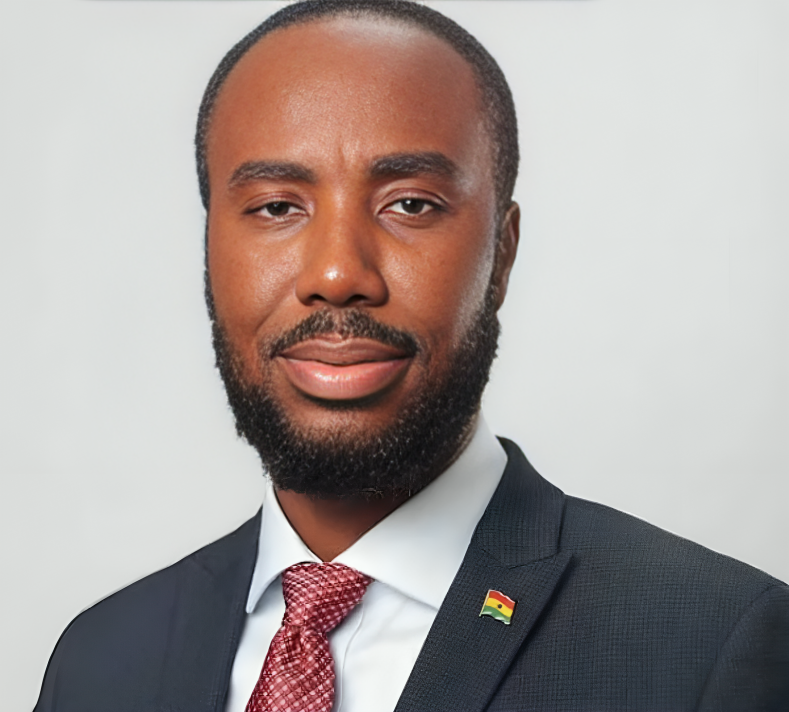
Adu Boahene
Fallouts From Adu-Boahene’s Trial! BANK OFFICER KIDNAPPED TO BURY GH¢49 MILLION SCANDAL
0Related Posts
Add A Comment
© 2026 THE NEW REPUBLIC GH.
About | Contact | Privacy Policy