

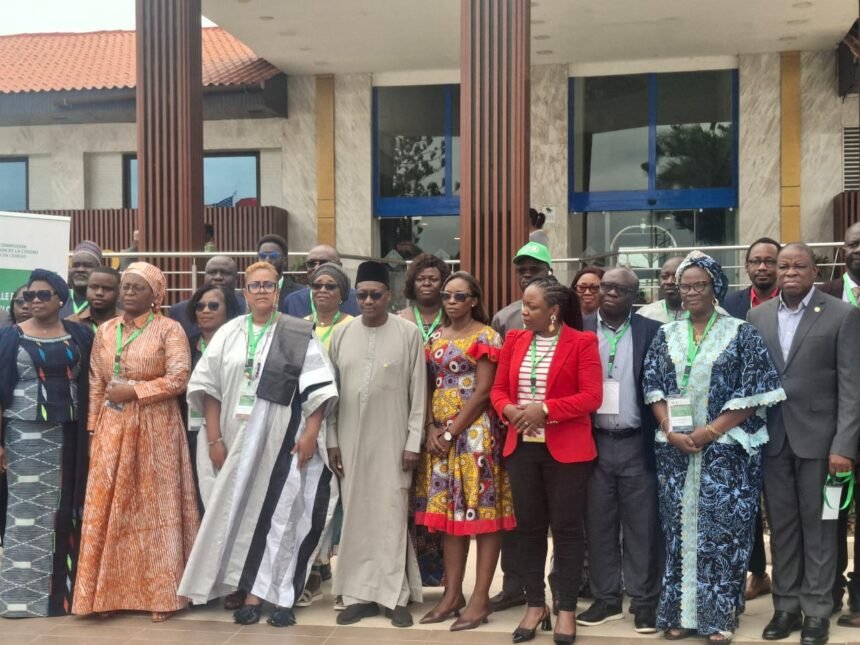
Ghana is hosting a major four-day ECOWAS gender meeting in Accra, using the platform to showcase its recent legislative wins while urging West African nations to build stronger institutions and increase investment in gender equality.
The 2026 ECOWAS Gender Development Centre (EGDC) Annual Briefing has brought together policymakers, civil society groups, and development partners under the theme: “Strengthening the Institutional and Organisational Capacities of Regional and National Gender Mechanisms.”
Speaking on behalf of the Minister for Gender, Children and Social Protection, Dr. Agnes Naa Momo Lartey, Deputy Director, Sabia Kpekata outlined Ghana’s recent milestones. Chief among them is the Affirmative Action (Gender Equity) Act, 2024, which mandates a progressive increase in female leadership representation—reaching 30% by 2026, 35% by 2028, and full parity by 2034.
Ghana also recently launched a revised 10-year National Gender Policy (March 2026) to integrate gender equality into sectors like agriculture, healthcare, and digital transformation.
Beyond policy, Kpekata detailed Ghana’s aggressive stance on gender-based violence. This includes convening the first National Men’s Conference on Positive Masculinity in December 2025 to engage men and boys as allies, alongside enhanced anti-trafficking and child marriage interventions.
Economically, she highlighted the Social Protection Act (2025), the ongoing LEAP cash transfer programme, and the establishment of a dedicated Women’s Development Bank to boost female entrepreneurship.
While Ghana celebrated its progress, ECOWAS Resident Representative in Ghana, Ambassador Lawan Gana, warned that weak institutional capacity and inadequate financing continue to hold the region back. He stressed that strong institutions are vital to translate regional commitments into measurable outcomes, noting that the workshop would train gender focal points to better utilize the ECOWAS Gender Observatory for data-driven policymaking.
International partners also reaffirmed their backing. Valerie Arikpo-Ettah, a Technical Advisor for GIZ, emphasized that Germany and the European Union remain deeply committed to the ECOWAS agenda. She noted that reliable data and shared ownership are critical as the EGDC transitions into its 2026–2030 strategic phase.
The meeting is expected to yield concrete recommendations to accelerate the implementation of the ECOWAS Gender Policy over the next four years.