

By Prince Ahenkorah
Ghana’s water sector has been hit by a major financial setback after Ghana Water Limited was ordered to pay about US$235 million to the Spanish-owned company behind the Teshie-Nungua desalination plant following a dispute over the termination of a water purchase agreement.
The award, which is nearly twice the reported cost of constructing the facility, follows a long-running disagreement between Ghana Water and the operators of the desalination project over payments, pricing, maintenance and the terms of the contract.
Cox Infrastructure Group, which owns 95 percent of Befesa Desalination Developments Ghana Limited, announced on September 21 that an International Chamber of Commerce (ICC) arbitration tribunal had issued two final awards on September 17 against Ghana Water and the Republic of Ghana.
According to Cox, the US$235 million award is net of taxes and relates to payments arising from the termination of the Water Purchase Agreement under which Ghana Water purchased treated seawater from the Teshie desalination facility.
Interest on the award will accrue from April 1, 2026, until the amount is fully paid. Ghana Water has also been ordered to contribute to the legal costs incurred by the project company.
The arbitration tribunal largely dismissed counterclaims brought by Ghana Water, including a US$144.5 million claim against the project company.
The financial consequences of the arbitration extend beyond Ghana Water.
Under a state guarantee attached to the project, the Republic of Ghana has also been found liable for the amounts awarded.
Cox, however, clarified that the project company would not be entitled to recover the same sums twice.
The development places a significant potential burden on the state at a time when the government is already dealing with several contractual and infrastructure-related financial obligations.
The award is particularly significant because the government’s own 2024 Public Private Partnership report placed the cost of the desalination project at approximately US$125 million, while other reports have cited the project cost at about US$126 million.
While the dispute has created a major financial issue for the state, residents in parts of Accra have been dealing with a separate but connected problem: inadequate access to water.
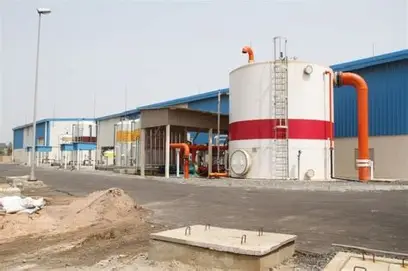
The Teshie-Nungua desalination plant was shut down in October 2025 after Ghana Water halted operations amid unresolved contractual obligations and concerns over maintenance.
The government had been working to resolve the dispute before the arbitration awards were issued.
In February 2026, President John Dramani Mahama directed the Finance Minister, the Attorney-General and Ghana Water to engage the plant’s shareholders with the aim of finding a solution and facilitating the resumption of operations.
Ghana Water Managing Director Adam Mutawakilu subsequently indicated that the utility was working towards a settlement that would allow the facility to resume supplying water to affected communities.
In March, then Works and Housing Minister Kenneth Gilbert Adjei also indicated that negotiations were nearing completion.
During a tour of the Weija treatment plant, he acknowledged the Teshie desalination facility as a major challenge and said consultations with its owners were ongoing.
He indicated that the government expected to conclude the negotiations and have the plant operational again.
However, the subsequent arbitration awards have changed the financial and legal context surrounding those negotiations.
The Teshie and Nungua areas had experienced water shortages for decades before the desalination project was introduced.
An earlier agreement with Aqualyng Ghana Limited had been terminated by Ghana Water over non-performance.
On April 29, 2010, Ghana Water received an unsolicited proposal from Befesa Ghana Limited for the construction of a desalination plant capable of producing 60,000 cubic metres of water per day.
The Ghana Water board approved the signing of the agreement on August 25, 2010.
The Ministry of Finance subsequently issued a Letter of Comfort in October 2011, while the parties amended the agreement and signed an addendum in February 2012.
The arrangement eventually went before Parliament in March 2012.
A joint report by the Finance and Works and Housing Committees recommended approval of a US$110 million Water Purchase Agreement, a Government of Ghana guarantee and tax and duty exemptions amounting to approximately US$72.8 million.
The project was structured as a 25-year build-own-operate-transfer arrangement, meaning the private company would finance and operate the facility before eventually transferring it to the state.
The reported cost of the project has varied over the years.
Parliament approved a US$110 million agreement in 2012, while the government’s 2024 Public Private Partnership report placed the project cost at US$125 million.
Other reporting has used a figure of approximately US$126 million.
The facility was designed to produce about 60,000 cubic metres of water every day, with the capacity to serve as many as 500,000 people within the Teshie-Nungua catchment. It was commissioned in 2015.
At the centre of the dispute was the cost of desalinated water supplied by the plant.
Accordingly, Ghana Water had reportedly been purchasing the water at about GH¢6.75 per unit, while the approved tariff allowed the utility to sell it at approximately GH¢1.47.
The difference created a substantial gap between the cost of obtaining the water and the revenue Ghana Water could generate from selling it to consumers.
Befesa had sought approval from the Public Utilities Regulatory Commission for a bulk tariff of US$1.716 per cubic metre.
PURC considered the proposed tariff uncompetitive and directed the company to review it. The regulator eventually settled on an indicative figure of US$1.37, subject to verification of actual costs.
The financial burden of the project was not limited to the latest arbitration award.
Ghana’s 2024 Annual Report on Public Private Partnership Projects shows that the government had been providing substantial financial support to the project.
Of the US$72.83 million tax exemption approved for the project, approximately US$31.55 million had been utilised by the end of 2024, leaving about US$41.28 million available.
In 2024 alone, Befesa invoiced approximately US$16.93 million, consisting of capacity charges of US$14.94 million, variable water charges of US$1.54 million and delay charges of US$457,650.
The plant, however, delivered an average of 43,009 cubic metres of water per day, compared with the contracted 60,000 cubic metres. That represented supply efficiency of about 72 percent.
The capacity charge, according to the material, did not fall in line with the reduced water output, meaning Ghana continued paying for contracted capacity rather than only the actual volume of water delivered.
The figures also show that Ghana Water itself was not responsible for most of the payments made under the arrangement.
Of the approximately US$16.92 million settled in 2024, Ghana Water paid only about US$800,000, while the Ministry of Finance paid approximately US$16.12 million.
Government support for the project was also recorded at US$13.92 million in 2020, US$9.54 million in 2021, US$8.22 million in 2022, US$9.58 million in 2023 and US$16.12 million in 2024.
The cumulative government support during that period was approximately US$57.38 million.
Despite those payments, approximately US$9.77 million remained outstanding to Befesa at the end of December 2024.
The 2024 PPP report also identified several challenges affecting the project.
It said the facility was experiencing financial difficulties because the government and Ghana Water were unable to meet payment obligations on time, with fiscal constraints affecting their ability to settle bills.
Its electricity bill alone amounted to approximately US$6.98 million in 2024.