

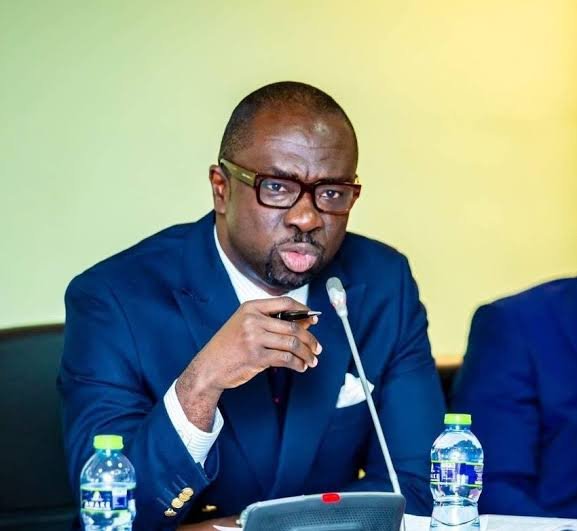
SIC Life land deal prob sparks dramatic High Court Showdown
By Gifty Boateng
The dramatic evasion of arrest by Manhyia South MP Nana Agyei Baffour Awuah has thrust the intersection of parliamentary privilege and criminal investigation into the spotlight. But beneath the political theatre of the 23 September incident lies a tangled web of financial impropriety, a collapsed land settlement, and a law firm fighting to shield its senior partner from the Economic and Organised Crime Office (EOCO).
The confrontation at the Accra High Court, which saw the NPP MP flee to the precincts of Parliament despite the House being on recess has sparked a constitutional standoff. EOCO says its officers attempted a lawful arrest in connection with an ongoing investigation. Awuah claims the officers intended to kidnap him. The truth, as is often the case in Accra’s political scandals, lies somewhere in the paper trail.
The Paper Trail: SIC Life and the Oyibi Land Dispute
At the heart of EOCO’s pursuit is an investigation into financial irregularities at SIC Life Savings and Loans Company Limited. Documents obtained by The New Republic reveal that EOCO summoned Awuah’s law firm, Sarkodie Baffour Awuah & Partners, on 10 February 2026. The confidential invitation, signed by Ag. Deputy Executive Director Benjamin Ndede, requested the Senior Partner a designation Awuah holds to appear before the Executive Director on 17 February.
The firm’s attempts to deflect the invitation to the Clerk of Parliament were swiftly shut down. In a terse 27 February letter, EOCO’s Ag. Executive Director Raymond Archer rejected the maneuver, stating the Office “disagrees with forwarding an official letter specifically addressed to a designated officer of a law firm to Parliament.” Archer warned that any correspondence from the Clerk would not be recognized, adding that failure to honour the invitation would compel the Office to “compel him to appear.”
The substantive details of the probe emerge in a handwritten statement filed on 30 April 2026 by Theresa Tabil, a Managing Partner at the firm. Tabil outlines a complex legal battle dating back to 2017/2018, when SIC Life instructed the firm to initiate an action against an entity referred to as “Egyity” (Equity) to recover a debt.
According to Tabil, the firm successfully obtained judgment against Egyity. Enforcement steps included garnishee proceedings against GCB Bank and the examination of Egyity’s CEO. Subsequently, a parcel of land at Oyibi, belonging to Egyity, was attached to satisfy the judgment.
However, Tabil’s statement alleges that SIC Life later received information that Egyity wanted to settle the judgment debt “peacefully and to have quiet possession of the land without the litigation.” SIC Life, she claims, directed the firm to commence negotiations. Initial proposals were rejected, but eventually, a formal settlement was reached and filed in court as a consent judgment, striking out the dispute as settled.
The Political Fallout
The optics of the arrest attempt are poor. The incident occurred while Ghana was hosting the ECOWAS Parliament conference in Accra, an event meant to showcase the country’s democratic credentials. Instead, it exposed the raw nerves of Ghana’s political class.
Rockson-Nelson Dafeamekpor, MP for South Dayi, warned that parliamentary leaders would resist any attempt by law enforcement to bypass established protocols for arresting MPs. “Such seemingly casual cases of procedural impropriety hurt the sterling image of Ghana here and abroad,” he said.
President John Dramani Mahama has moved quickly to lower the temperature. In a letter signed by the Secretary to the President, Dr. Callistus Mahama, the President cautioned against disproportionate arrests over mere criticism or politically charged commentary. He warned that such actions could create “undeserving martyrs” and undermine public confidence in state institutions. The President has called for a national stakeholder engagement on hate speech and digital content, attempting to draw a line between legitimate dissent and unlawful conduct.
The Bottom Line
The standoff comes amid a broader crackdown on organised crime and political financing, including the National Security Council Secretariat’s (NSCS) pursuit of fugitive pastor Emmanuel Boakye-Danquah, an alleged NPP financier accused of running a massive counterfeiting ring from his Klagon church.
For the NPP, the twin scandals present a severe test. The party must distance itself from figures like Awuah and Boakye-Danquah while simultaneously defending the principle of parliamentary immunity against what it perceives as a politically motivated witch hunt by the NDC government. For EOCO, the challenge is to prove that its investigation into the SIC Life land settlement is a genuine pursuit of justice, and not merely a cudgel to bludgeon the opposition. The coming weeks will determine whether the rule of law can prevail over the protective instincts of Ghana’s political elite.