

By Leo Nelson
As global markets grapple with renewed volatility in crude oil prices, the Bank of Ghana (BoG) has moved to reassure businesses, investors and households that the country is better positioned than ever to withstand external shocks.
Backed by an international reserve stockpile exceeding US$14 billion, the central bank says Ghana has built a strong financial buffer capable of protecting the economy from the immediate effects of rising oil prices.
Speaking on the country’s economic outlook, the Governor of the Bank of Ghana, Dr. Johnson Asiama, expressed confidence that the nation’s reserve position provides a critical shield against unforeseen global disruptions.
“We believe that our resilience now is far better than a year ago and we are hopeful things can be managed going forward, based on current data.”
His comments come at a time when geopolitical tensions and supply concerns continue to push crude oil prices higher, raising fears of inflationary pressures and currency instability across many emerging economies.
A Stronger Financial Fortress
According to the central bank, Ghana’s reserve accumulation strategy has significantly strengthened the country’s ability to absorb external shocks. The reserves, which surpassed US$14 billion in May 2026, represent one of the strongest foreign exchange positions recorded in recent years.
Dr. Asiama stressed that the BoG has deliberately undertaken measures to build adequate buffers, allowing the economy to remain stable even during periods of global uncertainty.
“We do not see things getting out of hand, based on the work that we have done by building the necessary reserves to help withstand the shocks.”
The Governor emphasized that current developments largely align with the central bank’s projections and therefore do not warrant excessive concern. “What is happening now is actually based on our current projections, and we are not that worried,” he added.
The remarks are expected to provide relief to market participants who have closely monitored recent fluctuations in global energy markets.
Dollar Accumulation Strategy Gains Momentum
Despite concerns that the recent depreciation of the Ghana cedi could exert pressure on foreign exchange reserves, the central bank remains optimistic about its reserve-building efforts.
BoG has intensified its foreign exchange interventions and recently increased its forex intermediation allocation to US$1.2 billion for June 2026, up from US$1.0 billion in May.
The move forms part of a broader strategy under the newly approved foreign exchange operations framework, which seeks to enhance market stability while supporting reserve accumulation.
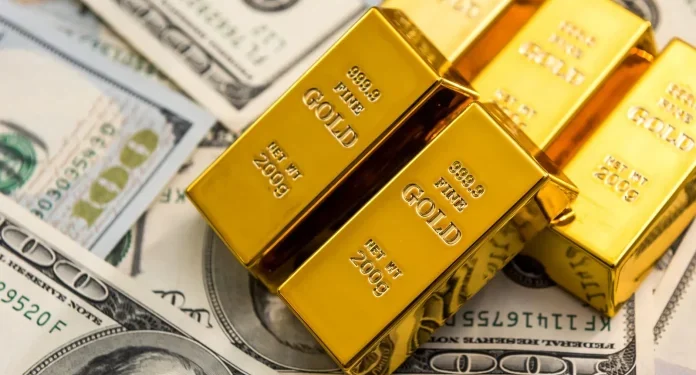
A key component of this framework is the Domestic Gold Purchase Programme, which has emerged as a strategic tool for strengthening Ghana’s external position. By leveraging gold purchases to support reserve growth, the central bank aims to create a sustainable mechanism for building foreign exchange buffers.
Market analysts believe the combination of forex interventions and gold-backed reserve accumulation could provide Ghana with an important advantage as global economic uncertainties persist.
Inflation Risks Loom on the Horizon
While confidence in reserve levels remains high, inflation continues to present a significant challenge for policymakers.
Data released for May 2026 showed inflation rising to 3.7 percent, driven largely by increases in food prices and external economic developments.
However, concerns are mounting over what could happen if crude oil prices continue their upward trajectory.
An internal model reportedly developed by the Bank of Ghana suggests inflation could rise above 10 percent by the end of 2026 if elevated oil prices persist.
Such a development would have widespread implications across the economy. Rising fuel costs could increase transportation fares, raise production expenses for businesses and trigger higher utility tariffs during upcoming reviews.
The resulting chain reaction could place additional pressure on consumers already dealing with higher living costs.
Monetary Policy Under Pressure
The inflation outlook is likely to feature prominently when the Monetary Policy Committee meets next.
Economists believe sustained increases in crude oil prices could force policymakers to consider raising the policy rate in an effort to contain inflationary pressures and preserve macroeconomic stability.
Although the Governor remains optimistic about the current situation, he acknowledged that prolonged shocks could alter the outlook. “If it should continue, then the outlook could be impacted,” Dr. Asiama cautioned.
That warning highlights the delicate balance facing policymakers as they seek to protect economic growth while maintaining price stability.
Confidence Amid Uncertainty
For the meantime, the Bank of Ghana is projecting calm amid a turbulent global environment. The institution’s confidence rests heavily on the impressive reserve build-up achieved over the past year, which officials believe provides a vital cushion against external shocks.
As oil markets remain unpredictable, the effectiveness of these reserves may soon be tested. Yet with more than US$14 billion at its disposal and a strategy focused on continued reserve accumulation, Ghana appears determined to face the challenge from a position of strength.