

…When the NPP Was “Oppressed,” Now It Must Not Become the Oppressor
By Innocent Samuel Appiah
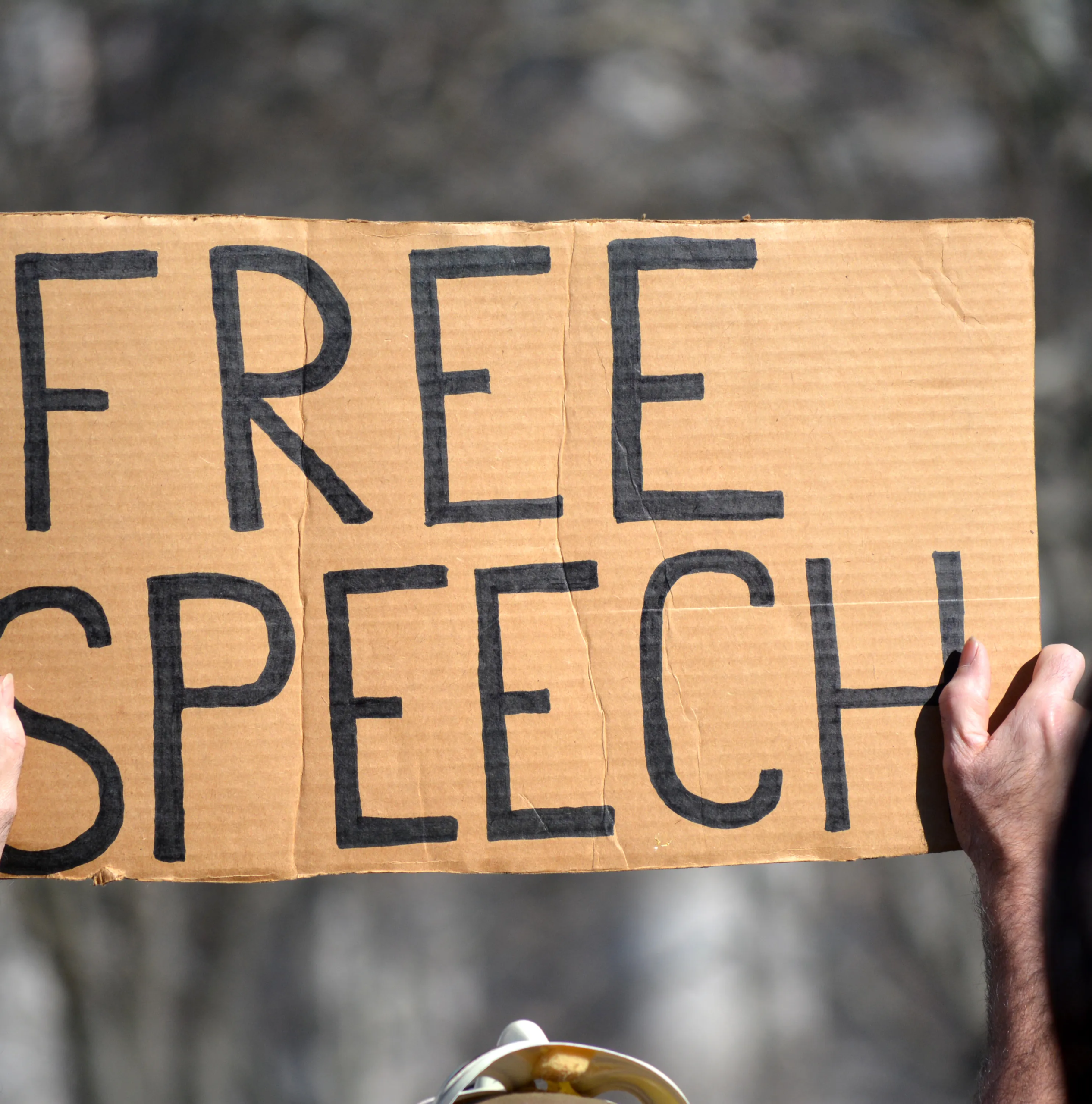
Ghana’s democracy has always been tested not only at the ballot box, but in the quiet moments when citizens are expected to tolerate scrutiny, especially when the scrutiny targets powerful people. Free speech is not a tribal prize meant for whichever party is currently weak. It is a civic right that must survive elections, regime changes, public anger, and partisan narratives.
Today, the New Patriotic Party (NPP) is positioning itself as the champion of democratic freedoms. Its leadership, including Dr. Mahamudu Bawumia, frames the political season around allegations of intimidation, arrests, and harassment, arguing that the state under President John Dramani Mahama is suppressing dissent and closing space for opposition voices. If those concerns are real and well-evidenced, they deserve attention. But Ghana cannot be asked to mature her democracy on slogans alone.
Democracy grows when standards stay consistent, and when the same moral rules apply to everyone: the opposition when in power and the government when in power; the journalist when it is convenient to criticize power and the journalist when the story is uncomfortable; the critic when the critic belongs to your side and the critic when they belong to the other side. And that is the central question Ghana must confront: When the NPP controlled power, did it protect free speech and lawful dissent or did it normalize the very practices it now condemns?
Accountability Must Go Both Directions
Free speech debates in Ghana have increasingly been turned into political warfare—where “persecution” is invoked loudly when it is your friends being questioned, but legal accountability is suddenly minimized when allies are implicated. That is not democracy. That is selective tolerance.
In a constitutional democracy, no one is entitled to unlimited speech. People can be held responsible for misinformation, threats, harassment, incitement, or offences defined by law. But the state’s power must be exercised with due process, proportionality, and fairness—without theatrics, without selective enforcement, and without treating court processes as weapons for political comfort.
Just as importantly, political leaders must not demand “freedom” only when they fear consequences. A democracy is proven by restraint, especially when emotions run high and anger feels righteous. When citizens see that restraint is missing on one side, they stop believing the promises of the other side too.
Therefore, Ghana must ask a hard question: How were journalists, social media commentators, and opposition voices treated during the NPP administration from 2017 to 2024? Were they treated as citizens with rights? Or were they treated as problems to be removed? When freedom is treated like a switch, the constitution becomes a slogan. When it is treated like a contract, it becomes a culture.
The Wounded Names: People Who Paid for Expression
Press freedom in Ghana is not an abstract idea. It has names, faces, and painful memories, some of which are repeatedly referenced in public debate and documented advocacy. Several people paid the price under the NPP regime for alleged expressions or conducting their lawful duties. Among such wounded names are:
1) Kwaku Manu (Peace FM)
Kwaku Manu was detained in connection with his work covering events linked to the NPP’s press activity on March 27, 2017. For many Ghanaians, the case symbolized a frightening principle: that professional journalism can be criminalized when it becomes inconvenient to powerful interests. If the NPP now insists that journalists and critics must be left alone to speak freely, it must also remember how media coverage connected to NPP politics was sometimes met—not with dialogue, but with detention.
2) Journalists brutalized at NPP headquarters (Accra)
On December 21, 2017, reports circulated of journalists being brutalized while attempting to cover or engage matters involving NPP influence. Democracy is not only about what laws exist. It is also about whether citizens can investigate, report, and ask questions without fear of physical harm.
3) Oheneba Boamah Bennie (Power FM)
Oheneba Boamah Bennie was arrested/detained over alleged Facebook posts on December 14, 2020, and later jailed for contempt of court in February 2022. When the justice system becomes an instrument for silencing critical media voices, free speech becomes a slogan instead of a right.
4) Kwabena Bobie Ansah (Accra FM)
Kwabena Bobie Ansah was arrested on February 10, 2022, over allegations described as “false news/offensive conduct.” In theory, everyone should be treated equally under law. In practice, when enforcement appears selective, credibility collapses. And where press freedom meets punitive politics, trust is destroyed. It was also reported that his FM station at Atimpoku in the Eastern Region was razed down, an outcome that, to many observers, felt like punishment for criticism.
5) Ibrahim Mohamed
The public also heard claims surrounding and NDC Organizer, Ibrahim Mohamed reported to have faced a process involving charges such as false news, threatening harm, and offensive conduct. Whatever one believes about the underlying facts, the democratic principle is clear: the law must apply the same way to everyone, regardless of party. If the NPP calls for due process now, it must accept due process always even when it affects your own.
6) Noah Adamtey (“Noah Dameh”)
No discussion of free speech is complete without confronting human cost. Noah Adamtey was reported to have faced jail term connected to a “false news” dispute, and later, according to reports, his condition worsened while dealing with serious health challenges and issues around access to medication, before his death in September 2023. A democracy cannot punish journalists into illness and call it justice. Even when courts act, humane standards must never be negotiable.
7) Manasseh Azure Awuni
Manasseh Azure Awuni, an investigative journalist was widely reported to have faced death threats after producing the documentary “Militia in the heart of the nation.” The fear and danger imposed on investigative journalism is not just a media story; it is a warning to society: if truth becomes lethal, the public pays the price. He had to be smuggled out of the country to avoid being killed like Ahmed Suale, whose pictures were shown on Net2 TV by its owner and bankroller, Kennedy Ohene Agyapong, and suffered death a few days after.
8) David Tamakloe (Whatsup News)
David Tamakloe, Editor-in-Chief of Whatsup News, was reported to have been arrested on April 1, 2021, amid allegations that he was taken into custody dramatically. The police described alleged offences relating to attempted extortion and publication of false news, while Tamakloe’s legal team disputed the narrative and suggested the charges were not anchored in fairness. The Ghana Journalists Association and civil society organizations condemned the arrest, with concerns raised about abuse of police powers. Whatever the final legal conclusions were, the core issue remains: how easily state power can be used to disrupt investigative work.
Now the NPP Wants the Reverse—But Ghana Must Demand Consistency
When the NPP and for that matter, its flagbearer criticized the NDC era for alleged suppression of expression, the country heard a clear message: Do not silence dissent; respect media freedom; protect political space. Now Ghana cannot accept a new script that reverses roles while ignoring past harm. If the NPP truly believes in free speech, it must confront its own record with honesty, especially when allies once benefited from enforcement pressure.
Ghanaians should not be asked to “forgive” or “forget” simply because the party currently in government has changed. If the NPP demands accountability for alleged false news today, then it must accept accountability when its own people face similar accusations without spinning everything into persecution. If the NPP condemns intimidation and arrests now, then it must explain why intimidation and punitive enforcement were tolerated during its administration. And if the NPP insists that courts must be respected, then it must stop treating court outcomes as proof of innocence when your side wins and proof of persecution when your side loses.
The Real Democratic Test: What Happens When It Hurts You?
Ghana’s constitution does not grant free speech to one party only. The right to speak survives only if leaders defend it even when it embarrasses them. So, the democratic test for Bawumia and the NPP is not what they promise during election campaigns. The test is what they do when: journalists criticize them, social media critics offend their narratives, court processes implicate their insiders, and political allies behave in ways that demand correction instead of protection. Ghana will not be persuaded by ceremonial language about democracy. The nation will judge by conduct.
Conclusion: What Was Wrong Yesterday Is Still Wrong Today
Dr. Bawumia and his people must receive one clear message loud enough to be impossible to ignore: What was wrong yesterday is wrong today too. If detaining journalists, harassing critics, or treating court processes as political tools violated the constitution when your opponents faced them, then it violates the constitution now, even when the accused are no longer your opponents.
Free speech is not a favour. It is not an opposition weapon. It is not a reward for winning arguments. It is the foundation that allows Ghana to survive disagreement without fear. Accordingly, if the NPP wants to be believed when it speaks of freedom, it must demonstrate that belief in action by protecting critics, honoring due process, respecting journalists, and applying the same standards to your friends that you demand for your enemies.
Ghana’s democracy survives when leaders choose restraint over rage, fairness over convenience, and truth over tribal defense. And Ghana remembers always.