

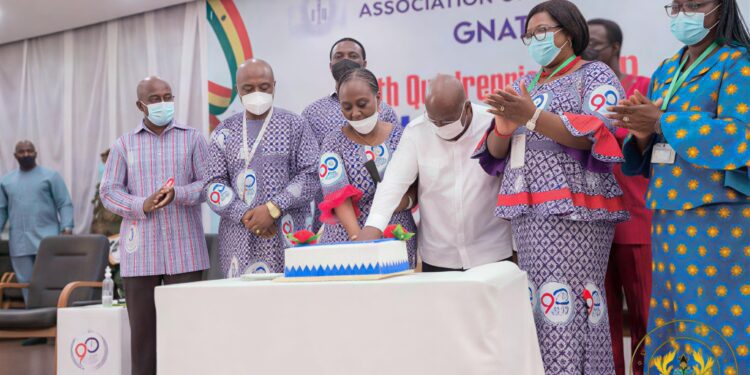
The Ghana National Association of Teachers has criticised the government’s decision to recruit only 7,000 teachers, which it says is too small, compared to over 100,000 trained graduates still without jobs.
Speaking at a National Council meeting in Ejisu Abankro, the association’s president, Prosper Tachie, described the plan as disappointing. He said the approach does not deal with the large number of trained teachers waiting for placement.
The association pointed to a clear gap between recruitment and vacancies. More than 10,000 teachers have retired or died in the past three years, while others have left the country.
Tachie said the shortage has increased pressure on teachers still in the classroom, adding that the Ministry of Education has enough data to support a larger recruitment exercise.
The union called for urgent action from senior government officials. It urged an increase in the quota to include graduates who have waited for years.
President Tachie referred to earlier assurances given during the 2025 base pay talks. He said the current limit goes against promises of stronger job creation.
The association warned that youth unemployment could affect national stability. It insisted that older graduates should be given priority in recruitment.
“In view of the threat that unemployment poses to national security, the National Council of the Ghana National Association of Teachers demands a significant increase in recruitment and calls on the government to ensure that those who completed their training earlier are given priority over more recent graduates.”
The leadership said the current intake barely replaces teachers who have left the system. It described the situation as worrying, especially ahead of the 2026 fiscal year.
“Within the Ghana National Association alone, over the past three years, we have had more than 10,000 members who have either retired or passed on. We also note the data recently presented by the National Teaching Council on the number of teachers who have left the shores of Ghana.”
The association said it believed the President was receptive to concerns and would consider their appeal. It expressed hope that he would direct an increase in recruitment into the education service.
The union added that the workload on its members had grown due to staff shortages. It therefore requested a review and expansion of recruitment to absorb more unemployed teachers.
The Ghana National Association of Teachers has also criticised the current budget allocation for basic education. It said the funding for the 2026 fiscal year is too low to meet sector needs.
It noted that in 2026, only 990,500,000 Ghana cedis, representing 9.31 per cent of the total education budget, was allocated to the sector.
“Only 990,500,000 Ghana cedis, representing 9.31% of the entire education budget, was allocated to basic education, and we think this is woefully inadequate, especially as more focus is placed on Senior High Schools.”
The union said basic education receives a small share of the total education budget. It added that this leaves primary and junior high schools under-resourced.
The council proposed the creation of a dedicated fund for basic education. It said this would help provide a great support for infrastructure and learning materials within the basic education sector.
The association maintained that quality education depends on consistent state funding and pointed out that schools cannot function well without proper resources.
The National Council urged government to prioritise basic education. The association emphasised that strong foundations at the early levels determine long-term academic success.
Delegates also raised concerns about poor infrastructure in rural basic schools. They said many schools still rely on inadequate support for teaching and learning.
President Tachie warned that unequal funding between public and private schools would widen the education gap. He said this could also affect national literacy outcomes.
The association also called for maternity leave for female teachers to be extended from three months to four months. It said this would align with international labour standards on maternal welfare.
President Tachie explained that three months is not enough for proper childcare after birth. He added that education service rules do not allow teachers to bring babies into classrooms.
The union said female teachers face pressure when they return to work too soon after childbirth. It added that better maternity support would benefit both mothers and children, adding that the extra month would help mothers recover and care for their children properly. It added that this would improve working conditions for female educators.