

By Prince Ahenkorah
Gold Fields Ghana Limited has mounted a strong defence of its contribution to Ghana’s mining industry, highlighting more than US$5 billion in investments and US$3.3 billion in payments to government as it pushes for the renewal of its mining leases for the Tarkwa Mine.
The company says its decades-long investment in the mine, coupled with its economic contributions, employment opportunities and community development initiatives, makes a compelling case for its continued operations at one of Ghana’s major gold-producing sites.
The renewed push comes as the government considers the company’s lease renewal application, a process that could shape the future ownership, investment direction and operational lifespan of the Tarkwa Mine.
In a statement, Gold Fields disclosed that it submitted its lease renewal application in November 2025 following a request from the government. It said the application was progressing in accordance with Ghanaian law, with ongoing engagements involving relevant government agencies.
The company said it was outlining its investment history and economic contributions to provide context for public discussions surrounding the renewal process.
Tracing its involvement in Tarkwa to 1992, Gold Fields said the government selected it as the preferred investor to help revive the then-struggling underground mine operated by the State Gold Mining Corporation.
As part of the initial arrangement, the company paid US$3 million under a project development agreement before committing US$50 million to exploration activities from 1993.
According to Gold Fields, the exploration programme identified the open-pit mineral resource that eventually paved the way for the development of the large-scale mining operation currently in existence.
Following further exploration and development activities, the government granted five mining leases in 1997. The company also disclosed that it separately paid US$8 million for assets transferred from the former underground operation.
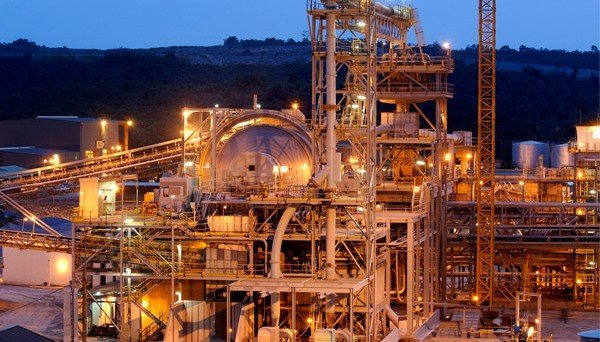
Since then, Gold Fields says it has invested more than US$5 billion in developing and sustaining the Tarkwa Mine, including the construction of open pits, processing facilities and supporting infrastructure.
Managing Director of Gold Fields Ghana, Elliot Twum, said the company remained committed to the mine’s future and was prepared to inject additional capital to support its next phase of development, subject to the outcome of the renewal process.
“We invested in exploration, defined the resource, and built a large-scale mine that has shared value with Ghana for decades. We respect the Government’s renewal process and the views of our host communities. Subject to the outcome of that process, we are ready to make the investment Tarkwa needs for its next phase,” he said.
Beyond its investment in mining infrastructure, Gold Fields is placing significant emphasis on its financial contribution to the Ghanaian economy.
The company says it has paid approximately US$3.3 billion to the government through royalties, corporate taxes and dividends over the years.
It further reports spending more than US$4.6 billion with local suppliers over the past five years, a move it says has supported the growth of Ghanaian businesses and strengthened local participation in the mining value chain.
Among the businesses benefiting from its procurement activities are Engineers & Planners, Zen Petroleum, Genser Energy and Western Transport Services.
The Tarkwa Mine currently supports more than 5,000 employees and contractors, providing livelihoods for thousands of people directly and indirectly connected to its operations.
Gold Fields also highlighted the work of the Gold Fields Ghana Foundation, which it says has invested more than US$114 million in community development projects.
These contributions form part of the company’s broader argument that its presence at Tarkwa extends beyond gold production to employment creation, business development and social investment.
Despite highlighting its economic contributions, Gold Fields acknowledged concerns raised by communities hosting its operations.
The company said it remained committed to engaging traditional authorities, municipal assemblies and community representatives to identify and address local development priorities.
It also argued that mining communities should benefit not only from direct investments made by mining companies but also from government expenditure financed through revenues generated by the mining industry.
Looking ahead, Gold Fields says extending the operational life of the Tarkwa Mine will require substantial fresh investment.
The proposed investment areas include waste stripping, additional tailings storage capacity, mining equipment and improvements to the processing plant.
The company believes its technical expertise, operational experience and access to financing give it the capacity to undertake the required investments and sustain the mine’s operations into the next phase.
Ultimately, the government’s decision will determine whether the company gets the opportunity to continue its operations and undertake the next phase of investment at Tarkwa.