

By Leo Nelson
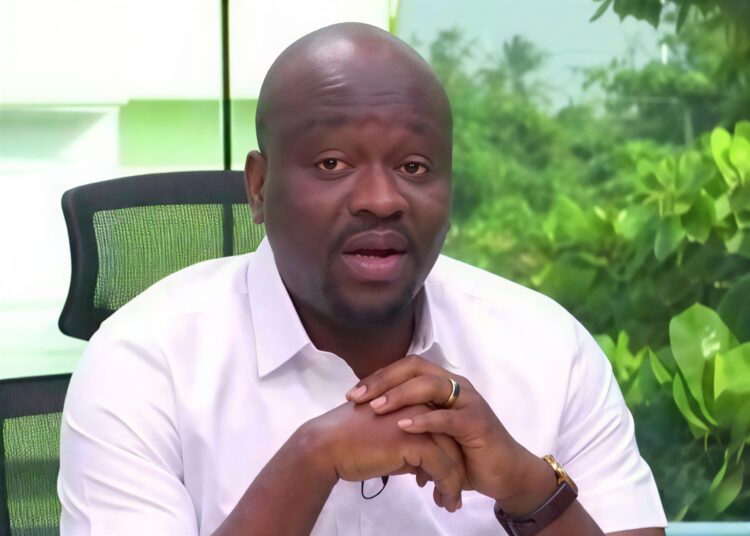
Hamza Suhuyini, a member of the NDC Communications Team, has strongly defended staff of the Bank of Ghana, arguing that many professionals at the institution earned their positions through merit and hard work.
He highlighted that the current Governor rose through the ranks after serving as First Deputy Governor.
The communicator stated that questioning the integrity of such seasoned professionals on public platforms was entirely unacceptable.
He acknowledged that while some individuals might gain roles through political associations, this did not apply to the majority.
“And to sit on such a platform and seek to question professionals in this nature is clearly unacceptable. There may be instances where maybe others have earned their pride of place because of political association.”
Suhuyini urged participants to avoid assumptions that painted all bank employees with the same political brush.
He insisted that such rhetoric undermined the hard work of parents who strive to see their children succeed.
He explained the importance of comparative analysis in both political science and economics.
Suhuyini maintained that any first-year political science student understands that governance requires an examination of historical data and peer performance.
He asserted that voters need comparative analysis to make informed decisions during elections.
Suhuyini also rejected the idea that such comparisons were merely attempts at political equalisation between parties.
He explained that while principles may appear similar, the outcomes of different economic policies vary significantly.
He criticised the NPP for what he described as a lazy analysis of economic figures.
The NDC Communications member pointed out that the 2022 losses were driven by reckless management.
He argued that the current recovery journey involves different factors, such as Other Comprehensive Income implications.
Suhuyini stated that the government did not spend money carelessly on building cathedrals.
He also noted that resources were not wasted on servicing an excessive number of ministers.
He referenced past statements made by former Finance Minister Ken Ofori-Atta regarding central bank balance sheets.
Suhuyini claimed that the NPP practised a politics of convenience that appeared nauseating to observers.
The communicator emphasised his background as a graduate student of political economy, noting that his commentary was supported by facts rather than mere political rhetoric.
Suhuyini cited a Bank of Ghana release from August 2023, which stated that central banks are not commercial banks.
The document suggested that financial outcomes have little implication for the actual operations of the bank.
The communicator highlighted a contradiction in the arguments presented by the Minority regarding insolvency.
He noted that the very people who claimed central banks could not be insolvent were now arguing the opposite.
Suhuyini claimed that the opposition engages in a destructive form of national discourse. He contrasted this with the constructive minority role the NDC played while in opposition.
Political Economy Expert Rejects Minority’s Economic Narrative
Hamza Suhuyini also insisted that the current administration is working to fix the abyss created by the previous government.
The NDC Communicator argued that the NPP has refused to acknowledge its role in the energy sector crisis.
Suhuyini stressed that political economy is his forte and gives him a deeper understanding of the issues. He rejected the dismissal of comparative tools in evaluating market conditions.
He argued that the framework for analysing central bank balance sheets had shifted, according to previous official statements. He found it strange that the NPP now organises press conferences that ignore these established shifts.
Suhuyini maintained that the recovery journey requires honesty about the foundational sources of financial losses.
He defended the current fiscal path as distinct from the recklessness of previous years.
The communicator stated that the NDC provided a constructive alternative during its time out of power.
He lamented that the current opposition prefers to engage in rhetoric that lacks substance and direction.
“It is true that we are in power and will do what we ought to do. But it does not mean that we should not also remind Ghanaians of the abyss you subjected this country into.”
Suhuyini urged the opposition to observe the recovery process and learn from the current administration.
He said the people of Ghana deserve a discourse rooted in truth and documented evidence.
He affirmed that the government will continue to do what is necessary, maintaining that the path to recovery involves correcting the mismanagement of the preceding era.
Suhuyini added that the public should remain wary of political commentary that lacks a factual basis, pledging to continue using his expertise to provide clarity on complex economic and political issues.