

By London Correspondent
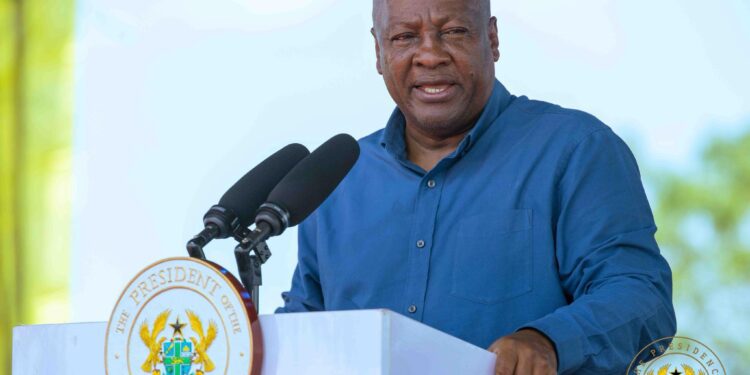
Former President John Mahama has unveiled a sweeping UK-Ghana Growth Partnership, signed on the sidelines of the Ghana-UK Investment Summit in London.
Touted as a “roadmap for 2026–2028,” the deal centres on £215 million worth of private-sector led projects, infrastructure upgrades, and youth skills training.
Yet for seasoned observers of Ghana’s patronage-fuelled politics, the announcement raises the usual question: will these headline-grabbing figures survive the gap between London press release and Accra tarmac?
The centrepiece is a £101 million UK-backed initiative to build the Gulf of Guinea’s first commercial-scale ship repair and dry-docking facility in Takoradi. Proponents claim 430 direct jobs, with 30% earmarked for women.
If realised, it could nudge Ghana ahead of regional rivals. If not, it joins a long graveyard of port-side promises.
Elsewhere, the partnership dangles £85 million for a reforestation fund and £9 million for forest restoration in the Oti Region framed as “climate-aligned infrastructure.”
A further £6 million is meant to implement Ghana’s Artificial Intelligence Strategy and boost university science collaboration, while £4 million targets clinical engineering training.
New Transnational Education guidelines are also promised to help Ghanaian students access foreign qualifications without necessarily leaving home.
Mahama, never shy of a summit photo-op, hailed the package as #ResettingGhana. But with elections looming and fiscal space tight, sceptics will watch which of these millions actually move from spreadsheets to the ground. In the New Republic’s experience, London handshakes are cheap; Tamale tarmac is the real test.