

By Leo Nelson
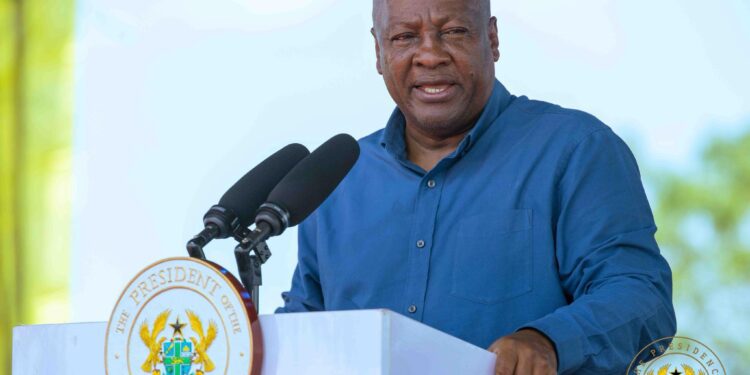
President John Dramani Mahama told an audience of investors and policymakers in London this week that Ghana’s economic turnaround is not a matter of mere statistics but the product of deliberate structural reforms.
Speaking at the 12th African Debate, he argued that the country’s progress since he took office in January 2025 demonstrates what happens when “leadership, reform and national purpose” align.
Mahama acknowledged the scale of the crisis he inherited: sharply rising inflation, a swollen public debt, a weakened cedi and an ongoing, difficult debt restructuring.
“We refused to accept decline as our destiny,” he said. In 18 months, he claimed, his administration has restored fiscal confidence and stabilised the economy, with investor appetite slowly returning.
Yet the president’s main message was that the recovery goes deeper than headline indicators. He insisted it is “structural”, with Ghana being repositioned around industrialisation, agro‑processing, exports, logistics, digital transformation and value addition.
The flagship 24 Hour Economy initiative coupled with an Accelerated Export Development Programme is central to this. Mahama described it as a reorganisation of the economy to maximise productivity across manufacturing, agriculture, pharmaceuticals, digital services and the creative industries, not simply longer working hours.
On the investment climate, Mahama was direct: “Ghana is open for business.” He promised reforms to improve the ease of doing business, strengthen transparency and create a more predictable environment.
Infrastructure is also getting a push roads, rail, ports, energy, aviation, agro‑industrial parks and digital connectivity under what the government calls the Big Push programme. Local participation in investment partnerships is a stated priority, intended to ensure that growth translates into skills and jobs for Ghanaians.
Mahama concluded by reminding his London audience of Ghana’s political stability, democratic continuity and strategic access to West Africa. But behind the confident rhetoric, the unspoken challenge remains: delivering on these structural promises while navigating tight fiscal space, an IMF programme and the high expectations of a population weary of boom‑and‑bust cycles.