

By Leo Nelson

Benjamin Boakye, the Executive Director of the Africa Centre for Energy Policy (ACEP), has sounded a clarion call for an immediate and comprehensive overhaul of Ghana’s aging power infrastructure to prevent systemic failures and ensure continuous energy demand is met.
Highlighting the critical link between financial liquidity and technical reliability, Boakye argued that the nation cannot achieve true energy resilience if the underlying “financial issues that allow us to plan” remain unaddressed, as building and maintaining the necessary capacities requires significant capital investment.
The energy expert emphasized that without resolving these fiscal bottlenecks, the sector will remain unable to diversify fuel sources or sustain the robust maintenance schedules required to safeguard the national grid against unforeseen disruptions.
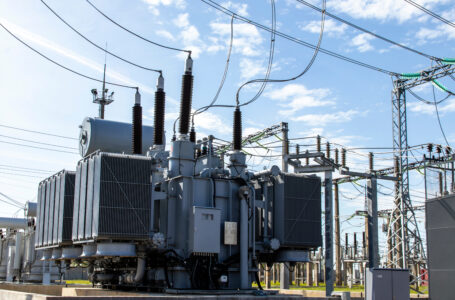
“These are essentially cables with some few switches and insulation that need to be replaced time and again to make sure that it is robust. But beyond that, recognising that it’s a 1960 infrastructure, you need to deepen your safety drills.”
Expanding on this urgent necessity, Boakye pointed out that the current state of Ghana’s energy infrastructure much of which dates back to the 1960s is increasingly vulnerable to risks that could have been mitigated through proactive modernization.
He noted that while new substations, such as those at Pokuasi and Kasoa, serve as “templates” of modern engineering equipped with advanced safety protocols, the older segments of the grid remain dangerously neglected.
This disparity in safety standards is particularly concerning given that the “old system rather needs more safety measures” to compensate for its age.
By failing to integrate modern technologies like heat sensors and automatic shutdown systems into legacy assets, the sector risks catastrophic events that could have been prevented with the right “risk antennas” and managerial foresight.
“You need to make sure that you anticipate fire, you anticipate any risk that could endanger that infrastructure. And that anticipation helps you to put in the necessary mechanism to ensure that it never happens. So, for example, if you look at the new substations that have been built in Pokuasi and in Kasoa, they have all the modern safety measures, thermocameras, automatic shutdown systems, heat sensors.”
The transition from 1960s-era infrastructure to a modernized grid is not merely a cosmetic upgrade but a fundamental requirement for power stability.
According to Boakye, the essence of a robust grid lies in the consistent replacement of “cables with some few switches and insulation” that have long outlived their intended lifespan.
When these components are upgraded, the grid’s ability to handle fluctuations in load improves significantly, reducing the frequency of unplanned outages.
Boakye noted that “anticipation helps you to put in the necessary mechanism to ensure that it never happens,” referring to the proactive safety drills and technical foresight needed to manage a vast entity like the Ghana Grid Company (GridCo).
Furthermore, the integration of “stable alternatives” and fuel diversification is only possible when the infrastructure is flexible enough to accept power from various sources, whether it be Ghana Gas or other thermal and renewable inputs.
A modernized grid acts as a resilient conduit that can reroute power and balance loads effectively, ensuring that a failure in one sector does not lead to a total system collapse.
Advanced Systems: The First Line of Defense
A critical component of the proposed upgrades involves the installation of “modern safety measures” that are currently missing from older substations.
Boakye highlighted that the newer installations at Pokuasi and Kasoa utilize “thermocameras, automatic shutdown systems, and heat sensors” to provide real-time monitoring and rapid response capabilities.
These technologies serve as the first line of defense against fire a major risk to high-voltage infrastructure.
By detecting thermal anomalies before they escalate into open flames, these systems allow for “early detection of fire on time” and immediate intervention.
The Executive Director also advocated for the use of “automatic fire extinguishers” embedded directly into electrical panels.
These systems are designed to “explode to douse the fire” the moment an ignition is detected, effectively self-extinguishing localized faults before they can cause widespread damage.
Implementing these “modern systems” across the entire national grid would drastically reduce the “deep-seated negligence” that Boakye believes currently plagues the maintenance of older energy assets.
Financial Sustainability and Risk Management
Ultimately, the call for infrastructural upgrades is a call for better “risk management” and financial discipline within the energy sector.
Boakye criticized the lack of institutional learning, stating he does not “see how anybody sat down without copying the templates of the new substations” to protect the older, more vulnerable parts of the system.
This failure to replicate success across the grid suggests a gap in managerial oversight that must be closed to protect the billions of dollars invested in national energy assets.
Achieving energy resilience requires a shift from reactive repairs to a culture of “anticipating fire” and other risks.
By securing the “money to actually build the capacities” and ensuring that safety is treated as a “paramount” concern, Ghana can move away from a fragile power system toward one that is truly robust and capable of supporting sustainable economic growth.