

By Philip Antoh
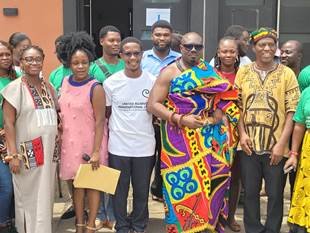
Marking International Youth Day, a new body known as the Civil Society Coalition Against Transnational Crime has been launched in Accra.
The coalition is calling for a united front between government agencies, civil society, traditional leaders, and the private sector to dismantle organized crime networks across the country.
The coalition will coordinate civil society organizations operating across nine critical fronts: human trafficking, cybercrime, illicit finance, illegal mining, drug trafficking, weapons trafficking, maritime crime, extremism, and corruption.
This initiative builds on the momentum of a national forum held on July 30, 2026, titled “Trapped Behind the Scam,” which highlighted the alarming rise in trafficking for forced criminality.
Speaking at the launch, one of the Conveners Princess Yanney explained that a primary motivation for the coalition is to ensure that victims of trafficking are identified and supported, rather than wrongfully penalized.
Citing a July 21, 2026, operation in Afienya where nine victims were rescued and 10 suspects arrested, she questioned whether proper victim-support protocols were followed.
“Was anybody assigned to them? Was there a file? Did anyone sit down with each of them and ask the questions that determine whether a person has been trafficked?” she asked.
Yanney noted that the coalition will establish nine specialized working groups governed by a strict charter emphasizing ethical conduct and safeguarding. She described the initiative as “one Coalition working nine fronts of a single economy,” highlighting how different forms of organized crime are deeply interconnected.
The urgency of the coalition’s mission was underscored by the Chairman of the event, Professor Caesar Apentiik. Referencing the 2025 Global Organised Crime Index, he revealed that Ghana scored 5.77 out of 10, ranking 21st out of 54 African nations and 6th in West Africa.
“Organised crime in Ghana is no longer an abstract threat discussed in the media or security briefings. It is here with us, and it is entrenched,” Prof. Apentiik warned. He stressed that civil society must complement government efforts by providing community-level intelligence and demanding accountability, rather than trying to replace the state.
Jeremiah Afako, Head of Programmes at the Ghana Red Cross, echoed the need for a human-centered approach. He emphasized that young people, who are often the primary targets of exploitation, must be engaged as active partners in the fight against organized crime rather than being viewed solely as victims.
Guest of Honour and the Dufia of Agbesia Traditional Area, HRM Togbe Adze II brought attention to the critical role of traditional authorities in this fight. He warned young people about the dangers of fake job advertisements, noting that legitimate employers do not confiscate passports or charge hiring fees.
More importantly, Togbe Adze II challenged the coalition to look beyond conference rooms and workshops, urging them to tap into the deep, localized knowledge of community leaders.
“We know which families have someone away, we know when money has appeared without explanations. That knowledge is worth more than your workshops and it is free,” he stated, advocating for grassroots collaboration to identify and rescue victims of trafficking and exploitation.