

By Lawrence Odoom
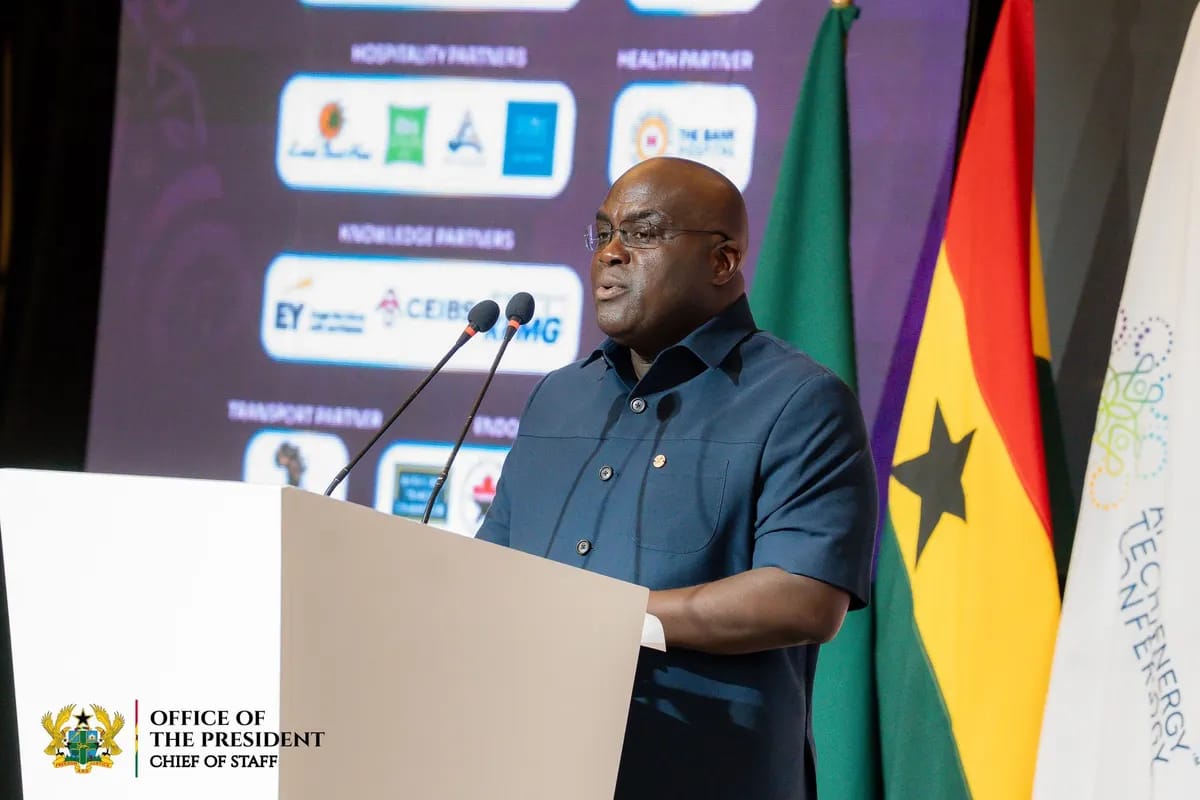
Chief of Staff, Julius Debrah, has reaffirmed the government’s inflexible commitment to the resettlement and rehabilitation of Ghanaians evacuated from South Africa, assuring them of comprehensive state support as they rebuild their lives in dignity and safety.
The assurance was delivered when the first contingent of 300 returnees touched down at Accra International Airport, following weeks of xenophobic violence and civil unrest in South Africa.
Addressing the evacuees during a solemn reception, Mr. Debrah dispelled any notion of despair, charging them to view repatriation not as capitulation but as renewal.
“You should not see your return as the end of your dreams. This is an opportunity to begin again with hope and determination,” Mr. Debrah told the returnees.
Speaking at the reception, the Chief of Staff acknowledged the psychological trauma and material deprivation endured by many returnees. He pledged that government would orchestrate a seamless transition, anchoring their reintegration in compassion, structure, and opportunity.
He underscored that the Republic would not abdicate its responsibility to citizens imperiled by foreign hostility, stressing that targeted interventions were being formulated to restore stability and livelihoods.
“No Ghanaian returnee will be abandoned. Your country stands with you at this difficult moment, and we will do everything possible to support your recovery and future,” he declared.
The repatriation was executed through a coordinated inter-agency operation led by the Ministry of Foreign Affairs, in concert with the National Disaster Management Organisation (NADMO).
Numerous returnees were compelled to relinquish enterprises and livelihoods precipitously as tensions escalated, forcing them to seek sanctuary before eventual evacuation.
Member of Parliament for North Tongu, Samuel Okudzeto Ablakwa, was present at the airport to receive the returnees and to receive first-hand testimonies of their ordeals.
In immediate response, NADMO provisioned emergency relief – nourishment, essential supplies, and medical screenings to mitigate the acute needs of the arrivals.
An official linked to the evacuation programme affirmed that the state’s mandate extends beyond safe passage: “Our focus goes beyond bringing them home safely. We are looking at ways to help them regain economic independence and rebuild their confidence.”
One returnee, bearing the scars of displacement, recounted.
“We lost almost everything and lived in fear for weeks. Coming back to Ghana safely gives us another chance to start afresh.”
Meanwhile, government has confirmed that logistical and diplomatic arrangements remain active for additional Ghanaians in South Africa who have expressed resolve to return home.