

By Leo Nelson
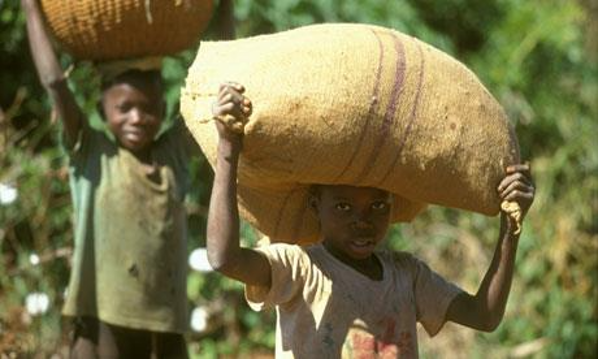
More than 1.1 million Ghanaian children nearly one in ten of those aged 5–17 are engaged in economic activities that violate their rights to education and development, the Commission on Human Rights and Administrative Justice (CHRAJ) disclosed on the World Day Against Child Labour (12 June). Of these, over 458,000 are not attending school at all, according to 2023 data from the Ghana Statistical Service.
In a blunt statement timed to this year’s global theme “Red Card to Child Labour: Fair Play for Children, Decent Work for Adults” CHRAJ described child labour as “one of the most pressing child rights challenges of our time”, a violation enshrined in the Children’s Act 1998 (Act 560), the 1992 Constitution, the UN Convention on the Rights of the Child and the African Charter on the Rights and Welfare of the Child.
Yet successive governments have failed to translate these commitments into action. While acknowledging the complexity of the issue, the Commission placed the blame squarely on three persistent drivers: grinding poverty, chronically limited access to quality education, and woefully inadequate social protection systems.
- “The fulfilment of children’s rights is among the most fundamental measures of a society’s commitment to human dignity and social justice,” CHRAJ said.
- The numbers tell a starker story. Globally, an estimated 138 million children are caught in child labour, 54 million of them in hazardous work. Ghana’s share 1.1 million reflects not a unique crisis but a familiar pattern of elite rhetoric masking inaction.
- For every child withdrawn from the cocoa farm or the quarry, several more enter because their parents lack decent work.
CHRAJ’s prescription is unsparing: enforce existing laws, expand social protection, invest in schools that actually keep children safe, and crucially guarantee stable, adequately paid employment for adults. “When parents have decent work, children stay in school,” the Commission argued.
The Commission has called on the public to report exploitation, but insiders note that CHRAJ itself lacks prosecutorial powers. Real leverage lies with the Ministry of Employment and the Attorney-General’s office, where child labour cases rarely receive priority.
As Ghana observes another World Day, the gap between law and lived reality remains a chasm.
Ending child labour is not a technical fix. It is a political choice. CHRAJ’s message to the government: put children’s welfare at the centre of national development or admit that the red card is for show.