

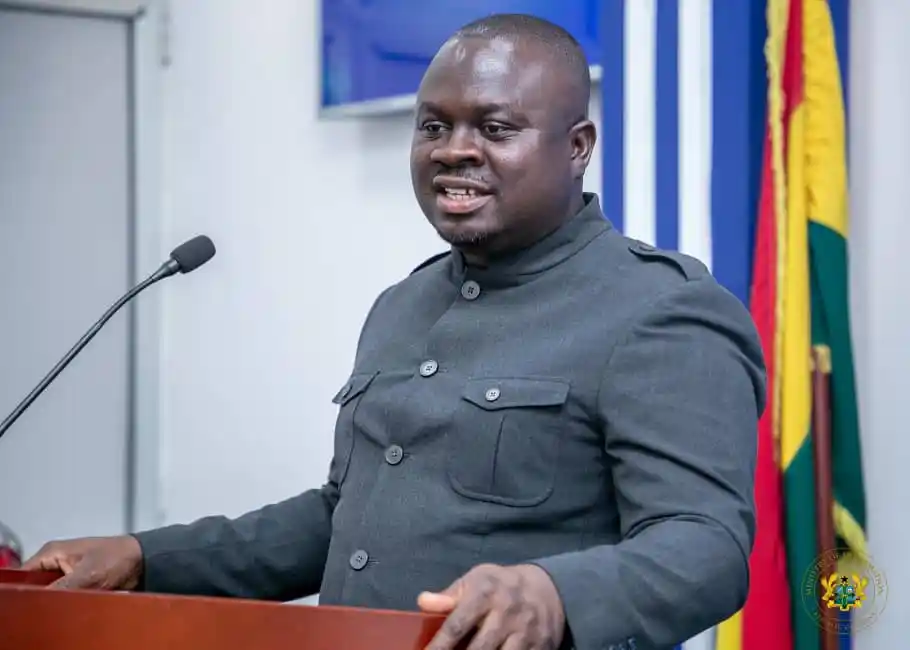
The President of the Ghana Journalists Association (GJA), Mr. Albert Dwumfour has stated that the duty of its current executives is to strengthen press freedom and hand it in better shape to the next generation.
According to him, the GJA as custodian of trust working tireless to protect the interest with it currents executives and the regional army to safeguard the interest of journalists and ensure professionalism at all levels.
Speaking at the 77th Anniversary Symposium and Lecture of the Ghana Journalists Association (GJA) in Accra on Wednesday, August 19, Mr. Dwumfour said GJA has been an important voice in Ghana’s media landscape adding that the association has been advocating for an environment where journalist can work without intimidation, fear and undue interference.
He said the GJA has defended the fundamental principle free press which is essential to democracy and accountable governance. It has worked with successive governments, state institutions, civil society groups, development partners and media organisations to strengthen journalism and promote professional standard.
“We have organised training programmes, workshops, conference and stakeholder engagement to improve the standard of journalist in the country. We have condemned attacks on journalist and engaged relevant authorities which has impacted our current position on press freedom index.”
Mr Dwumfour said annual GJA awards has also become one of the most important platforms in recognising media excellence where we celebrate journalists whose work impact the country.
He said press freedom is at the heat of GJA as journalists must be free to investigate, report, questioned and scrutinised but it must accompany with responsibilities.
On his part, the Country Representative of UNESCO in Ghana, Mr. Edmond Moukala, added that free and independent press is a necessity for nation-building and not a luxury afforded by democracy.
He argued that the media had played a critical role in shaping Ghana’s democratic journey, from the country’s struggle for independence to the consolidation of democratic governance.
Moukala said journalists had historically helped shape public consciousness and given voice to the aspirations of citizens seeking self-determination.
He said the founders of Ghana’s press understood the importance of an independent media to the development of the country, a principle which, he noted, remained relevant in the digital age.
“A free and independent press is not a luxury afforded by democracy. It is the very necessity upon which nation-building is predicated,” he said.
Mr Moukala noted that Ghana’s reputation as one of Africa’s stable democracies had been supported by the work of the media over the years.
He said journalists had contributed to major democratic milestones by monitoring elections, providing platforms for public discourse, exposing corruption and ensuring that citizens’ concerns reached those in positions of authority.
According to him, the media had helped make accountability a lived reality by holding institutions and public officials to scrutiny.
Mr Moukala, however, said while the media celebrated its rich legacy, it was important for journalists and media institutions to engage in” honest introspection” and consider how best to navigate the challenges of the digital era.
He said the “future of digital media required the profession to honour the foundations laid by previous generations while developing innovative tools and approaches to serve society effectively.”
He urged journalists to remain committed to the principles of press freedom, accountability and public service as they adapt to the changing media landscape.
The event, held at the British Council in Accra, brought together journalists, media practitioners, policymakers and other stakeholders to deliberate on the future of journalism and the role of the media in Ghana’s democratic development.