

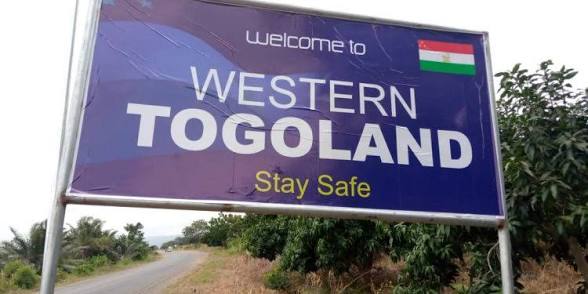
A: After reviewing the five pages uploaded, the document appears to be a British colonial policy paper marked “MOST SECRET – THE FUTURE OF TOGOLAND UNDER UNITED KINGDOM TRUSTEESHIP.”
It is highly significant because it openly discusses strategies for securing the integration of British Togoland into the Gold Coast (later Ghana), influencing public opinion, managing opposition, and persuading the United Nations to approve the desired outcome.
Summary
The document reveals that the British Administration viewed the continued existence of British Togoland as a separate UN Trust Territory as an obstacle to Gold Coast independence.
The central objective was not to determine freely the wishes of the people, but rather to ensure that British Togoland ceased to exist as a separate territory and became part of a self-governing Gold Coast.
Key revelations include:
- British officials regarded integration into the Gold Coast as the “only feasible solution.”
- They considered how to convince the UN that integration reflected the wishes of the people.
- They proposed organizing large numbers of petitions supporting integration.
- They discussed selecting and training representatives who would present the desired position before UN bodies.
- They sought methods of neutralizing or winning over opposition leaders.
- They proposed development spending to reduce resistance to integration.
- They planned political organization to ensure that reliable supporters of integration occupied important local positions.
- They openly discussed influencing public opinion before approaching the UN for approval.
The document therefore suggests that British policy was directed toward achieving a predetermined political outcome rather than conducting a genuinely neutral process of self-determination.
B: Critique of the Plebiscite and the British-UN Arrangement:
The Fundamental Conflict of Interest
The most serious problem revealed by this document is that Britain acted simultaneously as:
- Administrator of the Trust Territory;
- Principal advocate of integration;
- Organizer of the plebiscite process; and
- Main source of information provided to the United Nations.
This arrangement violated a basic principle of impartial governance.
A party seeking a specific outcome should never be entrusted with administering the process meant to determine that outcome.
The document demonstrates that British officials had already concluded that integration was the desired result years before the plebiscite.
If the administrator had already chosen the destination, then the plebiscite cannot be regarded as entirely neutral.
Evidence of Predetermination
The document repeatedly speaks of:
- bringing public opinion “to the right state”;
- persuading the UN of integration;
- selecting supportive petitioners;
- training advocates to speak before UN bodies;
- neutralizing opposition;
- using development expenditures to secure support.
These are not the actions of an impartial referee.
They are the actions of a political actor pursuing a specific objective.
Failure of UN Due Diligence
The UN Trusteeship System was created to guide Trust Territories toward self-government or independence according to the freely expressed wishes of the people.
The document raises troubling questions:
- Did the UN sufficiently investigate Britain’s neutrality?
- Did it independently verify public opinion?
- Did it adequately assess allegations of political manipulation?
- Did it sufficiently consider alternative outcomes, including separate independence?
If Britain had already formulated a strategy for integration and influencing public opinion, then the UN should have exercised far greater scrutiny. Instead, the Trusteeship process appears to have relied heavily on information supplied by the very administering power seeking integration.This creates the appearance of institutional negligence.
Why Many Western Togolanders Consider the Plebiscite a Sham
Critics argue that:
*The administering authority had a predetermined preference.
*Separate independence was not equally promoted.
*Public opinion was actively shaped before consultation.
*Opposition groups were treated as obstacles to be managed.
*The UN depended heavily upon British representations.
*The terms of the plebiscite were completely ignored.
Under this interpretation, the plebiscite was not a neutral exercise in self-determination but a managed political process designed to legitimize a decision already favored by Britain and the Gold Coast government.
Whether one accepts this conclusion or not, this document undeniably provides evidence supporting the concern.
C. Appeal to the Conscience of the UN, AU, Ghanaian Authorities and Traditional Leaders
THE MORAL BURDEN OF WESTERN TOGOLAND: A CALL TO CONSCIENCE
History imposes obligations not only upon those who commit injustice but also upon those who knowingly tolerate it.
The secret British document concerning the future of Togoland under United Kingdom Trusteeship raises profound questions about whether the people of Western Togoland were ever afforded a genuinely free and impartial opportunity to determine their political future.
If a process presented as self-determination was influenced by a colonial administration that had already chosen its preferred outcome, then a historic wrong may have occurred.
The passage of time does not erase injustice. Nor does political convenience transform injustice into justice.
*The United Nations was founded upon the principle that all peoples possess the right of self-determination.
*The African Union proclaims respect for human rights, justice, and the dignity of peoples.
*Traditional authorities exist to defend truth, protect their communities, and preserve the honour of their ancestors.
*Political leaders swear to uphold justice and the rule of law.
Each of these institutions therefore bears a moral responsibility.
If Western Togoland citizens are being subjected to unlawful arrests, arbitrary detention, torture, malicious prosecution, or disproportionate sentencing merely for peacefully advocating their political beliefs, silence becomes complicity.
Justice does not require agreement with the political objectives of Western Togoland activists. Justice requires that their fundamental human rights be protected.
A people may be wrong about politics and still be entitled to freedom.
A government may be right about politics and still be wrong to suppress dissent.
The true test of democracy is not how it treats those who agree with it but how it treats those who disagree.
*The United Nations must examine whether unfinished obligations arising from the Trusteeship system remain unresolved.
*The African Union must ask whether historic grievances are being addressed through dialogue or suppressed through force.
*Ghanaian authorities must ask whether coercion can ever provide a legitimate answer to demands rooted in history and identity.
*Traditional leaders must ask whether future generations will remember them as defenders of justice or silent witnesses to injustice.
No society achieves lasting peace by ignoring legitimate grievances. Peace built upon fear is temporary. Peace built upon justice endures.
The time has come for truth, dialogue, accountability, and reconciliation.
History is watching.
Future generations are watching.
ANDConscience is watching.
Bobby Quarqoo
A Diasporan Freelance Journalist and Freedom Fighter
June 15, 2026
westtogo@gmail.com westtogo@outlook.com