

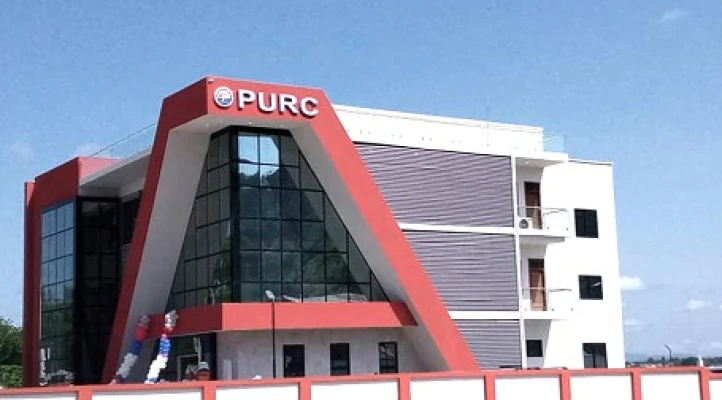
as Petition Lands on Mahama’s Desk
TNR Files
A formal petition to President John Dramani Mahama has put the Public Utilities Regulatory Commission (PURC) at the centre of a gathering storm over electricity tariffs, boardroom governance and the regulatory treatment of a major power project.
The petitioner, Emmanuel Senyo Amekplenu, a Ghanaian citizen, has asked the President to order an independent investigation into the Executive Secretary and the Board.
Copies went to the Vice-President, the Finance and Energy Ministries, SIGA, the Public Services Commission, the Auditor-General, CHRAJ, EOCO, the AGI, TUC, ACEP, IMANI and the IEA.
At the heart of the dossier is an allegation that PURC’s most recent major tariff review approved preferential rates for certain steel companies described as mostly foreign-owned below the normal industrial tariff paid by Ghanaian consumers in the same consumption bracket.
The petition cites the 2026 third-quarter gazette, which it says shows SLT-MV customers (mostly AGI members) at 208 pesewas per kWh, SLT low-voltage Ghanaian businesses at 240 pesewas per kWh, and a special group of mostly foreign-owned firms at a lower rate. Amekplenu is careful to say the information came orally from people associated with the companies and is not established fact.
He wants investigators to establish whether a contribution of about GHS5m was made in connection with the review, who received it, whether it was disclosed to PURC, and whether it influenced the outcome. If true, he argues, Ghanaian industries and consumers are subsidising a few privileged foreign-owned companies.
The EMOP levy
The second strand concerns a levy tied to the Electricity Market Oversight Panel (EMOP) embedded in the approved tariff.
The petitioner argues that EMOP is neither a public utility under section 49 of the PURC Act nor an institution designated by the sector Minister through a legislative instrument, and that L.I. 1937 provides a specific framework for recovering EMOP’s costs through the transmission utility.
Information obtained under the Right to Information Act from EMOP and GRIDCo, he says, shows GRIDCo recovered and paid more than GHS2m into EMOP’s account between January and July 2026.
He further alleges that EMOP has organised more than 70 people, including some PURC Commissioners, on a tour of Canada and the United States this year. He wants a full audit of all amounts collected and transferred.
The petition also alleges excessive interference by the Board in PURC’s day-to-day management, to the point where professional management has been undermined. It reports unease and tension within the Commission, and more seriously that executives of the staff union have allegedly received threatening telephone calls from persons said to be Board members.
It asks whether any Board member has abused office through excessive foreign travel, tribal and partisan divisions, or the recruitment of sons and daughters.
It further raises governance concerns about a current Board member who was previously a PURC employee and left several years ago under reportedly contentious circumstances.
The petitioner does not assert the facts but wants the circumstances of her departure, her subsequent appointment and her conduct since examined for actual, potential or perceived conflict of interest.
He alleges a punitive approach towards staff perceived as unsupportive, and asks whether unresolved grievances are influencing board decisions.
The fifth strand concerns the AkSA Power Takoradi project. The petitioner says information available to him suggests the project may not have obtained the requisite licence from the Energy Commission and may not have completed all applicable regulatory processes before PURC granted or approved a tariff which he says would be contrary to PURC’s own Act and tariff guidelines, and to sections 24(1)(b) and 26(2) of the Energy Commission Act.
He also reports that some in the sector consider the tariff non-competitive compared with other generation tariffs. He stops short of alleging bribery, but asks anti-corruption and law-enforcement authorities to determine whether there is evidence of improper inducement or misconduct.
Amekplenu distinguishes between what he verified through RTI requests, what he heard orally and what requires independent verification. He asks Mahama to refer the matters to CHRAJ, EOCO, the Auditor-General, SIGA, the Energy Commission and other competent bodies, and to consider removal or reconstitution of the Board if misconduct is established.
The political sensitivity is obvious. PURC sets tariffs that feed directly into business costs and household budgets, and its decisions are watched by the IMF, the World Bank and investors in the power sector.