

By Leo Nelson
President John Dramani Mahama has called for greater recognition of the unique experiences of women and girls in discussions on reparatory justice, stressing that historical accounts of slavery and enslavement have too often overlooked the specific forms of suffering endured by women.
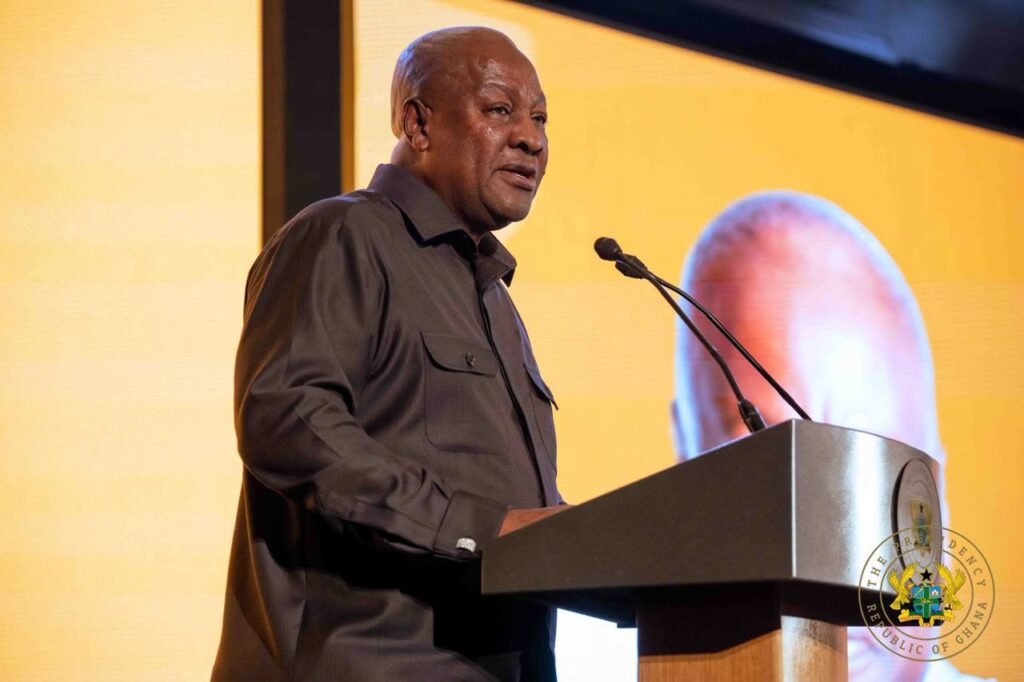
Speaking at the Next Step High Level Consultative Conference on Reparatory Justice in Accra, the President said any meaningful effort to address the legacy of slavery must acknowledge that the experience of enslavement was not the same for all victims.
According to him, women and girls were subjected to forms of brutality that have frequently been marginalized in historical narratives, despite the profound impact those experiences had on generations of African families and communities.
“It is important to acknowledge that the experience of enslavement was not uniform. Women and girls endured forms of brutality that have too often been marginalised in historical accounts.”
His remarks formed part of a broader appeal for a more inclusive and comprehensive approach to reparatory justice, one that recognizes the contributions and sacrifices of women both in the past and in contemporary struggles for historical justice.
Hidden Stories of Suffering
President Mahama noted that while history often records the activities of traders, ships and commercial enterprises involved in the transatlantic slave trade, it frequently fails to capture the stories of women who suffered some of its most devastating consequences.
He observed that many women became victims of exploitation in ways that extended far beyond forced labor. Their bodies, he said, became sites of abuse and instruments of economic extraction within a system that sought to profit from every aspect of their existence.
“Too often, history records traders, ships, and companies, but forgets the women whose bodies became sites of exploitation, or mothers who stood on the shore uncertain whether they would ever see their children again.”
The President further explained that the suffering of enslaved women was compounded by the exploitation of their reproductive capacities, which were used to sustain and expand systems of bondage across generations.
His comments highlight a growing international conversation about the need to ensure that the experiences of women are fully reflected in historical reckoning and reparatory justice initiatives.
Honouring Women of Resistance
President Mahama used the occasion to pay tribute to women who resisted oppression and helped sustain hope in the face of immense hardship.
He cited historical figures such as Nanny of the Maroons, Harriet Tubman and Sojourner Truth as examples of women whose courage and determination contributed significantly to the struggle for freedom and justice.
Beyond these well known names, he also acknowledged the countless women whose stories may never be fully documented but whose sacrifices preserved families, communities and cultural identities during some of history’s darkest periods.
“Today, we honour not only historical figures such as Nanny of the Maroons, Harriet Tubman, and Sojourner Truth, but also the countless unnamed women whose resistance preserved families, communities, and hope.”
The President emphasized that the resilience of these women remains an enduring source of inspiration for present and future generations, particularly as nations and institutions continue to confront the legacy of slavery and its lasting consequences.
Recognition for Contemporary Women Leaders
President Mahama also extended recognition to women who continue to champion the cause of justice and historical accountability in modern times.
He praised the contributions of scholars, activists, jurists, policymakers and civil society leaders whose work has helped advance discussions on reparatory justice across the world.
According to him, these women have played critical roles in research, advocacy, policy development and international engagement, ensuring that the quest for historical justice remains on the global agenda.
Their efforts, he noted, have helped create greater awareness of the enduring consequences of slavery while promoting dialogue on pathways toward justice, reconciliation and development.
Call for Gender Responsive Reparatory Justice
A central theme of the President’s address was the need for reparatory justice frameworks to fully incorporate the experiences and perspectives of women and girls.
He argued that any approach that fails to recognize the gendered dimensions of slavery and its legacy would remain incomplete. “Reparatory justice must therefore be gender responsive. Any framework that excludes the experiences of women and girls remains incomplete,” he said.
The President stressed that women’s experiences should not be treated as peripheral issues within discussions on reparations but should instead occupy a central place in efforts to address historical injustices.
He called on policymakers, researchers, advocates and international institutions to ensure that gender considerations are integrated into future initiatives aimed at advancing reparatory justice.
Bringing his remarks to a close, President Mahama expressed appreciation to women who have sustained the struggle for justice across generations.
He acknowledged both historical figures and contemporary advocates whose dedication has helped preserve the memory of those who suffered and strengthened efforts to secure recognition and redress. “To all women who have sustained this struggle, we see you, we honour you, and we are grateful,” he said.
His comments underscore the broader message of the conference, which seeks to move beyond recognition of historical wrongs toward practical actions that promote justice, truth and reconciliation while ensuring that all voices, especially those historically marginalized, are fully represented in the process.