

By Philip Antoh
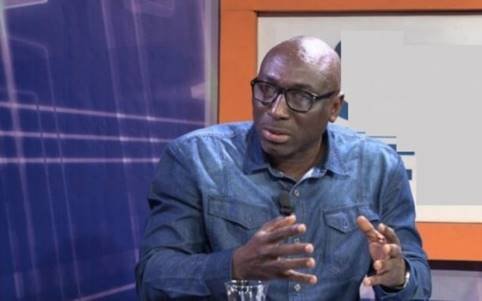
The Director-General of the National Road Safety Authority (NRSA), Abraham Amaliba, has stated that road safety education will fail without strict enforcement, calling for a coordinated approach that integrates education, enforcement, road engineering, and emergency response to reduce crashes and save lives.
Speaking on Joy Prime, Mr. Amaliba emphasized that public education campaigns are insufficient to change driver behaviour if motorists believe they can ignore regulations without facing punishment.
“If education is ongoing, but there is little enforcement, drivers consider the education as mere advice,” he stated.
“But when there is enforcement, punishment would make them sit upright.”
He explained that while education helps drivers understand the rules, enforcement is the critical mechanism that forces compliance. Without the fear of being caught or penalized, drivers will arbitrarily choose whether to follow safety guidelines.
Beyond enforcement, Mr. Amaliba identified road engineering as another vital pillar of the system.
He argued that improving driver behaviour alone is futile if the physical conditions of the roads such as poor design, faded markings, inadequate lighting, and missing pedestrian crossings continue to endanger motorists and pedestrians.
He urged institutions responsible for road infrastructure to collaborate and ensure roads are safely constructed and maintained.
The NRSA boss also raised serious concerns about emergency response, warning that the failure to provide timely and professional assistance exacerbates the consequences of crashes.
“We don’t want to get to the emergency stage where the ambulance service is not brought in,” he cautioned.
Mr Amaliba lamented situations where crash victims are mishandled by untrained bystanders while awaiting professional help.
“Because we don’t have the ambulance service working, people go to accident scenes and pick up victims the way they want. They may end up dead because those handling them are not professionals.”
He noted that countries succeeding in road safety have done so by ensuring all these elements work effectively together.
However, when asked to prioritize a single intervention if given the resources, he unequivocally chose enforcement.
“I would deal with enforcement,” he said, reasoning that anyone behind the steering wheel should have already acquired basic safety education from a driving school.
Therefore, he would direct resources toward ensuring drivers comply with traffic laws through visible policing and predictable penalties.
“People don’t do what you expect; they do what you inspect,” he remarked, emphasizing the role of consequences in shaping behaviour.
To illustrate the current enforcement challenges, Mr. Amaliba pointed to the common practice of drivers flashing lights or using signals to warn fellow motorists of upcoming police checkpoints, a habit that undermines the deterrent effect of law enforcement on the roads.
“You have noticed that most of the time, when drivers are on the road, they give signals to their colleagues when they know that there’s a police checkpoint somewhere,” he said.
The practice, he said, illustrated how the presence of law enforcement could influence driver behaviour.