

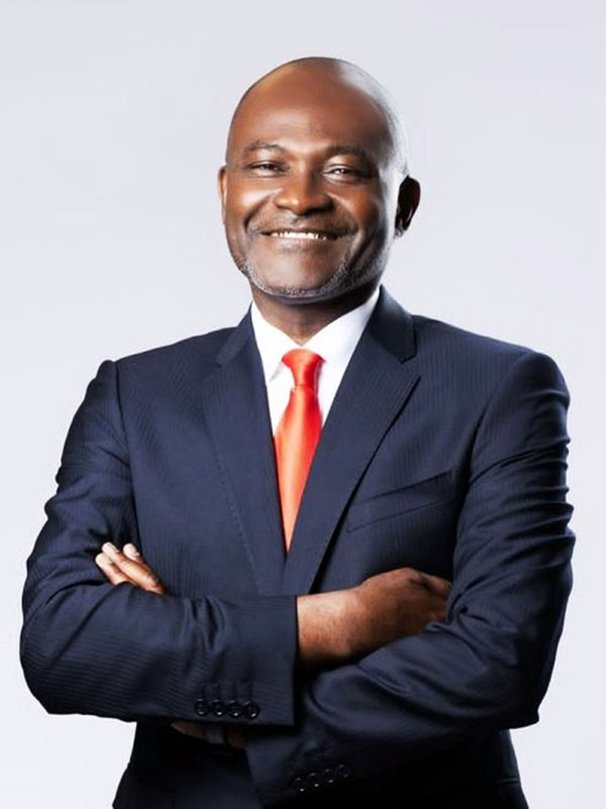
Kennedy Agyapong breaks ranks, admitting party failed to complete facility despite eight years in power.
By Prince Ahenkorah
The Afari Military Hospital was supposed to be a beacon of hope for the people of the Ashanti Region a 500-bed facility that would ease the crushing burden on Komfo Anokye Teaching Hospital and bring quality healthcare to millions.
Instead, it has become a symbol of governmental failure, a $180 million monument to political inertia that has now sparked a bitter internal battle within the New Patriotic Party.
At the centre of the storm is Kennedy Agyapong, the former flagbearer aspirant and outspoken MP for Assin Central, who has publicly broken ranks with his party over who is really to blame for the hospital’s unfinished state.
Speaking to journalists, Agyapong delivered a blunt assessment that his party leadership would rather not hear: the NPP had eight years to complete the hospital and failed.
” We were there for eight years and didn’t do it,” he said, rejecting attempts to pin the blame on the current NDC administration, which has been in office for just over a year.
The project, he explained, was initiated under former President John Agyekum Kufuor, developed under a subsequent NDC administration, and then inherited by the NPP at an advanced stage.
According to Agyapong, the party had sufficient time to operationalise the facility but did not. He also revealed that efforts by parliamentary oversight committees to inspect the project during his tenure as Defence and Interior Committee chair were reportedly blocked a claim that raises troubling questions about transparency and accountability.
But the NPP has pushed back hard, presenting a detailed defence that attempts to counter Agyapong’s narrative.
Dr Anthony Nsiah Asare, Co-Chair of the party’s Health Committee, cited official Ministry of Defence records indicating that the core hospital had reached over 90 percent completion by late 2024, with overall completion estimated at about 98 percent by early 2025.
Civil, architectural and auxiliary works were all substantially advanced, he argued, with only minor outstanding tasks remaining.
On financing, the party dismissed claims of large outstanding payments, insisting that most contractual obligations had been settled, with only a small balance remaining.
But the party’s response raises as many questions as it answers. If the hospital was 98 percent complete by early 2025, why was it not operationalised before the NPP left office? Why does the project remain unfinished today?
The Afari Military Hospital is not an isolated case. It is part of a troubling pattern of infrastructure projects that stall, drag on for years, and become political footballs while citizens continue to suffer.
The project was first conceived under President Kufuor, advanced under President John Dramani Mahama’s first administration, and then inherited by the NPP in 2017. Eight years later, it remains non-operational.
The human cost is immense. Komfo Anokye Teaching Hospital continues to operate beyond capacity, with patients often sleeping on floors and corridors. The promise of Afari was to change that. Instead, it has become a cautionary tale of political neglect.
NPP Health Spokesperson Dr Ekua Amoakoh also weighed in, arguing that even government budget statements acknowledged the facility was at an advanced stage when the current administration inherited it.
She noted that several other hospital projects in the Ashanti Region including facilities at Sewua, Trede and Kokoben were completed under the previous administration, suggesting the NPP’s record on health infrastructure should not be dismissed.
But her defence does little to address the central question: why was Afari not completed?
The public spat between Agyapong and his party exposes deep fault lines within the NPP. Agyapong, still a powerful force with a loyal following, has shown he is not afraid to challenge the party’s official narrative even if it means embarrassing the leadership.
The party’s decision to caution its members against public commentary that contradicts documented positions, referencing internal disciplinary expectations, is a thinly veiled warning to Agyapong. But the former flagbearer aspirant has never been one to be silenced.
Despite the bitter exchange over figures and responsibility, both Agyapong and the party leadership have expressed support for completing and operationalising the hospital.
But Ghanaians have heard this before. For over a decade, promises have been made and broken. The Afari Military Hospital remains a monument to political failure, a $180 million reminder that the people’s health is often sacrificed for political convenience.
The Afari Military Hospital is not just a building. It is a test of whether Ghana’s political class can put citizens ahead of partisan interests.
For the NPP, the dispute with Agyapong is a distraction from the larger question of accountability. For the NDC, it is an opportunity to point fingers while doing little to advance the project.
But for the people of the Ashanti Region, waiting for a hospital that was promised years ago, the political theatre is cold comfort.
The hospital must be completed. The people must be served. And the politicians all of them must be held accountable.