

By Gideon Amuah | Email – gideon.amuah@gmail.com
If there is one crop that captures the story of food security in Ghana, it is maize. From banku and kenkey to porridge and livestock feed, maize is woven into the very fabric of daily life. It is the country’s most widely consumed staple and the backbone of both household nutrition and the poultry industry. And yet, despite its central role, maize remains one of the most unstable and vulnerable crops in Ghana’s food system.
The numbers tell a sobering story. Ghana produces an average of three million metric tonnes of maize annually, but demand continues to outpace supply. In 2023, maize prices surged by more than 40 percent in some regions. A bag that once sold for 150 cedis now costs more than 300 cedis. Rising fertilizer prices, erratic rainfall, and poor storage have all contributed to this inflationary spiral. The result is felt not only in rural farming communities but also in urban households, where food budgets are stretched thin. School feeding programs, poultry farmers, and small food vendors all struggle to cope with soaring costs.
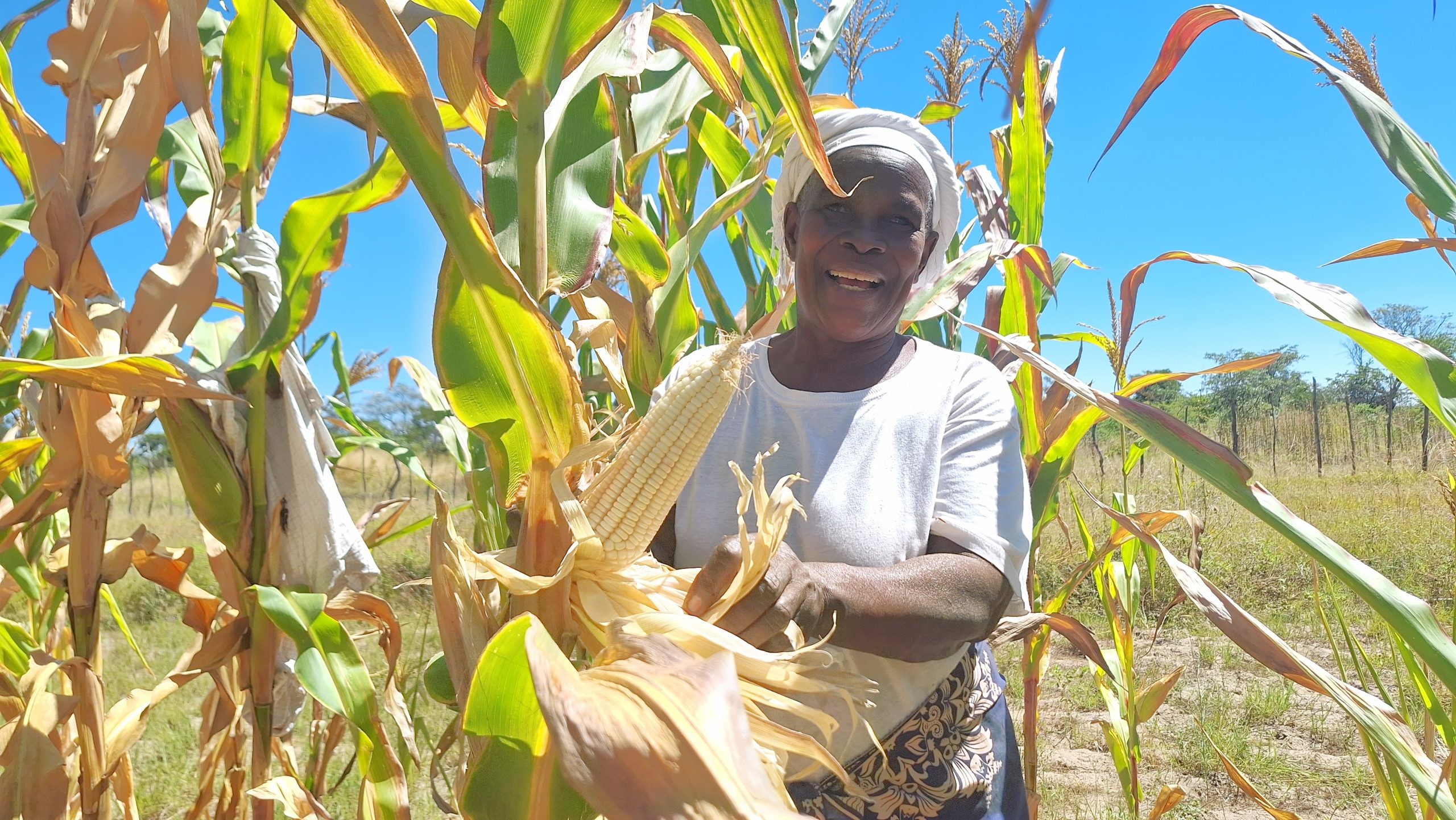
Behind these figures are millions of smallholder farmers. They produce more than 80 percent of Ghana’s maize, yet their livelihoods remain precarious. Most rely on rainfall that has grown increasingly unpredictable. Many plant traditional seed varieties that cannot withstand climate shocks. Mechanization is limited, forcing farmers to depend on manual labor. Even when harvests are strong, they face steep post-harvest losses. Without adequate storage or drying facilities, maize often spoils before it can be sold, wiping out months of hard work.
This cycle of fragility has far-reaching consequences. Maize is not simply a food crop—it is a “security crop.” It sustains families, underpins the poultry industry, and serves as a measure of national stability. When maize prices climb, everything from household meals to school feeding programs and local agribusinesses is affected. The volatility of maize reveals deeper cracks in Ghana’s agricultural system: weak infrastructure, fragmented markets, and underinvestment in farmer support.
But maize does not have to remain a weak link in the chain. Ghana has the potential to transform it into a cornerstone of resilience. A critical step is improving the seed system. Farmers must have access to high-yield, drought-resistant varieties, and this requires a reliable distribution network that gets seeds into communities at the right time and at affordable prices. At the same time, irrigation must become more widespread. Today, less than two percent of Ghana’s farmland is irrigated, leaving farmers dangerously dependent on increasingly erratic rains. Expanding small-scale irrigation technologies, particularly solar-powered pumps and community dams, would give farmers the ability to plant and harvest with greater confidence, free from the tyranny of weather patterns they can no longer predict.
Storage and processing are equally urgent. Post-harvest losses consume as much as a third of the maize grown in Ghana. Community-based warehouses, silos, and modern drying facilities would allow farmers to preserve their grain and sell it later in the season when prices are better. If this infrastructure were paired with local processing hubs that produce flour, animal feed, or grits, farmers would not only lose less but also gain more from value addition. This, in turn, would create rural jobs, stimulate markets, and reduce Ghana’s reliance on imported food products.
Technology can also play a decisive role. Digital platforms are already changing the way farmers in other countries access markets, credit, and weather information. In Ghana, scaling such platforms would mean farmers could receive SMS alerts about rainfall, track pest outbreaks, or check current maize prices in Accra before making decisions. Linking these tools with mobile money would open doors to affordable credit and crop insurance, shielding farmers from the financial shocks of failed harvests.
Farmers cannot, however, stand alone. Stronger farmer cooperatives would allow them to pool resources, share equipment, and negotiate better prices for both inputs and outputs. By working together, smallholders could achieve economies of scale usually reserved for large commercial farms. Government policy must reinforce this by offering stability. Too often, agricultural programs shift with political cycles, undermining confidence and discouraging long-term investment. A consistent, nonpartisan agricultural strategy—one that prioritizes maize as a national security crop—would provide the certainty that both farmers and investors need.
The stakes are high. If maize continues to be neglected, Ghana will face persistent food inflation, a deepening reliance on imports, and rising rural poverty. But if maize is prioritized, the benefits will ripple across the entire economy. Food prices would stabilize, school feeding programs could expand, rural communities would thrive, and national resilience would strengthen. Every bag of maize tells a story, and today that story is one of struggle and waste. With the right choices, it could become a story of resilience, prosperity, and pride.
In that sense, maize is more than just a crop. It is a mirror—reflecting the state of Ghana’s food system and reminding us that food security begins at home.