

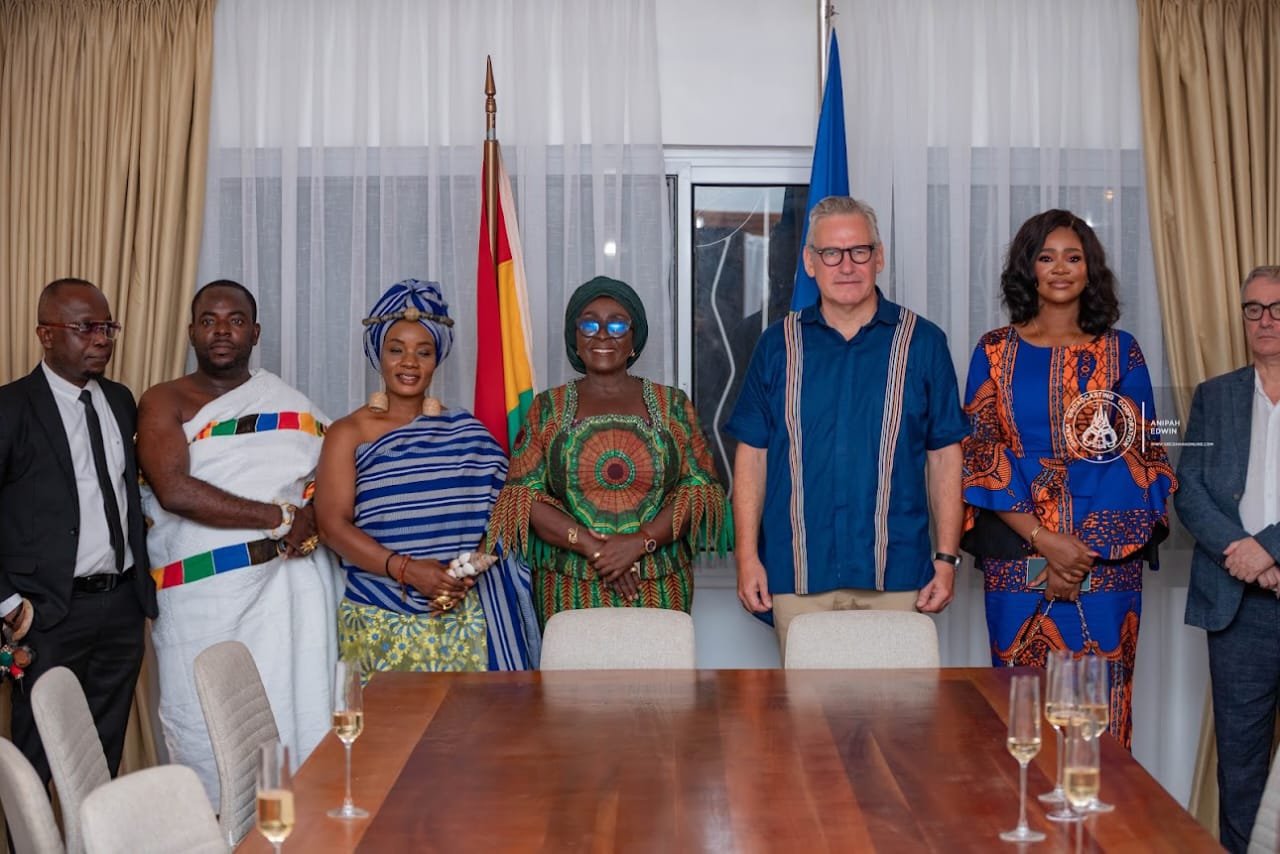
Minister for Tourism, Culture and Creative Arts, Abla Dzifa Gomashie, has officially opened the European Film Festival Ghana 2026 in Accra, describing film as “a formidable means of telling our stories, preserving our memories, shaping our identities and connecting people across cultures and borders.”
The launch, held on Monday, October 5, 2026, brought together government officials, diplomats, filmmakers and creative industry stakeholders under the theme “Peace, Tolerance and Inclusivity” — a theme the Minister described as timely “not only for our country and the European Union, but for the world.”
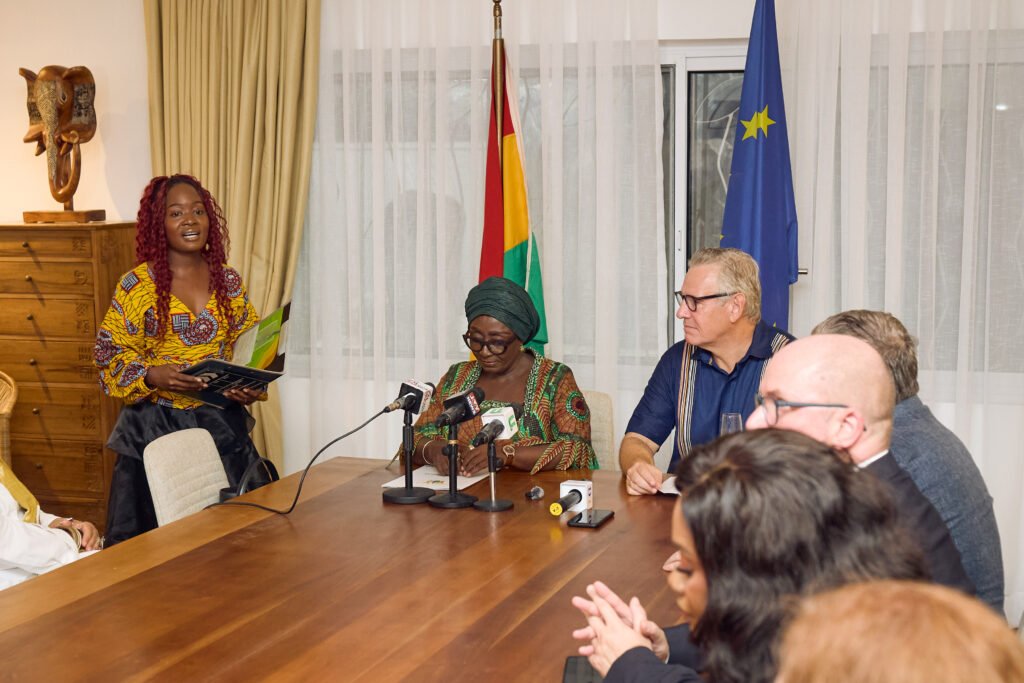
“The world needs to feel a sense of peace and tolerance. There’s too much going on in our world that is shaking the foundations that we’ve all known, which gives us comfort to do what we do as creatives,” she said.
Minister Gomashie expressed sincere appreciation to the Delegation of the European Union to Ghana for organising the festival and for its continued interest and confidence in Ghana’s film and creative industries.
Reflecting on the power of cinema, she recalled watching The Cosby Show as a child, noting that the series was created to project exemplary Black family role models in America and ultimately “changed a lot in the black communities.”
She added, with a touch of humour, that watching films where “America wins every war” shaped perceptions — until people actually visited the country. “That’s the power of film,” she said.
The Minister welcomed the deepening cultural and creative cooperation between Ghana and the European Union under the leadership of President John Dramani Mahama, citing opportunities for co-productions, capacity building, knowledge exchange, technology transfer and greater access to international markets for Ghanaian creative works.
“We are not in short supply of talent. What we are in short supply of are opportunities for these talents to be shared with the world,” she said, expressing gratitude to the EU for creating such platforms.
She also showcased a copy of Ghana’s revised cultural policy, developed with EU support, describing it as “an important framework for strengthening Ghana’s cultural sector and positioning culture and creativity more firmly within our national development agenda.” Under the Sankofa II project, the EU has further committed support towards the national sensitisation and dissemination of the policy — an effort the Minister said should allow every Ghanaian to “buy into the vision.”
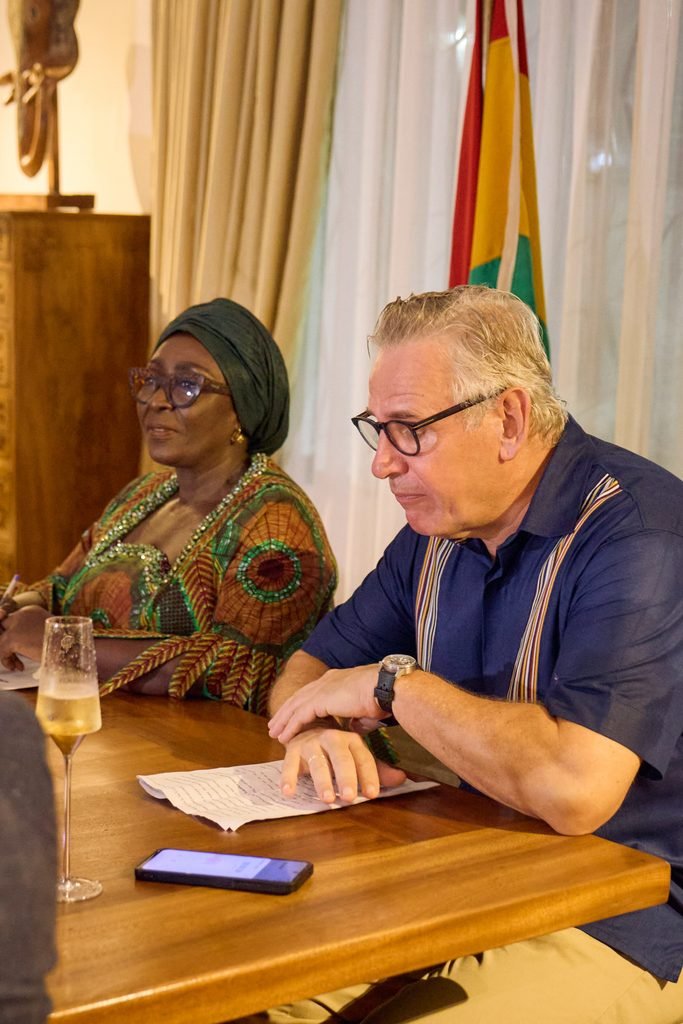
Touching on financing, Gomashie revealed that government has provided seed money of $20 million each for the National Film Authority (NFA) and the Creative Arts Agency, while acknowledging the need for more.
“Perhaps $20 million for the National Film Authority and $20 million for the Creative Arts Agency may not be enough, but these are seed money. Our responsibility is to go out there and find some more… so that we can reach the over 100 people who are applying,” she said, adding that applications mistakenly sent to her Ministry had highlighted gaps in public awareness of the Fund.
Her remarks echoed those of NFA Chief Executive Kafui Danku-Pitcher, who disclosed that the first call for applications to the Film Development Fund closes in a few days and has attracted over 100 applications from film businesses nationwide, together requesting GHS 95 million — far beyond the Fund’s current size.
“This is not an oversupply of hope, but it shows a measure of how much talent is awaiting funding,” she said.
Declaring the festival officially open, the Minister expressed the hope that the films screened would remind audiences that “although our cultures may be different in many ways, our capacity and ability to dream, create, tell stories and connect with one another is universal.”
Minister Gomashie invoked the old adage: “Until the lion learns to tell its own story, the tale of the hunt will always glorify the hunter.”
“Long live Ghana–EU friendship and cooperation. Long live Ghana’s creative industries,” she declared
Danku-Pitcher also announced the Cinema Train initiative, designed to take film beyond traditional cinema spaces to communities across Ghana.
“The Cinema Train is about access — ensuring that geography or the absence of a conventional cinema does not determine whether a Ghanaian gets to experience a Ghanaian on screen,” she explained, directing the public to cinematrain.com. She further recommended that the next edition of the EU Film Festival be hosted on the platform.
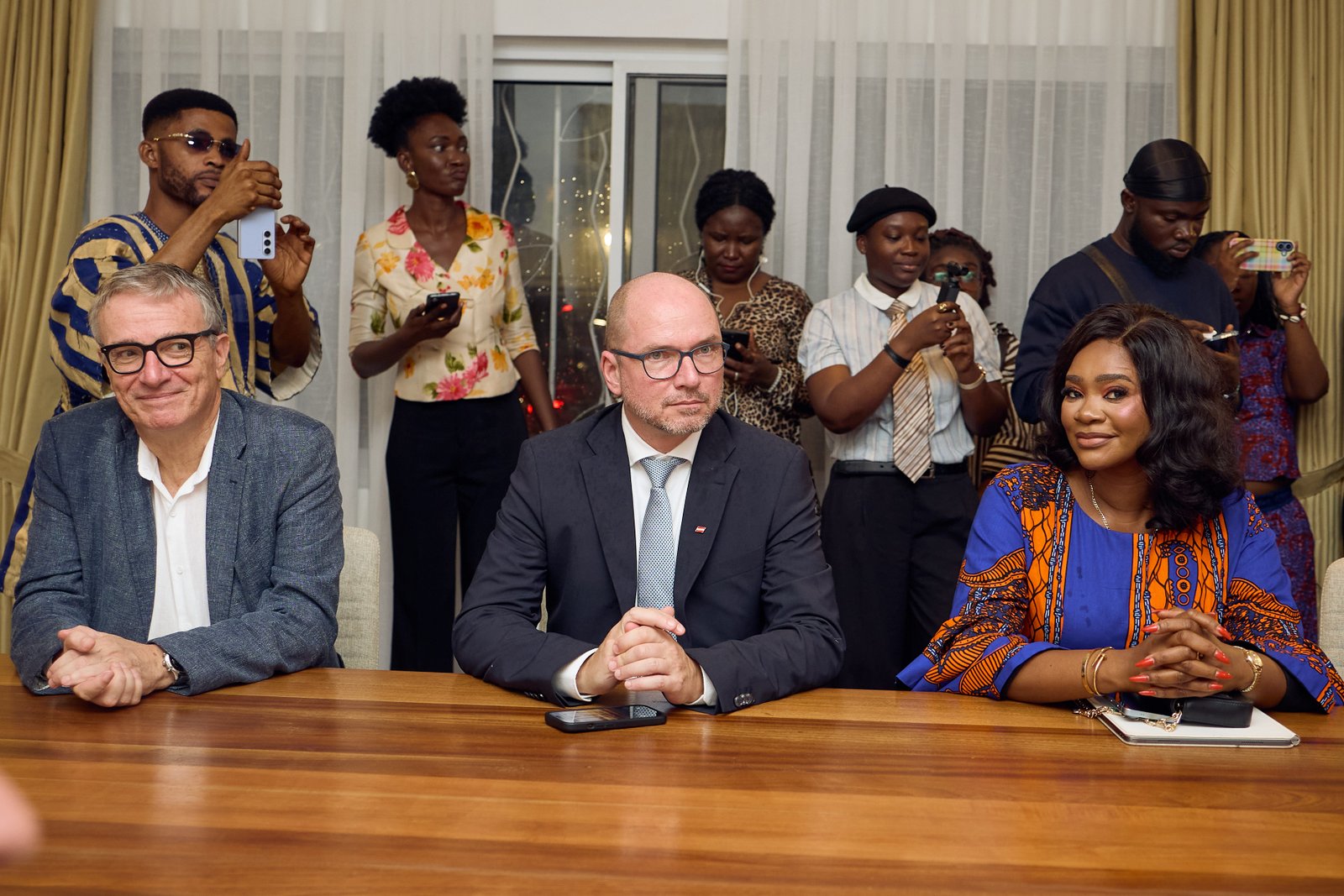
EU Ambassador to Ghana, Rune Skinnebach, said the festival opens “a week dedicated to storytelling,” stressing cinema’s power to allow audiences “to see the world through someone else’s eyes.”
“This year’s festival theme — Peace, Tolerance and Inclusivity — these are not just randomly selected topics. They are values that matter enormously in the world we live in today,” he said.
The Ambassador emphasised that culture “is not a luxury” but a vehicle that should be accessible to all, noting that through initiatives such as Sankofa II and the Africa–Europe Partnerships for Culture, the EU continues to support Ghanaian artists and creative professionals, including in cinema and animation.
“Europe is not one story. Ghana is not one story. And humanity certainly isn’t one story,” he added.
Festival Director Esiawonam Adisenu said it felt “particularly special” for the festival to return after five years, describing it as “a space where Ghanaian and European stories can meet, where filmmakers can meet audiences and where ideas can travel across borders.”
This year’s edition features 21 films from Ghana and Europe, screening at partner venues including the Goethe-Institute, Alliance Française, the Austrian Embassy and the British Council. From October 6 to 10, the festival will also host masterclasses, conversations and industry sessions with filmmakers, producers and creative professionals.
Urging Ghanaian filmmakers to tell their stories “boldly, authentically, and in ways that speak to Ghanaian realities,”
The festival’s opening night was to feature two films from very different worlds: the Ghanaian short Rule of Thumb, followed by Mr Nobody Against Putin from Denmark and the Czech Republic. But this did not happen because there was heavy rain during the night.
.By Gifty Boateng