

World’s Leading Democracy Reaffirms: Free Speech Does Not Protect Criminal Threats
By Stanley Assor
The United States, widely regarded as one of the world’s most established democracies with some of the strongest constitutional protections for freedom of expression, has demonstrated in dramatic fashion that the right to free speech is not synonymous with the right to be a criminal motormouth.
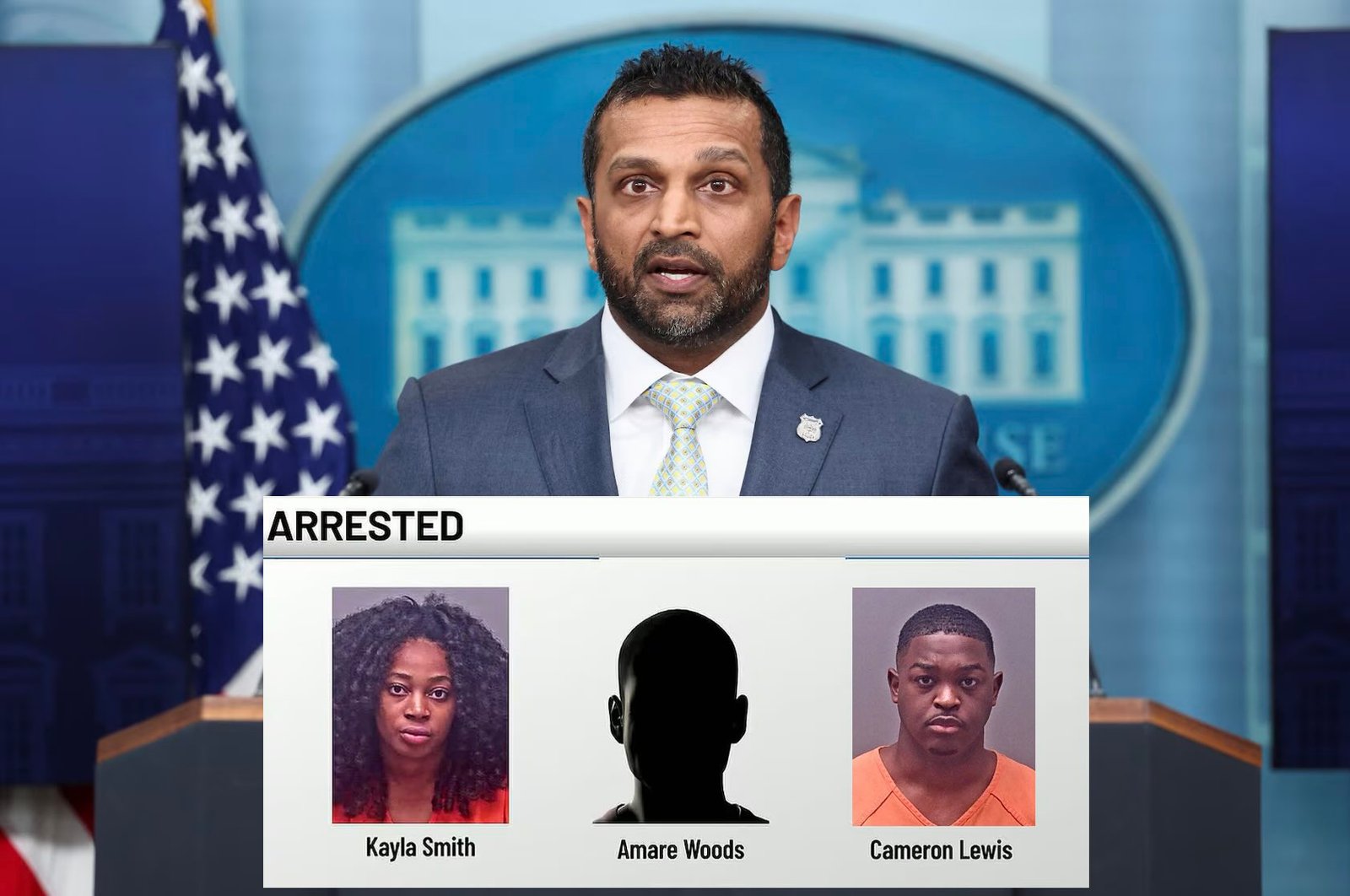
Three university students have been arrested and federally charged in the United States after allegedly making threatening communications directed at President Donald Trump ahead of his appearance at a rally in Mobile, Alabama.
The arrests by the Federal Bureau of Investigation (FBI), working with the US Secret Service and several other law-enforcement agencies, provide a striking contrast to the continuing controversy in Ghana over Barbara Asantewaa Kodua, popularly known as “Ghana Jollof,” who has been declared wanted by the Ghana Police Service but is believed to be in the United Kingdom.
The FBI announced on October 2 that its Mobile Division, in coordination with the US Secret Service, the US Attorney’s Office, the University of South Alabama Police Department, Mobile Police Department, Saraland Police Department and Alabama Fusion Center, had arrested three individuals over allegedly threatening communications directed at the US President.
The arrests came ahead of Trump’s scheduled appearance at the University of South Alabama.
The three students Amare Jemal Woods, Cameron Lamark Lewis and Kayla Leaann Smith are alleged to have made separate social-media posts that authorities considered sufficiently serious to warrant federal intervention.
· Woods, an 18-year-old aerospace engineering student, allegedly posted words interpreted as a threat against President Trump.
· Lewis allegedly made references to the shooting of conservative activist Charlie Kirk at Utah Valley University and another shooting incident.
· Smith, who is studying to become an elementary-school teacher, allegedly posted words suggesting that an opportunity should be seized, accompanied by an image appearing to mimic someone holding a firearm.
The Significance
The significance of the case is not simply that three students made disturbing social-media posts. It is that the American justice system did not dismiss the allegations on the grounds that the students were young, university students, politically motivated, or merely exercising their right to free expression.
The allegations were investigated, after which the students were arrested and formally slapped with federal charges, paving the way for the case to be determined through the American judicial process.
And herein lies the big lesson for Ghana in even the world’s leading democracy, threats, especially those made to the murderous extreme, are not absolved or deodorised by the right to free expression.
The Ghana Jollof Controversy
It is against this background that the continuing Ghana Jollof controversy assumes particular significance.
The Ghana Police Service has declared Barbara Asantewaa Kodua, the woman it identifies as the operator of the “Ghana Jollof” TikTok account, wanted in connection with allegations involving incitement to violence and the publication and circulation of false information.
A vulgar motormouth, Kodua cowardly hid behind anonymity and insulted all persons she disliked, eventually careening into threatening to have President Mahama and his family members poisoned.
Kodua is also on record to have claimed falsely that a coup d’état had occurred in Ghana.
The Police say Kodua is believed to be in the United Kingdom and have appealed to the public for information concerning her whereabouts.
According to the Police, investigations into the account found that it had been used to publish offensive and inciting material and videos containing information that investigators considered capable of causing fear, panic and violence.
Links to Salomey Awiti Bafoh
Police investigators have traced links between Kodua and Salomey Awiti Bafoh, a nurse who was charged with abetment of the publication of false news.
The prosecution alleges that Bafoh helped disseminate videos produced by Ghana Jollof by recruiting others to circulate them across social-media platforms. Police have also said their investigations uncovered financial transactions between the two women.
Bafor has pleaded not guilty.
She was subsequently granted GH¢100,000 bail with two sureties and ordered to report periodically to the police while the case continues.
The Extradition Challenge
The central difficulty for Ghanaian law enforcement is that the person at the centre of the investigation is believed to be outside the country.
The Police have identified Kodua as the person behind the account and declared her wanted.
Kodua, for her part, has publicly challenged the Ghanaian authorities to extradite her from the United Kingdom, reportedly insisting that the Ghanaian Government cannot do so.
Meanwhile, the opposition New Patriotic Party (NPP), which is said to have leading members bankrolling Kodua’s vulgar troll job, has been defending Ghana Jollof. According to the NPP, pursuing people over offensive or threatening political speech could amount to the abuse of state power or an attack on Ghana’s democratic freedoms.
That claim has been wobbly since the party first made it. And then the world’s leading democracy, the US, makes these three arrests affirming that freedom of speech does not mean you can threaten people like a lunatic and get away with it.
The three Alabama students provide a particularly powerful illustration. The FBI did not announce that America had suspended freedom of expression; it announced that three people had been arrested over alleged threatening communications directed at the President. And now, the makers of the threat will face prosecution in court.