

Finance Minister says every Cedi of fiscal space must create jobs, replace imports and build lasting value
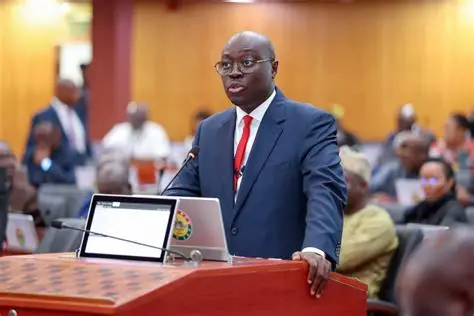
Minister for Finance Dr. Cassiel Ato Baah Forson on Thursday presented the 2027 Budget Statement to Parliament under the theme “New Economy, New Ghana — Jobs and Prosperity,” opening with an unflinching account of Ghana’s brush with economic collapse and a pledge that the sacrifices of the Ghanaian people will not be wasted.
The minister traced the crisis back to 2022, when Ghana could no longer afford to repay its debt.
By the end of that year, inflation had surged to 54.1 per cent, the primary balance had sunk to a deficit of 4.3 per cent of GDP, and the International Monetary Fund’s (IMF’s) debt sustainability analysis had put public debt above 100 per cent of GDP. Gross international reserves had fallen to less than three weeks of import cover.
“These numbers describe the scale of the economic meltdown, but do not fully capture the human cost,” Dr. Forson told the House. “The crisis affected every household and business. It made food too expensive to buy.
It raised transport fares and the cost of medicine. It diminished pensions and savings. And it collapsed businesses through high interest rates and rapid cedi depreciation.”
Families, he said, were forced into impossible choices — postponing education, housing and healthcare — while the debt restructuring imposed painful hardships on households, pension funds, banks, businesses and investors.
“The Ghanaian people paid a heavy price. We owe them something greater than recovery,” he declared. “We owe them a country that honours their sacrifices and ensures that the hardships they have endured do not become their children’s inheritance.”
From meltdown to stability
Dr. Forson said the government moved swiftly in 2025 to restore order, credibility and economic stability — and the results are visible in the numbers. By the end of 2025, inflation had fallen from 23.8 per cent to 5.4 per cent. The primary balance swung from a deficit of 4.1 per cent of GDP to a surplus of 2.5 per cent. Public debt dropped to 44.7 per cent of GDP, while gross international reserves rose to 5.7 months of import cover.
These gains, he noted, give households greater certainty, allow businesses to plan, and create room for Ghanaians to think beyond the next crisis.
“No statistic can refund the years families lost to instability,” he said. “Their sacrifices will be honoured when restored stability becomes production, jobs, rising incomes and opportunities.”
A warning from history
But the minister cautioned that Ghana has often created fiscal space and then failed to direct it with sufficient purpose. Scarce resources were spread thinly across competing demands, projects multiplied without rigorous appraisal, and short-term consumption crowded out investment in productive capacity.
“We repaired the public finances, but we did not use that recovery to alter the structure of our economy,” he said. “The productive base remained too narrow to carry the obligations of the state, and the cycle began again.”
Fiscal space, he insisted, is a national asset — earned through the painful sacrifice, the taxes and the discipline of the Ghanaian people — and government has a moral obligation to use it wisely.
By Gifty Boateng