

By Philip Antoh
A recent high-level delegation to Ukraine has unearthed the true, sobering scale of Ghanaian involvement in the war against Russia. Official figures provided by Ukrainian intelligence to Foreign Minister Samuel Okudzeto Ablakwa confirm that at least 272 Ghanaian nationals have participated in the conflict since Russia’s full-scale invasion in 2022. Of these, 55 have been killed and two are being held as prisoners of war in Russia.
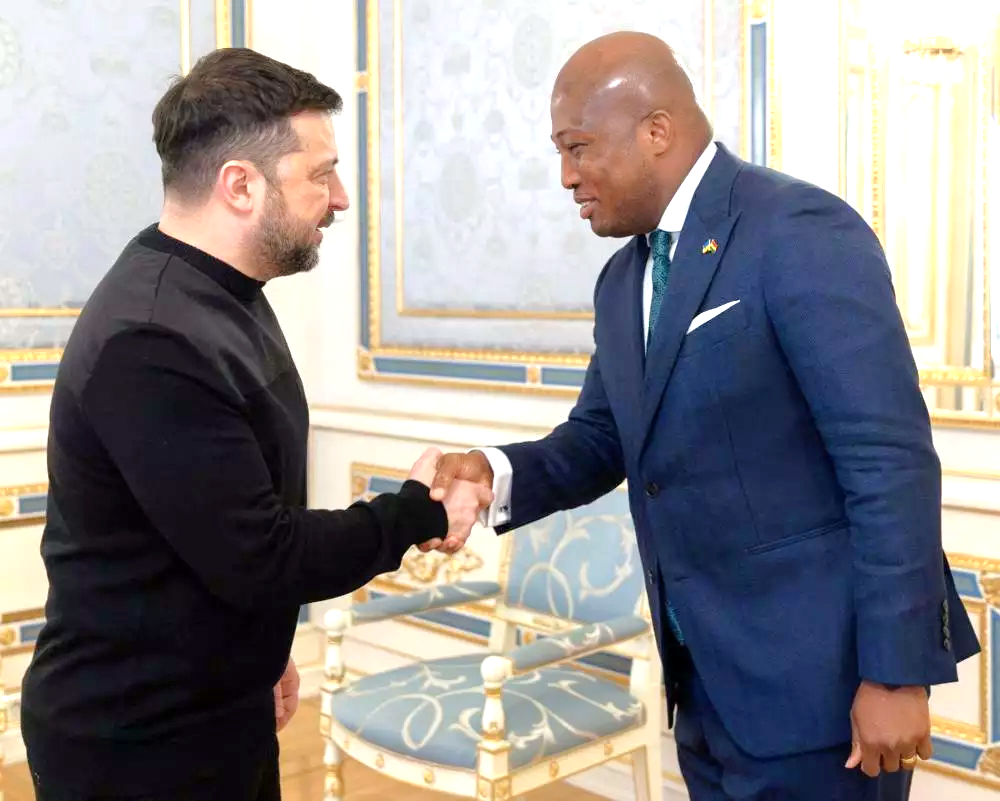
The statistics, shared during Ablakwa’s working visit to Kyiv, lay bare a humanitarian crisis that has been quietly unfolding far from the shores of the Volta River. The primary objective of the mission was to negotiate the release of the two captured men, whose fate has become a pressing concern for the administration of President John Dramani Mahama.
Ablakwa expressed profound shock at the findings. The numbers point to a steady flow of young Ghanaians who have taken informal, often perilous, routes to the war zone. Many are understood to have been lured by the promise of lucrative contracts or a pathway to a better life in Europe, only to be swallowed by the grinding reality of trench warfare in eastern Europe.
Behind the statistics are scores of grieving families across Ghana, from urban centres like Accra and Kumasi to rural communities, many of whom have received little to no official communication about the fate of their relatives.
The Foreign Minister stated that the government would now intensify efforts to dismantle the transnational trafficking networks responsible for recruiting and transporting these men. These shadowy operations, which exploit economic desperation, present a complex challenge requiring close collaboration with European and Ukrainian law enforcement.
There is, however, a glimmer of hope for the two captured men. Ukrainian President Volodymyr Zelenskyy has indicated a willingness to release them on humanitarian grounds, a gesture that would pave the way for their repatriation.
The men themselves, reportedly expressing remorse and a desire to warn others against following their path, have become unwitting symbols of the war’s global reach.
The visit was not solely focused on the grim task of casualty accounting. Kyiv and Accra, which have maintained diplomatic ties since 1993, used the opportunity to explore deeper bilateral cooperation.
Discussions touched on agriculture, education, and technology, but the most sensitive area of potential collaboration is defence and intelligence. Ukraine’s extensive combat intelligence on Russian tactics and the movement of foreign fighters could prove invaluable to Ghanaian security agencies grappling with their own regional threats.
The figures provided by Ukraine also highlight a broader continental tragedy. Officials in Kyiv revealed that, as of February 2026, approximately 1,780 Africans from 36 countries have participated in the conflict, with several hundred fatalities.
For Ghana, the immediate priority remains clear: bring the two prisoners home and sever the criminal pipelines that continue to traffic its youth into a war that is not their own.