

A former trade minister threatens legal action after being named in the Auditor-General’s special report on the One District One Factory programme. But the banks aren’t confirming the payments either.
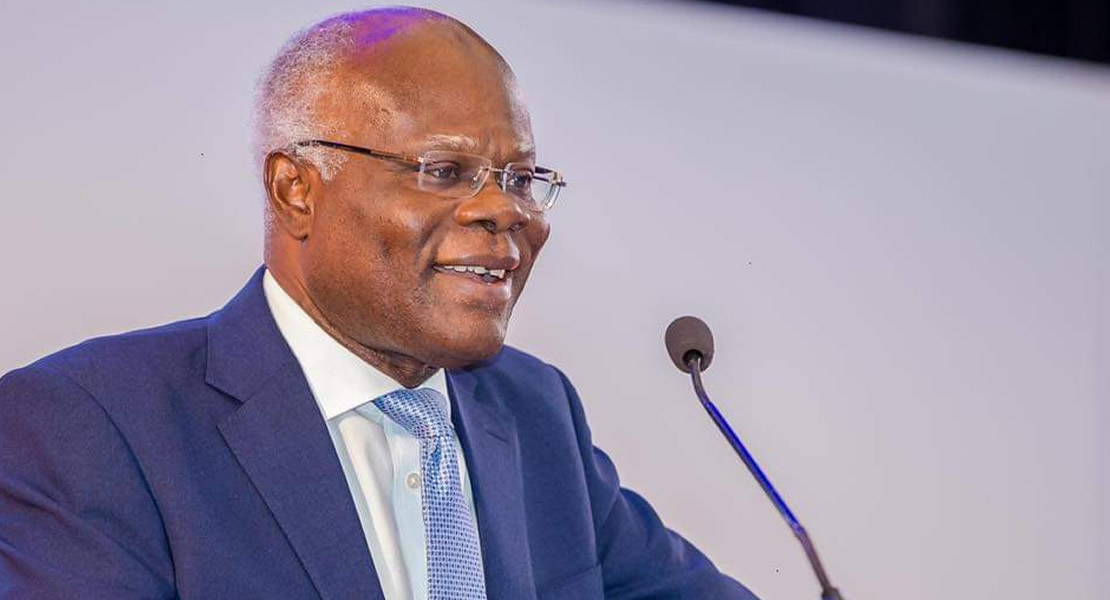
K.T. Hammond, the combative former Trade Minister, is preparing for a legal showdown with the Auditor-General and the Finance Minister.
At stake is his reputation and the credibility of the special audit into the flagship One District One Factory (1D1F) programme.
The report, published in 2024, flagged approximately GH¢90.4 million in unpaid interest claims that participating banks could not confirm.
Auditors sent confirmation requests to 15 partner banks; only seven responded. Of GH¢109 million submitted for payment, just GH¢18 million was verified and approved.
The remainder was disallowed due to insufficient supporting evidence.
More damaging still was a specific query involving Standard Chartered Bank.
Records suggested GH¢10.5 million had been paid to the bank under 1D1F, but the bank denied receiving the funds.
The account number provided, auditors noted, does not conform to the bank’s standard format and appears not to exist.
Hammond, who served as Trade Minister under the Akufo-Addo administration, is named in connection with these discrepancies. He is furious and making no secret of it.
In interviews on Asempa FM and elsewhere, Hammond has mounted a defence that blends legal threat with procedural grievance.
He insists he was never contacted during the special audit, despite the Ministry he once headed being the subject of scrutiny.
No request for clarification, no opportunity to explain the signature on those cheques.
“That is not how accountability works,” Hammond argues.
“You don’t publish a report naming a former minister without first allowing him to respond.”
He points out that as Minister, his role was limited to signing off on disbursements based on recommendations from technocrats. The funds, he maintains, never passed through his personal office.
The former Adansi Asokwa MP, who served 24 years in Parliament, is leaning heavily on his unblemished public record.
He has never been associated with corruption allegations, and he is banking on that history to counter what he calls a “false and defamatory” narrative.
Hammond’s legal threat is aimed at both Auditor-General Johnson Akuamoah Asiedu and Finance Minister Cassiel Ato Forson. But the politics are complicated.
Forson’s ministry received the report and, by parliamentary convention, is responsible for its publication.
Hammond is effectively threatening to sue the government’s chief financial watchdog and the minister tasked with acting on his findings.
Yet the Auditor-General’s report has vulnerabilities of its own. The non-response from eight of 15 banks weakens the evidential base.
If Standard Chartered denies knowledge of the account and the transaction, auditors should have pursued that trail further before publishing.
Hammond’s lawyers will likely argue that the report contains unverified allegations presented as findings.
The former minister also claims to have received calls alleging he had been arrested over the matter rumours he denies but which suggest the political damage is already spreading.
In Accra’s gossip-rich environment, an audit query can quickly morph into a conviction in the court of public opinion.
The 1D1F legacy
Behind the personal drama lies a bigger story. The 1D1F programme was the previous government’s signature industrialisation initiative, designed to establish factories in every district. It was politically popular but financially opaque from the start.
Private sector partners were meant to drive implementation, with government providing subsidised loans and interest support through participating banks.
The Auditor-General’s report suggests that opacity has not dissipated.
Unconfirmed interest claims, missing bank confirmations, and questionable account numbers point to systemic weaknesses in programme management.
Whether those weaknesses amount to embezzlement the term Hammond is contesting remains unproven. But they certainly indicate poor record-keeping and weak oversight.
For the Mahama administration, which inherited these programmes, the audit provides political cover to review or restructure 1D1F commitments.
But it also creates a dilemma: pursuing alleged malfeasance under the previous government risks being seen as a witch-hunt, especially against a veteran politician like Hammond who has cross-party respect.
The court option
Hammond is demanding a retraction and apology. If neither comes, he has promised to meet both Forson and Asiedu in court.
Defamation suits against state institutions are difficult to win public interest defences are broad but they force disclosure of evidence and can embarrass defendants if their files are not in order.
The Auditor-General’s office will be confident in its methodology, but the bank non-responses are a weakness.
Forson’s ministry will argue it merely published a statutory report. Hammond will argue they endorsed a flawed document.
Either way, the case is now personal. And in Ghana’s political theatre, personal fights have a way of overshadowing the systemic issues that prompted them.
The GH¢90 million question where did the money go, and who is responsible risks being lost in the clash of personalities.
For now, Hammond is banking on his reputation and the procedural gaps in the audit.
Whether that is enough to clear his name or force a retraction depends on whether the banks eventually respond, and whether their answers support the Auditor-General’s findings or undermine them.