

By Godson Bill Ocloo
At the Cape Coast Castle, the air is heavy with memory. Visitors walk slowly through narrow corridors, pausing at the “Door of No Return” a place where millions of Africans were forced onto ships, never to return home. For many, it is history. But for Africa, it is not just history. It is something that still echoes in our present realities.
Today, that history has taken a significant turn. Following the adoption of a United Nations resolution on reparations an effort strongly advanced by Ghana under the leadership of H.E John Dramani Mahama, President of the Republic of Ghana.
The global conversation has shifted from acknowledgment to action. For the first time in a long while, the question is no longer whether justice should be pursued. It is how it will be delivered. As someone who studies human security, I see this moment not just as a diplomatic milestone, but as a potential turning point in addressing the structural vulnerabilities that continue to shape life across Africa.
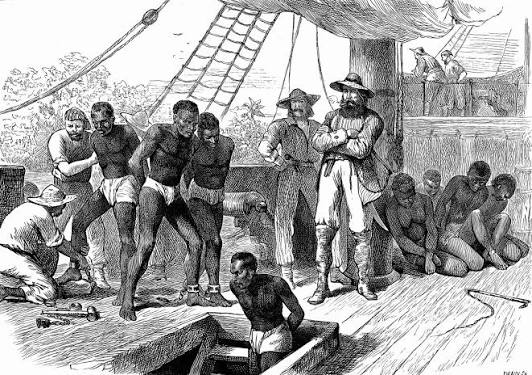
The legacy of the Transatlantic Slave Trade is not confined to history books, it lives on in economic fragility, institutional gaps, and limited opportunities for millions. Between 12 and 15 million Africans were forcibly taken across the Atlantic. Millions never survived the voyage. Entire communities were dismantled. Africa lost not only people, but the very foundations of its long-term development, its labour force, its internal systems, and its natural growth trajectory.
At the same time, wealth generated from enslaved labour contributed significantly to the rise of powerful economies in Europe and the Americas. That imbalance did not disappear with abolition; it evolved into the inequalities that define much of today’s global economic structure. This is why reparations must be properly understood. They are not about charity. They are not about reopening old wounds. They are about correcting a historical imbalance that continues to produce modern consequences.
With the UN resolution now adopted, the conversation must move decisively from principle to practice. What matters now is not rhetoric, but implementation. How will reparations be structured? Who will benefit? And how will these efforts translate into real improvements in people’s lives? Meaningful reparations must go beyond symbolic gestures. They should include strategic investments in infrastructure, stronger education and healthcare systems, technology transfer to support industrialisation, and sustainable debt relief.
Cultural restitution particularly the return of stolen African artifacts must also form part of this process. These are not acts of generosity. They are practical steps toward restoring balance where imbalance was deliberately created. At the United Nations, H.E John Dramani Mahama has helped position Ghana and by extension Africa not as a passive observer, but as a central voice in shaping this global agenda. Working alongside partners such as Caribbean community (CARICOM), this effort reflects a growing determination to move the issue of reparative justice from the margins into the core of international policy discourse.
But this moment also demands clarity and responsibility on all sides. For countries that benefited from slavery, the adoption of the resolution must mark the beginning of genuine commitment, not symbolic endorsement. Historical responsibility cannot be acknowledged in words and ignored in action.
For Africa, the responsibility is equally significant. The continent must approach this moment with unity, strategic clarity, and strong institutional frameworks. Without transparency and accountability, even the most well-intentioned reparations risk failing to deliver meaningful change.
This is not just about what the world owes Africa. It is about what Africa does with this opportunity. For many Africans, especially the youth, this conversation may still feel distant. But in reality, it is deeply connected to everyday life: the availability of jobs, the resilience of economies, the cost of living, and access to quality education and healthcare.
These are not abstract policy issues. They are lived realities shaped, in part, by historical systems that were never fully repaired. The adoption of the UN resolution is therefore not an endpoint. It is a beginning, a test of whether global justice can move beyond acknowledgment into measurable action. As President John Dramani Mahama has consistently emphasized, justice must be meaningful. It must be felt in the lives of people, not just recorded in diplomatic agreements.
Reparations are not about rewriting history. They are about confronting its consequences and building a more balanced future. Because if there is one lesson history continues to teach, it is this: injustice that is left unaddressed does not fade away. It adapts, persists, and quietly shapes the world we live in.This moment, therefore, must not be missed.

The writer is a Human Security Analyst and Executive Director, Africa Centre for Human Security and Emergency Management (ACHSEM)