

By Nelson Ayivor
Life does not always follow the script we imagine. For many, the belief that goodness should attract goodness is deeply ingrained—a moral symmetry where kindness yields reward and integrity guarantees protection.
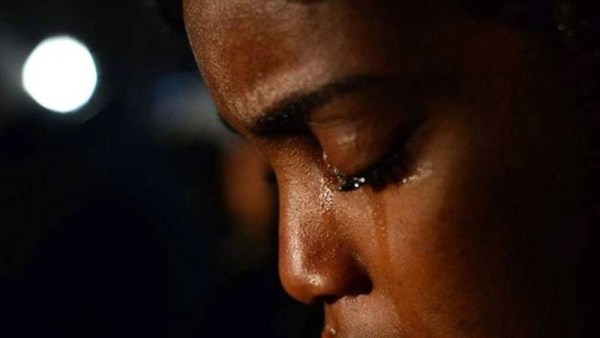
Yet reality often disrupts this expectation. Illness strikes the disciplined, loss visits the generous, and misfortune befalls those who seem least deserving. The unsettling question emerges: Why do bad things happen to good people?
This question is neither new nor confined to any one culture or era. It echoes through philosophy, religion, and literature. In the Book of Job, a righteous man endures immense suffering not as punishment, but as part of a deeper, mysterious unfolding.
Similarly, Harold S. Kushner, in his influential work When Bad Things Happen to Good People, confronts the painful reality that suffering is not always a consequence of wrongdoing. Instead, he suggests that adversity is often an inherent part of the human condition.
The Illusion of Fairness
From childhood, we are taught a moral equation: do good, and good will follow. While this belief fosters ethical behavior, it can also create a false sense of security. When tragedy occurs, it shakes not only our circumstances but also our worldview. We begin to question justice, faith, and even our own worth.
However, life operates on principles far more complex than simple moral arithmetic. Natural events, systemic inequalities, and sheer randomness play roles that transcend personal virtue. Understanding this does not eliminate pain, but it reframes it. Suffering is not always a verdict—it is often an experience.
The Hidden Power Within Adversity
Paradoxically, some of the most profound human growth emerges from hardship. Adversity strips away illusions, forcing individuals to confront their core identity. It is in these moments that resilience is forged.
Consider the philosophy of Viktor Frankl, who survived the horrors of Nazi concentration camps. In his seminal book Man’s Search for Meaning, Frankl argues that while we cannot always control what happens to us, we retain the power to choose our response. Meaning, he asserts, can be found even in suffering.
This perspective transforms pain from a purely destructive force into a potential catalyst for growth. It encourages individuals to ask not “Why me?” but “What now?”
Compassion: The Bridge Between Pain and Purpose
One of the most powerful outcomes of suffering is empathy. Those who have endured hardship often develop a deeper sensitivity to the struggles of others. Pain, in this sense, becomes a bridge—connecting individuals through shared vulnerability.
Communities are often strengthened in the aftermath of tragedy. Acts of kindness, solidarity, and support emerge in response to suffering, revealing the best of human nature. In this way, even the darkest moments can give rise to light.
Faith, Doubt, and the Search for Meaning
For many, suffering triggers a spiritual reckoning. Faith may be challenged, redefined, or even strengthened. Some find solace in the belief that trials serve a higher purpose, while others embrace uncertainty and focus on living meaningfully despite unanswered questions.
The tension between faith and doubt is not a weakness—it is a reflection of deep engagement with life’s complexities. It is through this struggle that many discover a more mature, resilient belief system.
Moving Forward: Choosing Strength Over Despair
When bad things happen to good people, there is no simple explanation that can fully satisfy the human heart. However, there are choices—how to respond, how to grow, and how to continue.
Resilience is not about denying pain; it is about enduring it with courage. It is about finding purpose in the aftermath, even when the reasons remain unclear. It is about refusing to let suffering define one’s identity.
In the end, the measure of a person is not determined by the absence of hardship, but by their response to it. Good people may face bad circumstances, but within them lies the capacity to rise, to inspire, and to transform pain into purpose.
Conclusion
The reality that bad things happen to good people is one of life’s most difficult truths. Yet within this truth lies an equally powerful one: adversity does not have the final word. Through resilience, compassion, and the search for meaning, individuals can transcend their circumstances.
Suffering may be inevitable, but despair is not. And sometimes, it is in the crucible of life’s hardest moments that the human spirit shines the brightest.
The writer is Associate Editor at The New Republic. He enjoys writing on compelling topics in religion and spirituality and draws inspiration from his faith and life’s challenges.