

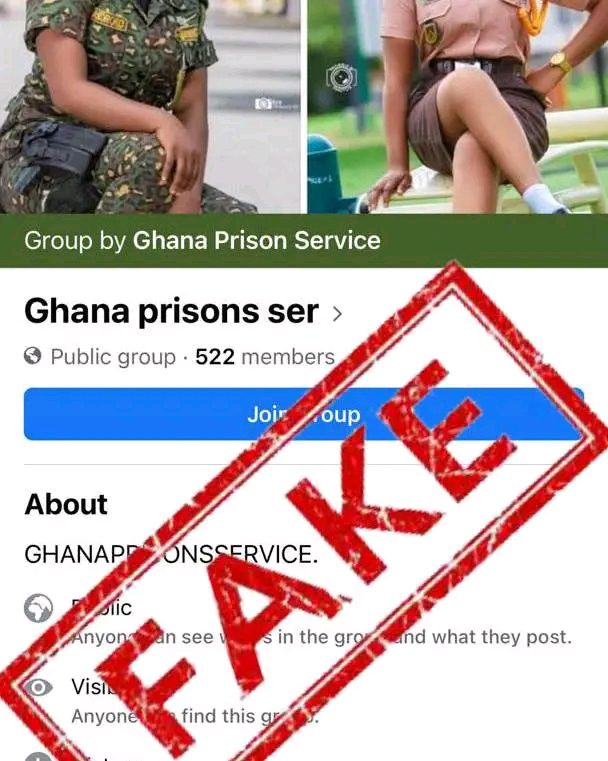
The Ghana Prisons Service has issued a strong public warning over a growing trend of impersonation scams involving individuals posing as prison officials on social media platforms to defraud unsuspecting members of the public.
The alert, contained in an official public disclaimer released by the Service’s Public Affairs Department, highlights a surge in fraudulent activities where scammers exploit the identities of senior officers, including the Director-General, to solicit money and sensitive personal information. Authorities say the development poses a serious risk to public trust and security.

The Service stressed that these impersonation schemes are entirely unauthorised and criminal in nature, urging Ghanaians to remain vigilant and avoid engaging with individuals or accounts that claim to represent the institution outside official channels.
Combating Scammers Operation Online
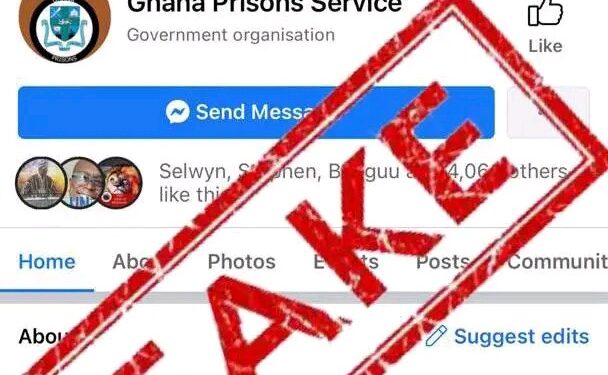
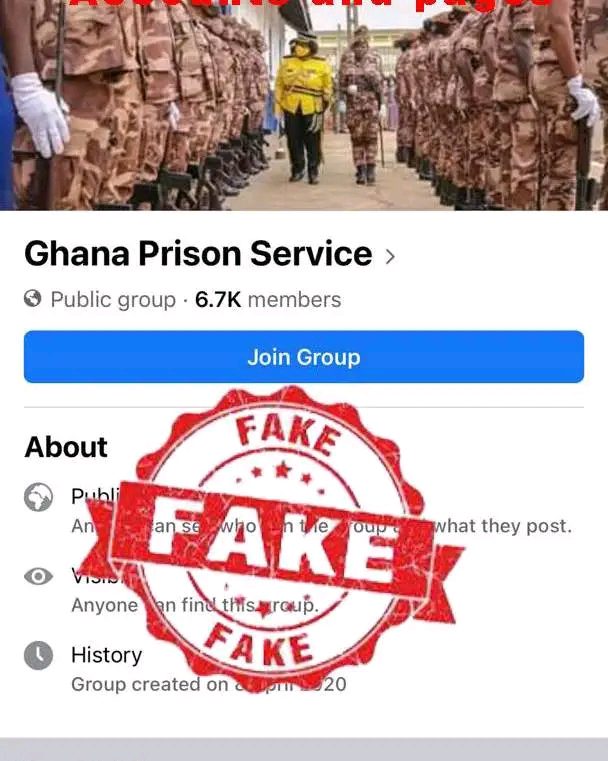
According to the statement, fraudsters have increasingly turned to platforms such as Facebook and other social media channels to create fake profiles using the names and images of officers of the Ghana Prisons Service. These impersonators then reach out to individuals under false pretences, often requesting payments, gifts, or confidential information.
Officials say the scammers typically exploit public interest in recruitment opportunities or official services, creating a false sense of urgency to pressure victims into compliance. In many cases, victims are convinced they are dealing with legitimate representatives of the Service.
This pattern reflects a broader trend of impersonation-related crimes across Ghana, where individuals pose as security personnel or officials of state institutions to extort money. Recent incidents have shown that such acts are not isolated, with authorities continuing to clamp down on similar schemes involving fake officers and fraudulent identities.
In response to the growing threat, the Ghana Prisons Service has made its position clear, outlining key points to guide the public and prevent further victimisation.
“The Service does not authorise any individual to solicit money, gifts, or personal information on its behalf through social media or unofficial channels.”
It further clarified that all recruitment processes and official engagements are conducted strictly through approved and publicly announced procedures. The Service reiterated that it does not demand payment at any stage of recruitment or for any official service rendered. These clarifications are intended to counter widespread misinformation and to reinforce the credibility of official communication channels.
Public Advised to Exercise Caution
The Service is urging the general public to take proactive steps to protect themselves from falling victim to such scams. Among the key recommendations is the need for vigilance when interacting with individuals claiming to represent the institution online.
Citizens have been advised to refrain from making payments or sharing personal details with unverified persons, regardless of how convincing the request may appear. Sensitive information such as identification details, financial data, or contact information should only be shared through trusted and official platforms.
Additionally, the public is encouraged to verify any claims or communications by contacting the Ghana Prisons Service directly through its official communication channels before taking any action.
To combat the growing menace, the Ghana Prisons Service has called on the public to report any suspicious activities to the nearest police station or through official Service channels. This, authorities say, will aid in investigations and help track down those responsible.
The Service confirmed that it is actively collaborating with the Ghana Police Service and other relevant security agencies to identify, arrest, and prosecute individuals involved in these fraudulent schemes.
“The Ghana Prisons Service will not be held responsible for any loss incurred through dealings with such imposters,” the statement cautioned, underscoring the importance of public awareness and caution.
Protecting Institutional Integrity and Spreading Awareness
Beyond the immediate financial risks, the impersonation schemes also threaten the integrity and reputation of state institutions. The Ghana Prisons Service noted that such activities undermine public confidence and can disrupt legitimate operations if not addressed swiftly.
In recent years, the Service has undertaken several initiatives aimed at strengthening professionalism, transparency, and public engagement, including reforms and partnerships designed to improve operations and public trust.
Officials say maintaining that trust requires both institutional vigilance and public cooperation, especially in an era where digital platforms are increasingly exploited for criminal purposes.
Calls for Public Awareness
The Ghana Prisons Service is appealing to all citizens to remain alert and informed, emphasising that awareness is one of the most effective tools in combating cyber-enabled fraud.
As impersonation scams continue to evolve, authorities stress that the public must adopt a cautious approach when dealing with unsolicited messages, particularly those involving financial transactions or sensitive information.
The Service reaffirmed its commitment to protecting the public and upholding the law, assuring that efforts are ongoing to bring perpetrators to justice and prevent future occurrences. For now, the message remains clear: verify, question, and report.