

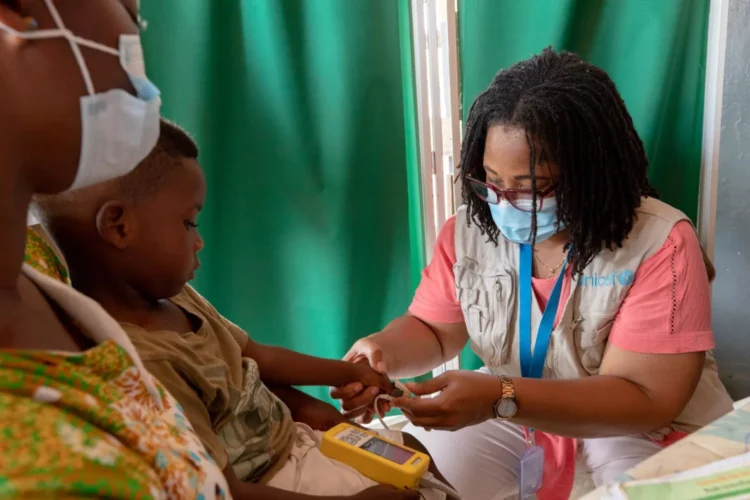
Dr. Sandra Kwarteng Owusu, a Paediatric Pulmonologist at the Komfo Anokye Teaching Hospital, has warned that Ghana faces an increased risk of disease outbreaks due to low childhood vaccination coverage across the country.
Speaking ahead of World Immunization Week, Dr. Owusu described Ghana’s estimated 56 percent full immunization coverage as inadequate and far below the level needed to ensure effective protection for children and communities.
According to her, the current vaccination rate means that nearly one out of every two children in the country is not fully vaccinated, leaving many vulnerable to preventable diseases such as pneumonia and measles.
“The 56 percent is not a good number; the 56 percent means one in every two children is fully vaccinated. That is not the ideal. We wish to have every child fully vaccinated on schedule. If we are not able to achieve that, then we want to be in the 90 percent where every child who is due for immunization receives it.”
Importance of Full Vaccination
Dr. Owusu stressed that vaccines only provide maximum protection when children receive all recommended doses according to Ghana’s Expanded Programme on Immunization schedule.
She explained that the pneumococcal conjugate vaccine, which protects children against pneumonia, requires three doses during infancy. However, many parents fail to complete the full schedule.
According to her, most caregivers ensure children receive the first vaccine dose at six weeks, popularly known as 40 days, but attendance begins to decline for the second and third doses.
“Sometimes, the first dose at 40 days, the mothers do well and they are taken. Then the second dose, the coverage drops, and then the third dose tends to be low.”

Dr. Owusu noted that incomplete vaccination weakens the country’s ability to control preventable diseases and increases the risk of outbreaks among children. She emphasized that all vaccines administered during infancy are critical to protecting children against serious illnesses and reducing childhood deaths.
Herd Immunity Remains Critical
The Paediatric Pulmonologist also highlighted the importance of herd immunity in protecting communities from infectious diseases. According to her, herd immunity occurs when a large majority of children within a population are vaccinated, reducing the ability of diseases to spread easily from one person to another.
“If your child receives it, my child receives it, and all other children receive it, we get a good benefit called herd immunity,” she explained. Dr. Owusu stated that vaccinated children indirectly help protect those who may not have received vaccines because of illness, access barriers, or other circumstances.
Since children interact regularly in schools, churches, homes, and playgrounds, high vaccination coverage creates what she described as a “circle of protection” around vulnerable children.
However, she warned that when large numbers of children remain unvaccinated, herd immunity weakens significantly and communities become exposed to outbreaks. “When herd immunity drops, it gives room for epidemics,” Dr. Owusu cautioned.
Measles Outbreak Serves as Warning
Dr. Owusu pointed to the measles outbreak recorded in northern Ghana after the COVID-19 pandemic as evidence of the dangers associated with declining vaccination rates.
According to her, disruptions caused by the pandemic prevented many children from receiving routine vaccines, including the measles vaccine, leading to increased vulnerability within several communities.
“A good example is that we had a measles outbreak soon after COVID-19 in the north; the reason was because of the disruptions. A lot of children had not received the measles vaccine.”
She explained that measles remains a serious disease that can lead to severe pneumonia and death among children if not prevented through vaccination. “Measles pneumonia can kill children very fast,” she stressed.
Dr. Owusu warned that outbreaks of vaccine preventable diseases not only threaten children’s lives but also place additional pressure on the healthcare system.
Call for Timely Immunization
Dr. Owusu urged parents and caregivers to ensure children receive vaccines according to schedule, beginning from birth and continuing throughout infancy.
She explained that children receive vaccines against tuberculosis shortly after birth, followed by additional immunizations at six weeks, ten weeks, fourteen weeks, and beyond.
According to her, adherence to the vaccination schedule remains essential for protecting children and safeguarding communities from outbreaks. “This is so crucial to save that child’s life and to save other children’s lives,” she stated.
She further stressed that Ghana must sustain strong herd immunity levels to avoid future outbreaks and preserve the progress made in reducing childhood illnesses over the years.
“Our good wish is that all children in infancy should receive the vaccine on schedule as prescribed,” Dr. Owusu added. Health experts continue to caution that unless vaccination coverage improves significantly, Ghana could face more outbreaks of preventable diseases in the coming years.