

By Leo Nelson
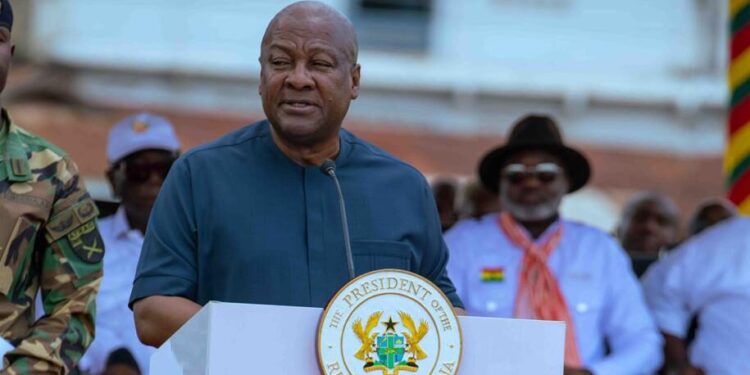
President John Mahama used the Africa Forward Summit in Nairobi (co-hosted by Kenya’s William Ruto and France’s Emmanuel Macron) to launch his most forceful pitch yet for African health self-reliance.
His vehicle: the Accra Reset, a Ghana-led initiative designed to wean the continent off imported pharmaceuticals and volatile aid flows.
“The test of Accra Reset is simple,” Mahama said. “Whatever you do, does it build sovereign capacity or does it deepen dependence?”
The numbers that sting
Mahama recited familiar but damning statistics: Africa bears 25 percent of the global disease burden but produces only 3 percent of its pharmaceuticals and barely 10 percent of its vaccines. The continent imports 70 percent of its medicines a dependency that Covid-19 exposed as a lethal vulnerability.
His diagnosis is not new. What is different is the political moment. With traditional donors tightening budgets and the US, UK, and EU redirecting resources inward, African leaders can no longer assume bailouts will come.
The debt trap
Mahama candidly acknowledged the elephant in the room: debt. “If you are spending 50 percent of your revenue to service debt, how much is left for education, health, agriculture?” he asked.
For Ghana which recently restructured its external debt and is still under an IMF programme the contradiction is acute. Mahama wants domestic resource mobilisation for health, but fiscal space is choked by creditors. The Accra Reset implicitly calls for parallel debt relief, though Mahama did not say so directly.
The President claimed the Africa Centres for Disease Control and other institutions are already aligned. He promised a continental compact to pool resources and mobilise private capital.
But sceptics note that similar pledges from the Abuja Declaration (15 percent of budgets to health) to the African Pharmaceutical Technology Foundation have yielded patchy results.
Mahama’s emphasis on “sovereign capacity” rather than isolationism is carefully calibrated. He wants partnerships, not aid dependency. Yet the fine print matters: who controls the intellectual property? Who sets the pricing for locally manufactured vaccines?
Missing from his Nairobi address was any mention of Ghana’s own domestic health financing gaps – the underfunded National Health Insurance Scheme, the strikes by health workers, or the brain drain of Ghanaian nurses to the UK and US.
Building continental sovereignty will ring hollow if Accra cannot first secure its own health workforce.
Also absent: a timeline or budget for the Accra Reset. The initiative remains a framework, not a plan.
Mahama has identified a genuine emergency. Africa’s health dependence is economically unsustainable and politically dangerous. The Accra Reset gives him a platform to lead continental debate and to position Ghana as a hub for vaccine manufacturing and pharmaceutical production.
But the gap between Nairobi rhetoric and Accra reality is wide. Without concrete financing, binding commitments from peers, and a resolution of the debt crisis, the Reset risks becoming another well-intentioned communiqué. Mahama knows this. His “simple test” will be applied to his own initiative first.