

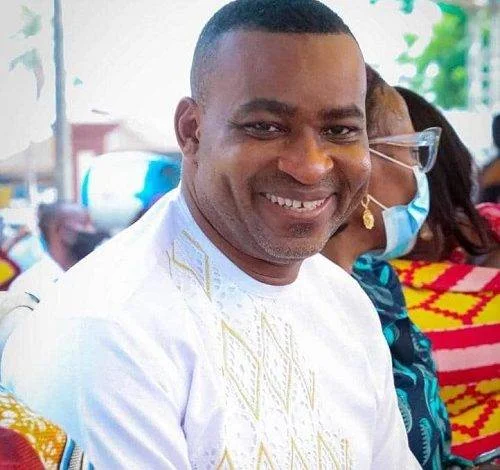
—NPP Kingpin Faces His Most Damning Test Yet
Front Desk Report
A confidential prosecutorial dossier filed at the High Court on 15 May 2026 has detonated what insiders describe as “one of the most brazen, politically‑protected financial schemes ever uncovered at a state bank.” The accused: Bernard Antwi‑Boasiako, better known as Wontumi, the Ashanti Regional NPP Chairman and one of the opposition party’s most powerful grassroots financiers.
The 19‑page charge sheet and accompanying brief of facts now in the custody of The New Republic paint a picture of a meticulously‑constructed deception that siphoned over GHC 30 million from the Ghana Export‑Import Bank (EXIM Bank) under the guise of a mega‑farm project that never existed.
“Investigations have established that the Accused Persons did not undertake the proposed farming activity. They bought no agricultural plant and machinery. They employed no one to work on the farm.”
According to the Attorney‑General’s filing, Wontumi acting as Managing Director of Wontumi Farms Ltd approached EXIM Bank in January 2018 seeking a GHC 19 million facility to develop a 100,000‑acre commercial farm. He submitted a board resolution allegedly authorising the loan application.
But investigators discovered a fatal flaw: “The resolution was passed on December 9, 2017 four clear days before A3 was incorporated.”
In other words, the company’s board approved a loan application before the company legally existed.
The proposal also claimed the farm would employ 6,000 families 38,000 people on just 2,500 hectares. EXIM Bank approved GHC 18.7 million, disbursing GHC 14.3 million before the scheme collapsed.
The most explosive revelation is the alleged forgery used to unlock an additional GHC 4 million.
In March 2018, Wontumi presented what he called a “receipt” showing the purchase of agricultural machinery. But investigators traced the document to KAS‑SAMA Enterprise, which had only issued a pro‑forma invoice after Wontumi made price enquiries.
“The inscription ‘Pro‑forma Invoice’ on the document was altered and replaced with ‘Receipt’.”
The company never heard from him again.
EXIM Bank, believing the machinery had been purchased, released more funds.
The Attorney‑General alleges that Wontumi withdrew huge sums from the company’s accounts for personal use, including investments in unrelated business ventures.
“A1 withdrew huge sums… and spent the same for his personal use, including investing such sums in other business enterprises.”
No land was acquired.
No machinery was bought.
No workers were hired.
No farm existed.
The charges go beyond fraud. Prosecutors say Wontumi knowingly took possession of proceeds of crime between 2018 and 2022, triggering a money laundering charge under Act 1044.
This widens the case from a simple loan fraud to a financial crime with criminal intent, carrying far heavier penalties.
Wontumi is not just any businessman he is one of the ruling party’s most influential regional chairmen, a financier, and a political mobiliser with deep grassroots networks. His arrest and arraignment threaten to fracture internal party alliances and expose long‑whispered concerns about the use of state‑backed credit to reward political loyalists.
Senior government insiders tell The New Republic that the Attorney‑General’s office, now under intense scrutiny for selective prosecutions, is using this case to demonstrate independence.
The second accused, Thomas Antwi‑Boasiako, is listed as “at large.”
He co‑signed the fraudulent board resolution and witnessed the loan acceptance. The company, Wontumi Farms Ltd, is the third accused.
The Attorney‑General alleges all three jointly caused EXIM Bank to lose over GHC 30 million.
“Intentionally cause the said Ghana Export‑Import Bank to lose over Thirty Million Ghana cedis.”
After years of failed recovery attempts, EXIM Bank referred the matter to the Economic and Organised Crime Office (EOCO) in March 2025. Wontumi was arrested, cautioned, and formally charged on 14 May 2026.
The case is now before the High Court (Criminal Division), Accra.
This case has the potential to reshape Ghana’s political and financial accountability landscape. If the prosecution succeeds, it will mark one of the most high‑profile convictions of a politically‑connected figure in recent memory.
If it collapses, it will reinforce public cynicism about elite impunity.
Either way, the trial of Bernard Antwi‑Boasiako will dominate Ghana’s political and legal discourse for months.