

By Leo Nelson
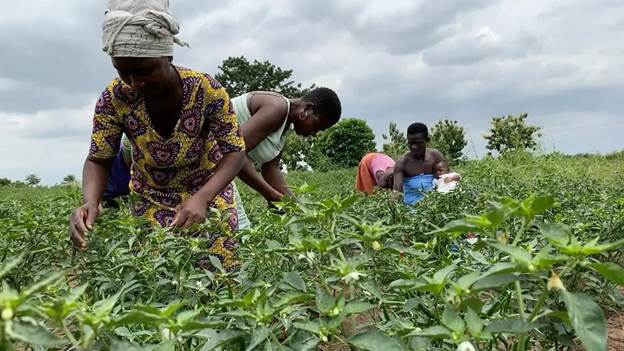
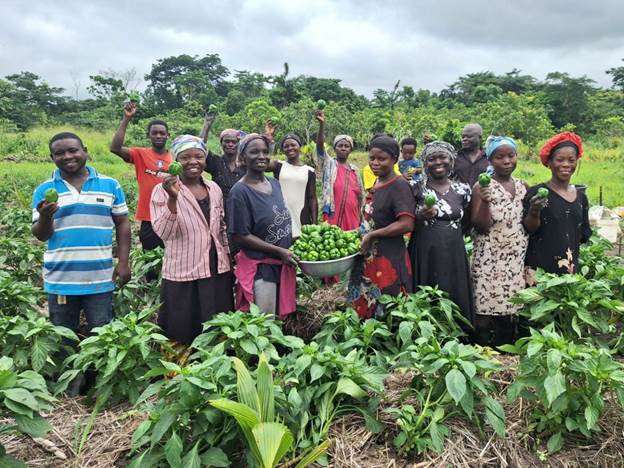
It is emerging that despite Ghana’s numerous agriculture legislations, millions of small holder farmers in the country, are still experiencing a gap between their realities and what these laws promise.
On the surface, Ghana is a rising star of agricultural legislation. With a suite of new laws, including the Fisheries and Aquaculture Act 2025, the Social Protection Act 2025, and the Affirmative Action (Gender Equity) Act 2024, all aimed to protect the vulnerable, the nation’s human rights framework appears robust and ready to protect its people
However, peasant farmers, artisanal fishers, and pastoralists, who serve as the nation’s “backbone of food production,” these documents remain largely aspirational rather than operational.
These are the observations of the United Nations Human Rights Working Group on the rights of peasants and other people working in rural areas after a mission in Ghana.
The working group, after the end-of-mission, reported in a press release that while national policy pushes toward mechanised, export-oriented agriculture, the reality for the family-based agrarian sector is one of increasing marginalization.
This drive for large-scale, input-intensive commercial farming risks creating a dual food system where the wealthy thrive while local producers are left behind.
“There is a persistent gap between the law and policy and their meaningful implementation on the ground. Small-holder farmers, artisanal fishers, and pastoralists, who constitute the actual backbone of food production, continue to suffer from poverty and exclusion,” the working group noted.
This is an indication that the “persistent gap” between high-level policy and field-level reality means that while the law may exist in Accra, it often disappears by the time it reaches the rural frontier.
According to the Working Group, the disconnect is most painful for those already on the fringes. Despite strong legal protections intended to promote gender equity, women remain excluded from land ownership and vital decision-making processes.
Moreover, deeply entrenched social norms continue to override the written law, leaving women, youth, and the elderly at a compounded disadvantage.
Meanwhile, members of the Fulbe pastoralist communities face a different kind of erasure. Their nomadic way of life makes them “structurally invisible” to a governance system built for settled residents.
Many cannot obtain citizenship documentation, effectively placing them outside the protection of any legal framework and fueling a cycle of conflict with settled farmers as grazing lands disappear due to climate pressure and agricultural expansion.
The Poisoned Earth: Galamsey and Economic Barriers
Even for those with land, the environment itself is under siege. Illegal gold mining, known as galamsey, has become what can be described as a politically charged environmental emergency.
The contamination of rivers and destruction of farmland by heavy metals is a crisis intertwined with elite interests, threatening the very food and nutrition security the government claims to protect.
Beyond the environmental toll, practical economic hurdles remain insurmountable for the average peasant. The daily reality involves the catastrophic post-harvest losses due to a lack of cold-chain facilities and poor rural roads. Moreover, intermediary dominance, where middlemen capture the value that should go to the farmer. Financial exclusion has also become a bottleneck as smallholders are unable to provide the conventional collateral required by banks.
The UN Working Group agrees that Ghana has built a “strong foundation” of laws that command respect on the international stage. Yet, for these laws to become more than just ink on paper, the government must find the “political courage” to challenge entrenched interests and push for bigger social change.
Until the gap between the boardroom in Geneva and the farm in Ghana is bridged, the country’s agricultural transformation will remain a story of two nations, one of promising policies and another of a rural population still waiting for those promises to yield a harvest.