

By Nelson Ayivor
In every human life, there are wounds unseen by the naked eye. Some are born from betrayal, loss, poverty, rejection, disappointment, abandonment, sickness, or failure. Others are carved by grief that lingers long after the tears have dried.
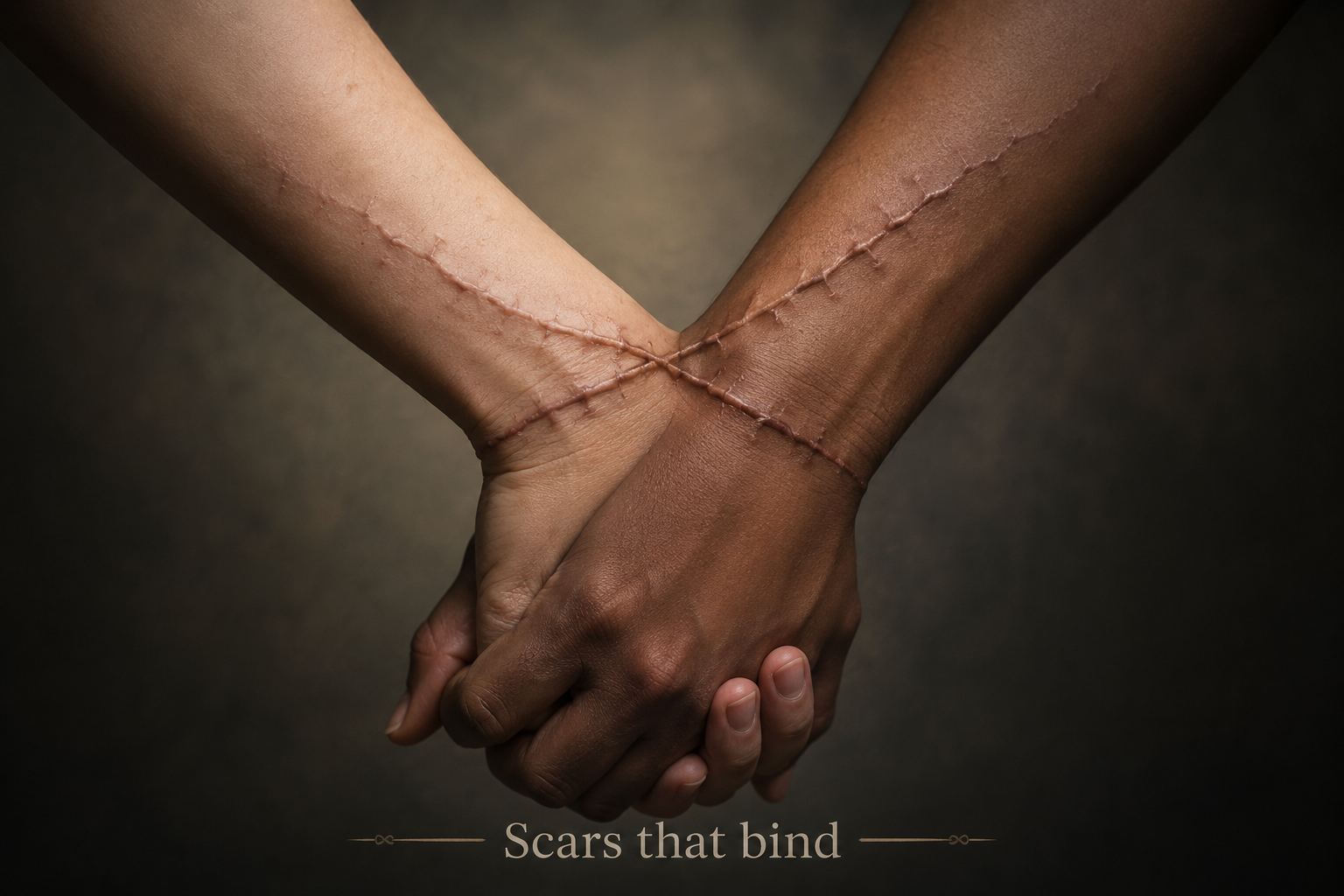
Yet amid these painful experiences lies a profound truth: scars do not only remind us of pain; they also testify to survival. They are the marks left behind after healing has taken place. And sometimes, the very scars we try hardest to hide become the invisible threads that bind humanity together.
The world often celebrates perfection. Society applauds strength, success, beauty, and victory while quietly pushing suffering into the shadows. Many people therefore walk through life pretending to be whole while carrying brokenness within.
They smile in public and bleed in private. They appear strong while silently battling storms no one else can see.
But human connection has never truly been built on perfection. It is built on shared vulnerability.
The parent who lost a child understands another grieving parent without many words. The young graduate struggling to find employment relates deeply to others facing uncertainty and hopelessness. The woman who overcame abuse recognizes the silent pain hidden behind another woman’s smile. The man who once battled addiction sees the struggle in someone else trying to escape destructive habits.
These shared experiences create empathy, compassion, and understanding. In many ways, scars become bridges between souls.
Pain has a strange ability to humble people. It strips away pride and exposes the fragile humanity that exists within everyone. Those who have suffered deeply often become kinder, more patient, and more compassionate. They learn not to judge quickly because they understand that every person is fighting battles unknown to the world.
History itself is filled with individuals whose scars became sources of inspiration. Nelson Mandela emerged from 27 years of imprisonment not with bitterness, but with a vision of reconciliation that united a divided nation. Helen Keller transformed the limitations of blindness and deafness into a life that inspired millions across generations. Viktor Frankl survived the horrors of Nazi concentration camps and later taught the world that even in suffering, human beings can find meaning and purpose.
Their scars did not weaken them; they refined them.
In families, communities, and nations, shared suffering often creates the strongest bonds. During times of hardship, people discover the true value of unity. Neighbours become helpers. Strangers become friends. Communities become families. It is often after tragedies, economic difficulties, conflicts, or disasters that humanity’s greatest acts of compassion emerge.
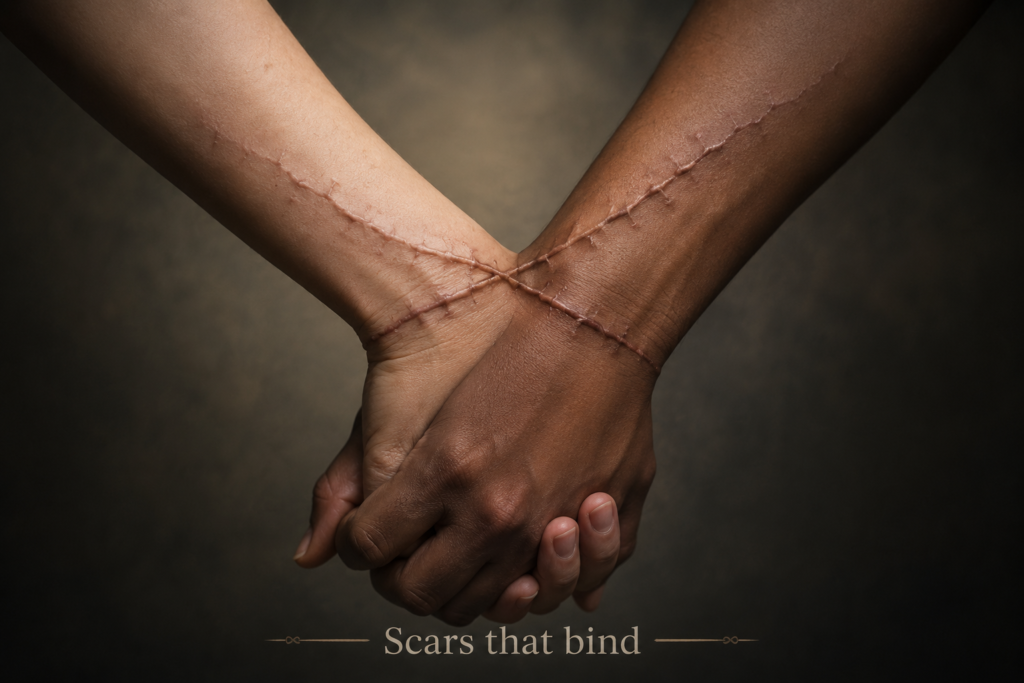
Ironically, those who have never experienced hardship sometimes struggle to understand others. Comfort can create distance, but suffering often creates connection. A scar says, “I know pain too.” It reminds others that they are not alone.
Yet many people still hide their emotional scars because society wrongly associates vulnerability with weakness. Men are told to suppress their emotions. Women are expected to endure silently. Young people are pressured to appear successful even when they are overwhelmed. As a result, countless individuals suffer in isolation, believing their struggles make them unworthy or broken.
The truth is the opposite. Scars are proof that healing is possible. A scar means the wound did not win. The pain came, but life continued. The darkness existed, but hope survived. Every scar carries a story of endurance. Every healed wound reflects courage. The person who has suffered and still chooses kindness possesses a strength greater than physical power.
There is also wisdom hidden within scars. People who have endured difficulties often develop resilience, emotional intelligence, and perspective. They learn to appreciate small victories, treasure relationships, and value peace. Hardship teaches lessons comfort rarely can.
This does not mean pain should be glorified. Suffering is real, and some wounds cut deeply. But within suffering lies the possibility of transformation. Fire refines gold, and trials often refine character. Many of the world’s most compassionate leaders, inspiring writers, gifted musicians, and impactful changemakers were shaped by adversity.
Even nature reflects this truth. A tree that survives fierce storms grows deeper roots. A broken bone, once healed, can become stronger at the point of fracture. Likewise, the human spirit often grows strongest where it has been wounded most.
In today’s fast-moving world, where social media encourages people to display only their best moments, many forget that every smiling face carries hidden battles. Behind achievements are sacrifices. Behind confidence are insecurities. Behind success are countless failures and disappointments that the world never saw.
If humanity embraced this understanding more deeply, there would be less judgment and more compassion.
The colleague who seems distant may be grieving silently. The student struggling academically may be battling depression. The parent appearing harsh may be carrying years of emotional pain. Understanding that everyone bears scars can change the way society treats people. Instead of mocking weakness, people would offer support. Instead of spreading hatred, people would extend grace. Instead of competing endlessly, humanity would learn to heal together.
The most powerful communities are not those without scars, but those willing to acknowledge them openly and support one another through healing. Genuine strength is not pretending never to hurt. Genuine strength is rising after pain and helping others rise too.
Life will inevitably leave marks on every individual. No one escapes hardship entirely. Dreams may collapse. Relationships may break. Loved ones may depart. Failures may wound pride and confidence. But scars should never be viewed merely as reminders of suffering. They are reminders of survival.
More importantly, they are reminders that human beings are deeply connected through shared struggles.
The scars that people carry are often the very things that enable them to understand, comfort, inspire, and uplift one another. They create compassion where judgment once existed. They create unity where isolation once thrived.
And perhaps that is one of life’s greatest paradoxes: the wounds that hurt the most sometimes become the very things that bind humanity together most powerfully.
For in every scar lies a testimony — not just of pain, but of endurance, healing, hope, and the unbreakable strength of the human spirit.
The writer is Associate Editor at The New Republic. He enjoys writing on compelling topics in religion and spirituality and draws inspiration from his faith and life’s experiences.