

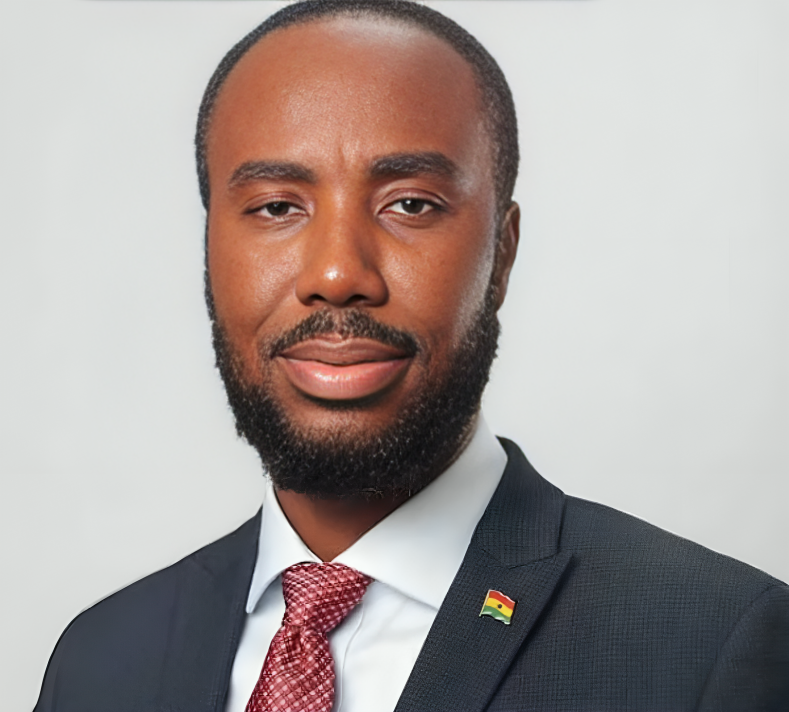
… Reveals How Couple Moved $7m Cyber fund into a phantom bureau’s account spend and blown cash and quietly closed the account to wipe-off evidence
By Prince Ahenkorah
The High Court in Accra has been treated to a rare glimpse into the mechanics of how state funds allegedly go missing, as the Economic and Organised Crime Office (EOCO) presented explosive evidence in the trial of former National Signals Bureau Director-General Kwabena Adu Boahene and his wife, Angela Adjei Boateng.
The testimony of lead investigator Frank Marshall Cromwell has laid bare a paper trail that leads from the National Security Coordinator’s Special Operations Account through private bank accounts, to Israeli defence contractors and back to private pockets.
Cromwell told the court that Adu Boahene and his wife issued three separate cheques totalling US1.75 million to an Israeli firm, ISC Holdings, ostensibly for a cybersecurity defence system intended for state security operations.
But here is where the trail goes cold. Cromwell testified that the transaction to ISC Holdings was the only payment made from the account for the stated cybersecurity purpose.
Shortly after, the accused persons allegedly instructed the bank to close the accounts entirely. The remaining funds were transferred into another account at UMB Bank this time solely in the name of Angela Adjei Boateng.
The prosecution is painting a picture of a carefully choreographed diversion of public resources. According to the state, Adu Boahene unlawfully obtained GH¢49.1 million from the National Security Coordinator’s Special Operations Account. These funds were allegedly channelled into BNC Communications Limited, a private company linked to the accused, before being used for personal benefit.
The charges are as numerous as they are grave: stealing, conspiracy to steal, defrauding by false pretences, wilfully causing financial loss to the state, using public office for profit, money laundering, and conspiracy to commit money laundering.
It is a menu of malfeasance that speaks to the scale of what prosecutors believe was a systematic operation to siphon public funds.
The defence has yet to respond substantively to the evidence, but insiders suggest they will challenge the prosecution’s interpretation of the transactions. They may argue that the payments were legitimate, that the accounts were closed for routine reasons, and that the funds were properly applied.
But the trail of cheques, closures, and transfers is difficult to explain away. The timing a single payment to an Israeli firm, followed by the swift closure of accounts and the channelling of remaining funds into a private account suggests a deliberate effort to obscure the money trail.
This trial is being watched closely, not just for its legal implications but for what it says about Ghana’s ability to hold its security officials accountable. The National Signals Bureau is responsible for the country’s cybersecurity and signals intelligence functions that are both secret and vital. When funds meant for such operations allegedly end up in private accounts, it raises fundamental questions about oversight and governance.
Deputy Attorney-General Justice Srem-Sai is leading the prosecution with the evident determination. The court has seen documents, heard testimony, and will now weigh the evidence. But for the public, the case is a stark reminder that the institutions designed to protect the state can themselves become instruments of its looting.
As the trial progresses, the prosecution is expected to call more witnesses and present further documentary evidence. The defence will have its turn to cross-examine and present its own case. But the central question remains: did Adu Boahene and his wife convert public funds meant for national security into private wealth?
The verdict, when it comes, will be a bellwether for Ghana’s anti-corruption efforts. For now, the paper trail speaks for itself and it is damning.
This case is more than a trial; it is a referendum on the state of Ghana’s security governance. The National Signals Bureau operates in the shadows, with limited public scrutiny. When funds go missing from such agencies, the public is left in the dark and the perpetrators often escape accountability.
The EOCO’s investigation has been meticulous, tracing funds across accounts and jurisdictions. But the real test is whether the courts will deliver justice. Ghana has seen too many high-profile corruption cases end in acquittals or suspended sentences. The Adu Boahene trial must break that pattern.
If the prosecution proves its case, it will send a powerful message: no one, not even those tasked with protecting the state, is above the law. If it fails, the message will be equally clear: the system protects its own, and justice is for the powerless, not the powerful.