

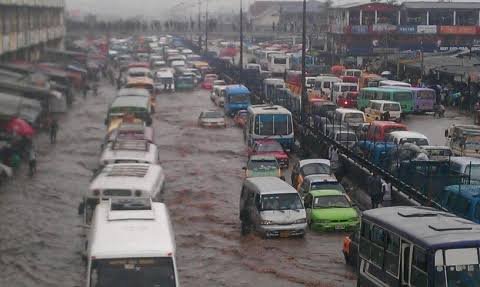
It began raining around 4am today, and since then much of Accra has remained under heavy rainfall. Across the capital, roads, homes and businesses have felt the impact of another downpour that has brought normal life to a near halt.
For many corporate workers, a rainy day of this magnitude effectively becomes an unplanned holiday. For others, especially those whose livelihoods depend on daily movement, staying home is never an option because work is not a choice.
Market women are among the hardest hit during such weather conditions. Many are forced to leave behind their goods, postpone sales and absorb losses that may take days or weeks to recover from.
Businesses also suffer when rainfall becomes severe enough to disrupt mobility. Shops close early, customer traffic declines and many residents are compelled into an involuntary stay at home routine.
Drivers, however, face a different reality. Heavy rain almost always means gridlock, longer waiting times and rising transport fares, particularly in the evening when available vehicles become scarce and thousands struggle to return home after work.
Nonetheless, the greatest burden falls on communities that live with the constant threat of flooding. For residents in flood prone areas, every heavy rainfall comes with anxiety, fear and the possibility of displacement, property destruction or even death.
This is the harsh reality for communities such as Weija, Tema, Kaneshie, Circle, Adenta, Pantang, Ofankor, Ashaiman and parts of Afienya. These communities have repeatedly made headlines whenever the rains intensify.
Flooding has grown into one of Ghana’s most persistent urban crisis. Today alone, there are reports of flooding along the Accra to Kumasi road, the Spintex Polo Grounds area, the Legon to Ghana Institute of Management and Public Administration road, parts of Tema and the ever vulnerable Weija enclave.
The question is no longer whether Accra floods. The real question is why the city continues to flood despite years of warnings, studies and public outcry.
Poor drainage is a major factor. Choked gutters filled with plastic waste, unregulated construction on waterways and weak enforcement of planning regulations continue to worsen the crisis.
In recent times, the Greater Accra Regional Minister initiated demolitions within Ramsar sites to curb encroachment and protect critical wetlands that naturally absorb excess floodwater. Though controversial, the exercise highlighted a painful truth: urban expansion has gradually consumed the very ecological buffers designed to protect the city.
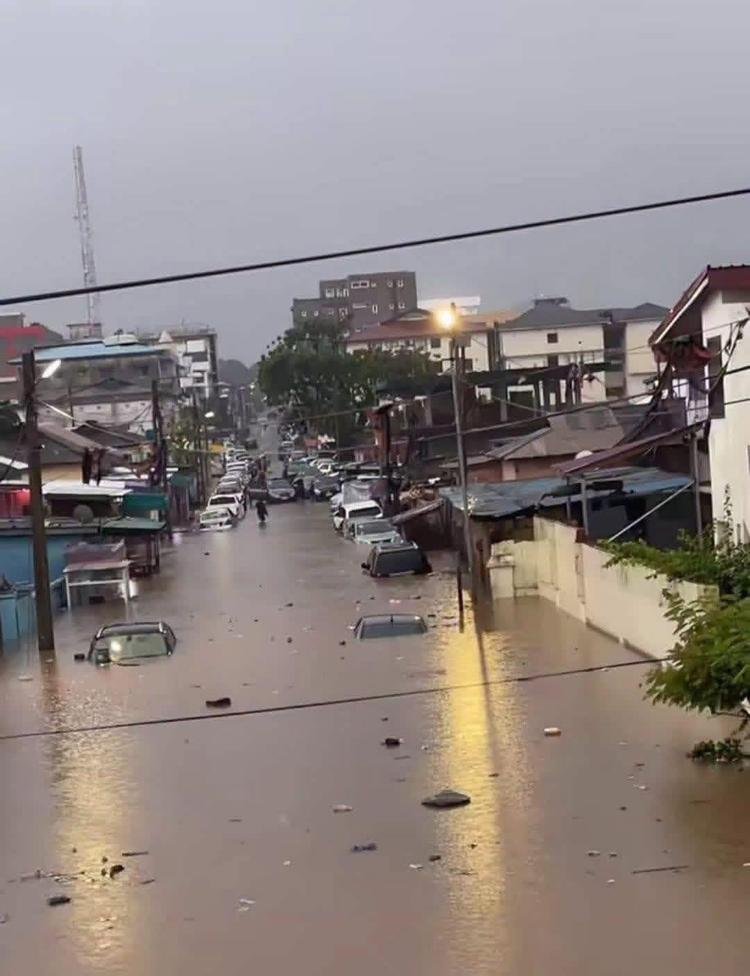
The National Disaster Management Organisation has also identified several structures considered unsafe or obstructive to drainage flow. Some buildings may be demolished as part of efforts to prevent disasters and protect residents from structural collapse and flood related emergencies.
Still, demolition alone cannot solve this crisis. The real challenge lies in long term urban discipline, political will and public cooperation.
Speaking during parliamentary proceedings, Member of Parliament for Weija-Gbawe, Jerry Ahmed Shaib highlighted the urgency of reform when he stated that Ghana must rethink how its cities are designed because flooding has become a repeated national burden.
If communities keep rebuilding after every rainfall, what exactly are we fixing? Are we rebuilding resilience or merely restoring vulnerability until the next disaster arrives?
His further remarks cut even deeper when he challenged the nation to ask how many times the same communities will be rebuilt after the same disaster before habits change and accountability is enforced. This question strikes at the heart of the issue.
Why do buildings continue to emerge on waterways? Why are permits granted in high risk areas? Why do drains remain clogged despite annual warnings?
The crisis has extended beyond Accra. Recent flooding in Samreboi shows that this is becoming a national challenge linked to climate changes, environmental degradation and weak infrastructure planning.
The next solution must therefore go beyond emergency response. Ghana needs stronger drainage systems, stricter building enforcement, restored wetlands, better waste management and climate resilient urban planning.
Public education must also become central to the solution. Citizens who dump waste into drains contribute directly to the flooding they later suffer from. Accra cannot continue to freeze every time it rains. A capital city should function through storms with preparedness and systems built for the future.
The big question however, is whether we are finally ready to build an Accra that does not flood.