

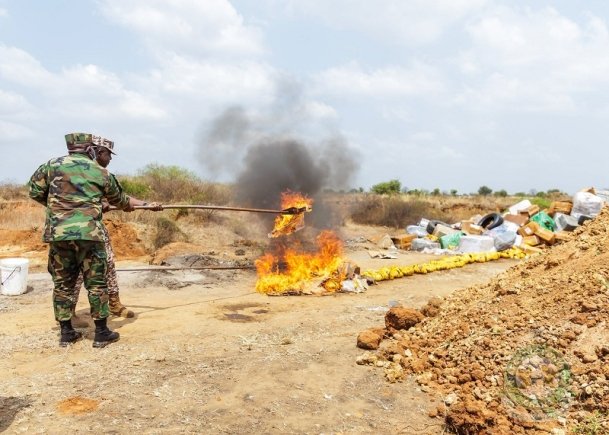
The Narcotics Control Commission (NACOC) has destroyed seized narcotic and pharmaceutical substances valued at more than US$10 million as part of intensified efforts to combat drug trafficking and prevent the circulation of dangerous substances in Ghana.
The destruction exercise, conducted at the Bundase Infantry Training School in the Greater Accra Region, involved large quantities of cannabis, synthetic opioids and codeine-based cough mixtures confiscated in previous anti-drug operations.
According to NACOC, the exercise formed part of the Commission’s mandate to ensure that seized illicit substances are safely disposed of after the completion of legal processes.
The Commission said the destruction was carried out following a court order authorising the disposal of the seized drugs.
Among the substances destroyed were 564.39 kilogrammes of cannabis, with an estimated street value of US$112,878, as well as 4,730,100 capsules and tablets of synthetic opioids valued at approximately US$5.9 million.
Also destroyed were about 338,000 bottles of codeine-infused cough mixture, estimated to be worth US$4.2 million.
NACOC said the destruction demonstrated its continued commitment to reducing the availability of illicit drugs and controlled substances that pose serious risks to public health and national security.
The Commission has in recent years intensified its operations against the trafficking and abuse of narcotic drugs, working with local and international partners to intercept illegal consignments and dismantle networks involved in the illicit drug trade.
The latest exercise comes amid growing concerns over the abuse of synthetic opioids and pharmaceutical products, particularly among young people, as authorities continue efforts to strengthen enforcement and public education.
NACOC urged the public to support the fight against drug trafficking by providing credible information on activities involving the production, distribution and sale of prohibited substances.
The Commission reiterated its commitment to protecting communities and ensuring that Ghana does not become a destination or transit point for illicit drugs.