

– AU Chief to Govts
By Philip Antoh
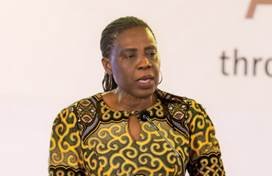
The African Union Commissioner for Health, Humanitarian Affairs and Social Development, Ambassador Amma Twum-Amoah, has issued a clarion call to African governments to drastically increase domestic funding for healthcare, warning that the continent can no longer rely on external donors to build resilient health systems.
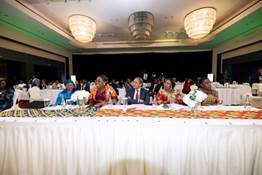
She made the appeal on July 20 in Accra during a High-Level Interactive Policy Dialogue jointly organized by the African Renaissance Trust and the Jakaya Mrisho Kikwete Foundation.
Themed “Advancing Africa’s Health Agenda through Domestic Financing, Accountability and Strategic Innovations,” the high-profile summit convened ministers, policymakers, global health experts, and private sector leaders.
The dialogue served as a precursor to the AU Extraordinary Summit, which is focused on ending AIDS by 2030, eliminating preventable maternal deaths, and combating endemic diseases.
Addressing the gathering, Ambassador Twum-Amoah described the current era as a defining moment for Africa’s pursuit of universal health coverage. While acknowledging the continent’s progress, she warned that persistent financing gaps and growing demographic pressures demand renewed political will.
Crucially, she challenged the narrative that healthcare spending is a social burden, urging leaders to view it as a foundational economic investment.
“Expenditure on health is not merely a social cost. It is a strategic investment in human capital, economic growth, productivity, national security as well as resilience,” she stated.
While noting that international partnerships remain valuable, the AU Commissioner stressed that true sustainability can only come from within. “No health system can be truly sustainable if it depends predominantly on external assistance. Africa’s health security cannot be outsourced,” she emphasized.
To achieve this, she urged member states to increase health allocations in their national budgets, improve public financial management, and explore innovative financing mechanisms for predictable funding.
However, Ambassador Twum-Amoah was quick to point out that increased funding must be matched by strict accountability.
“Financing without accountability risks inefficiency. Accountability without reliable data becomes difficult to enforce, and data without decisive action cannot improve lives,” she said.
She challenged governments to implement transparent systems that track exactly where health funds go, who they reach, and what tangible results they achieve.
The Commissioner also made a strong case for technological self-reliance. She urged African nations to invest heavily in digital technologies, artificial intelligence, and home-grown research, stressing that the continent must transition from being a mere consumer of foreign health technologies to a creator and producer of its own solutions.
Concluding her address, Ambassador Twum-Amoah delivered a blunt directive to African leaders, urging them to turn their political rhetoric into actionable reality.
“The time for action is now. We’ve done enough talking; we have to put our words into action. Our communities must be reflected in our budgets, our priorities demonstrated through implementation, and our progress measured by improvements in the daily lives of our people,” she said.