

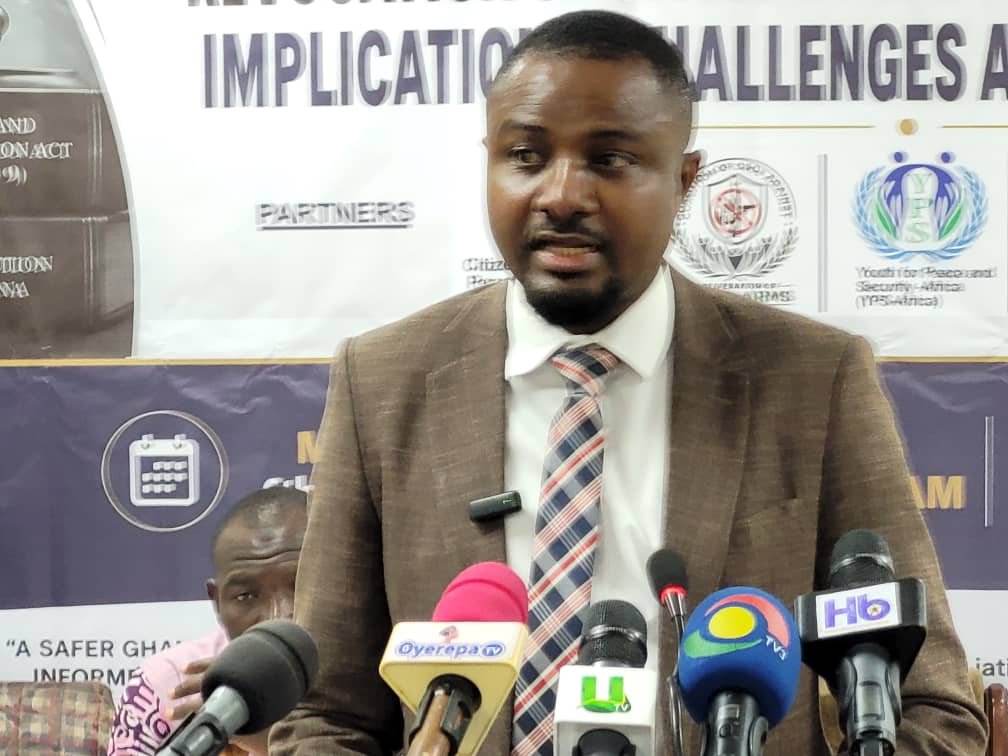
A coalition of civil society organisations is urging the government to immediately suspend its blanket revocation of civilian firearm licences, warning that the directive lacks the legal and administrative framework necessary for a smooth rollout.
Speaking at a press conference in Accra on Monday, Adib Saani, Executive Director of the Jatikay Centre for Human Security and Peace Building, noted that while the coalition fully backs reforms in Ghana’s firearms licensing regime, the current approach is flawed.
He acknowledged that the existing system suffers from inadequate mental health screenings, drug testing, and competency assessments. However, he argued that these deficiencies should be fixed before issuing sweeping directives.
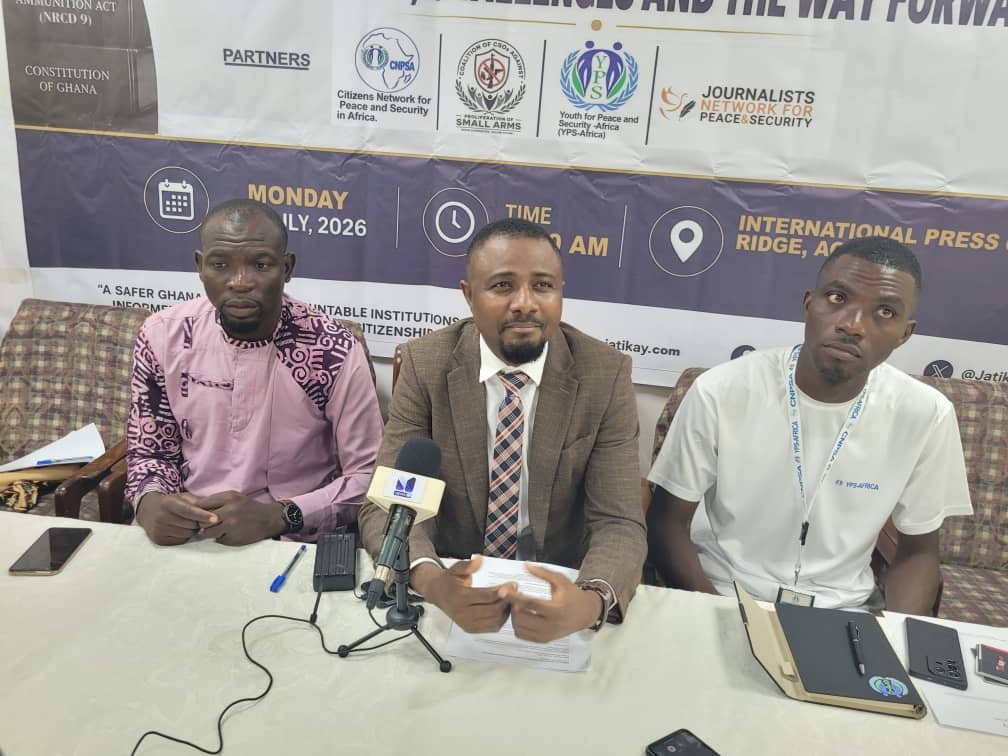
“The objective of strengthening firearms regulation is commendable, but implementation must be lawful, transparent and properly coordinated,” Mr. Saani stated.
He raised serious concerns about the capacity of key institutions—such as the Ghana Police Service, the Narcotics Control Commission (NACOC), and mental health facilities—to process thousands of licence holders within a reasonable timeframe.
Mr. Saani warned that a lack of certified training centers could lead to severe bottlenecks, exorbitant costs, and potential abuses.
Furthermore, the coalition criticised the government for failing to differentiate between law-abiding citizens who legally acquired weapons and criminals involved in illicit arms trafficking.
They also noted the lack of prior public education regarding timelines, fees, testing centers, and appeal procedures.
The CSOs warned that this sudden policy shift threatens to destroy the public trust built by the government’s recent and highly successful firearm amnesty program, which saw thousands of unregistered weapons voluntarily surrendered.
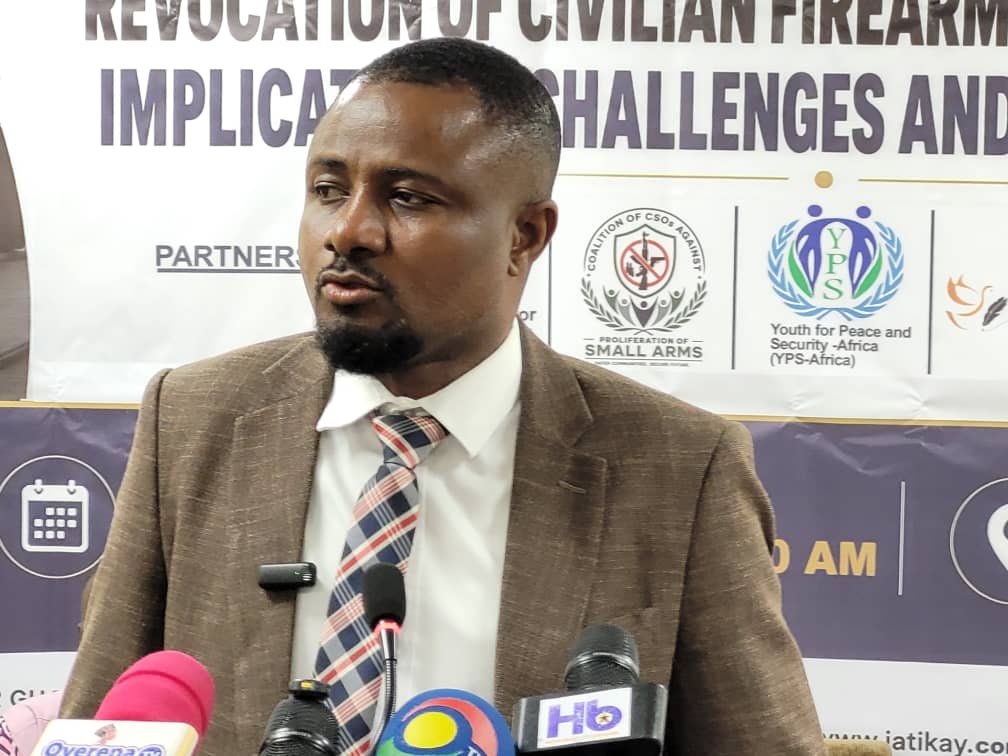
To rectify the situation, the coalition called on Parliament to fast-track the proposed Arms Bill. In the interim, they recommended that the Ministry of the Interior replace the blanket revocation with a phased, region-by-region audit, establish certified regional training centers, and create an independent complaints mechanism.
The press conference was jointly addressed by the Jatikay Centre, the Citizens Network for Peace and Security in Africa, Youth for Peace and Security-Africa, and the Journalists’ Network for Peace and Security.