

By Leo Nelson
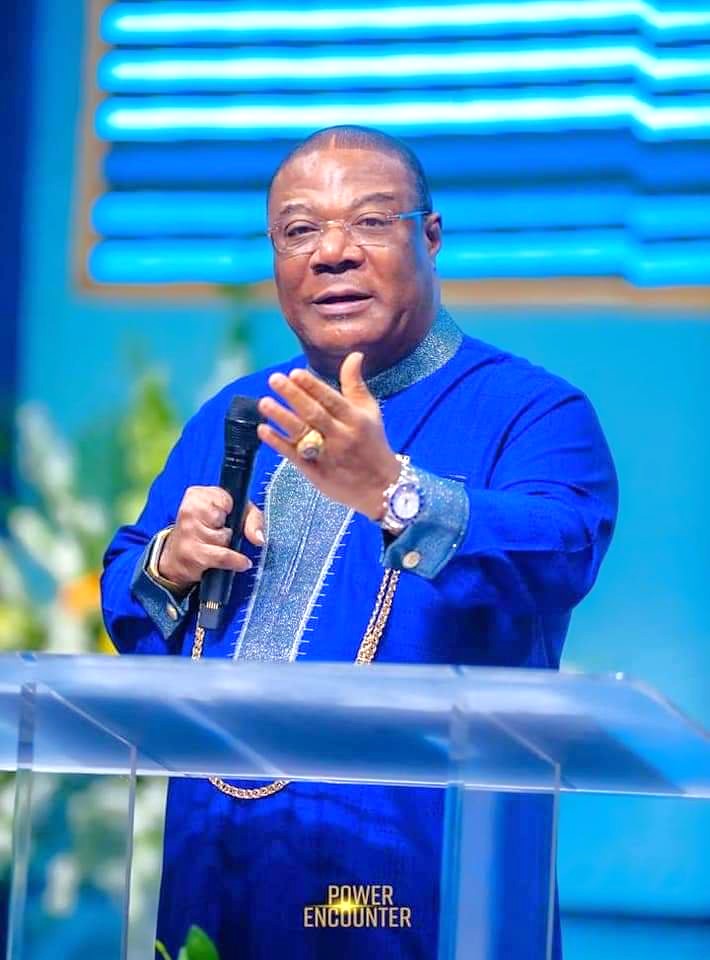
Archbishop Nicholas Duncan‑Williams, founder of Action Chapel International, has told African leaders that vision, values and principled leadership not mineral wealth are the true drivers of national prosperity.
Speaking at the 4th Inter‑Parliamentary Conference on Family, Sovereignty and Values, the influential Pentecostal leader argued that nations flourish only when justice, truth and “reverence for God” guide those in power.
His diagnosis arrives at a moment when several African countries, including Ghana, are wrestling with economic volatility, governance deficits and unclear long‑term direction. Duncan‑Williams pointed to Singapore, Malaysia, China, South Korea, Finland and Dubai as proof that visionary leadership can transform societies within a generation.
“Many Africans travel to Dubai for business and leisure because that city created an environment of confidence,” he noted a subtle rebuke to capitals that have failed to do likewise.
The Archbishop placed strong family values at the centre of his argument. “Family values determine the kind of leadership a nation produces,” he said. It is a familiar refrain among religious conservatives, but one that resonates in a country where corruption scandals and ethical lapses regularly dominate headlines.
He cited the biblical account of Israel’s wilderness wandering to warn that “communities without a shared sense of purpose” struggle to achieve sustainable growth.
A more practical prescription followed: national visions must transcend political administrations and enjoy broad stakeholder support. “We need a national vision that involves all stakeholders and guarantees continuity,” Duncan‑Williams said, implicitly criticising the stop‑start nature of Ghana’s development planning, where each new government often discards its predecessor’s flagship programmes.
The Archbishop also called for greater unity among African nations, arguing that division weakens societies and limits progress. He quoted former President John Agyekum Kufuor, who blamed many of Africa’s challenges on a “lack of love for country” a striking admission from a statesman of Kufuor’s stature.
Duncan‑Williams then invoked Nelson Mandela’s determination and Kwame Nkrumah’s pan‑African vision, reminding his audience that Ghana’s independence was always linked to the freedom of the wider continent.
Yet the speech left unaddressed the obvious tension between his call for long‑term national visions and the short‑term calculus of electoral politics. In Ghana, where presidential terms last four years and parliaments are fiercely competitive, consensus on multi‑decade plans remains elusive. Foreign investors and domestic businesses alike have long complained about policy flip‑flops.
Duncan‑Williams expressed hope that young Africans will one day build successful lives without leaving the continent. That aspiration is widely shared. But translating sermons into state practice requires more than righteous exhortation. It demands institutional reforms that outlast any single administration.
For now, the Archbishop has offered a moral roadmap. Whether Ghana’s political class, consumed by the next election, chooses to follow it remains an open question.