

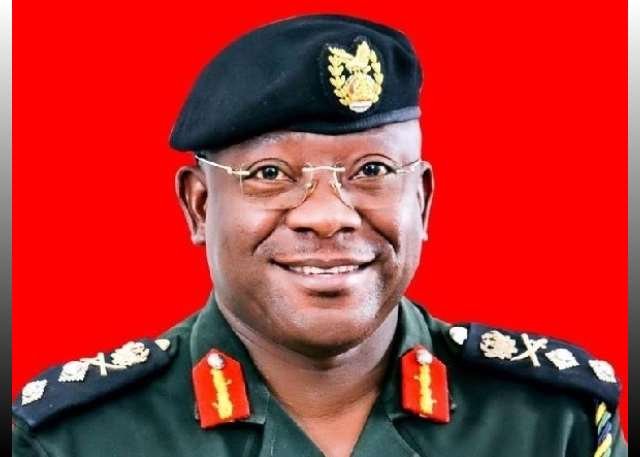
…as Military Investigations Target Peprah’s Procurement Empire
TNR Files
Less than a year after trading his combat fatigues for diplomatic attire, former Chief of Defence Staff General Thomas Oppong Peprah is caught in the crosshairs of a sweeping military investigation that threatens to unravel one of the most audacious procurement scandals in Ghana’s recent history.Multiple sources within the Ghana Armed Forces have confirmed to The New Republic that investigators are meticulously dissecting transactions executed during General Oppong Peprah’s tenure as head of the military establishment transactions that have left a trail of rusting hardware, missing millions and serious questions about who knew what, and when.
But General Oppong-Peprah has told The New Republic he is squeaky clean and point at his appointment to the his appointment as Ghana’s Deputy High Commissioner by President John Mahama as a litmus test on his character.
At the heart of the probe lies a US$8.8 million deal that reads more like a spy novel than a defence procurement. In 2023, the Ghana Armed Forces contracted the purchase of 20 BTR-70 armoured personnel carriers from Bulgaria vehicles that investigators now believe were fraudulently presented as 2002 models when they were, in fact, manufactured in 1972.
The deception, sources say, was executed through the systematic alteration of chassis records. But here is the damning detail: production of the BTR-70 ceased entirely in 1984. The vehicles, if they were manufactured in 2002, would have had to emerge from factories that no longer existed.
“The documentation was a work of fiction,” a senior military source told The New Republic “Someone sat down and created a paper trail designed to deceive the highest office in the land. “When the armoured personnel carriers finally arrived in Ghana, they bore the scars of five decades of neglect. Rusted bodies. Torn upholstery. Missing radiators and hoses. The military’s Electrical and Mechanical Engineering Corps was reportedly ordered to repaint and reupholster the vehicles a cosmetic facelift for equipment that military engineers knew would never see active service.
Seventeen of the 20 APCs now sit idle at the Recce Regiment in Burma Camp, Accra, their primary 14.5mm KPVT heavy machine guns arriving only in 2024 too late to be tested on vehicles that many believe will never become operational.
But the armoured personnel carriers are only half the story.Investigators are also examining the procurement of six bulletproof vehicles five Toyota Land Cruisers and a single Lexus LX 600 at a staggering US160,000. The Lexus, sources say, was reserved for General Oppong Peprah’s personal use. The former military chief’s troubles extend beyond procurement. The Ghana Armed Forces have also launched an inquiry into the alleged sale of military lands to private developers transactions that sources say proceeded with alarming speed and little oversight during his tenure.
President John Dramani Mahama appointed General Oppong Peprah as Ghana’s Deputy Ambassador to Canada in March 2025, shortly after his retirement from active service. But diplomatic cover has not shielded him from the long arm of military investigators, who are pressing ahead with their inquiries despite his new posting.
The former CDS has previously found himself at the centre of procurement controversies. In 2022, he was linked to a contract for 40 military vehicles from a Dubai-based company a deal that raised eyebrows after it emerged the suppliers had no prior experience in defence logistics. The contract was eventually cancelled following public outcry.
Then there was the 2023 deal for helicopters from a European firm, reportedly at prices significantly above market rates. Questions were raised in Parliament, but the answers were never quite satisfactory.Now, investigators are piecing together a pattern. The inflated prices. The altered documentation. The cosmetic cover-ups. The millions of dollars that seem to have evaporated into thin air.When this newspaper reached out to General Oppong Peprah for comment, he dispel the allegations wholesomely. But his denial only triggered more insight into the reign of the only ‘Four Star General. A spokesperson for the Ghana Armed Forces declined to comment on the ongoing investigation, citing the need to protect the integrity of the process.
“The military has a zero-tolerance policy for corruption,” a defence source insisted. “When we find wrongdoing, we pursue it. Rank does not protect anyone. “The investigations are at a delicate stage. No official findings have been announced, and no charges have been filed. But the questions are mounting:Who authorised the purchase of half-century-old armoured vehicles at premium prices? Who signed off on the altered documentation? And perhaps most importantly who profited? The New Republic has just began a story which would unravel the full story of General Oppong Peprah’s, life that must be of public interest.
Sources indicate that investigators are following the money trail examining bank accounts, interviewing procurement officers, and reviewing every piece of paper generated during the transactions. The case has already sent shockwaves through the military establishment. Some officers privately express concern that the probe could expose systemic weaknesses in Ghana’s defence procurement processes. Others fear the scandal may pierced the veil of integrity that guarded the image of the military from negative perceptions of the public over recent Years.
For now, General Oppong Peprah remains in Ottawa, representing Ghana’s interests abroad. But back home, a different battle is being fought one that could determine not just his legacy, but the future of military accountability in Ghana.