

Tehran Hardens Line Shipping attacks and fading peace hopes drive Brent toward $90, though US crude stocks offer a partial brake
By TNR File
Oil markets have tilted decisively into risk-premium territory this week, with Brent crude settling at $89.63 up 0.81% and WTI at $83.91, as geopolitical friction in the Gulf erodes any remaining optimism over a swift US-Iran accommodation. The gains, following Tuesday’s $1-plus advance, mark the highest close since July 31.
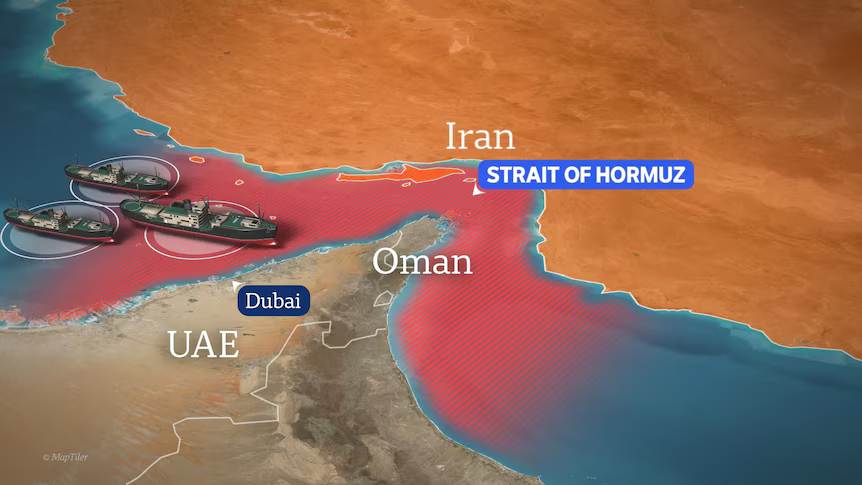
Geopolitical flashpoints. The price action is anchored by two simultaneous developments. At the Strait of Hormuz, Iranian security official Mohsen Rezaei has explicitly stated that the chokepoint will remain closed unless Washington meets Tehran’s conditions specifically, the unfreezing of Iranian assets and a halt to regional conflicts.
Shipping data confirms the impact: only six vessels transited the strait on Monday, down from a ten-day average of eleven, and a far cry from the pre-war daily traffic of 125–140. With roughly one-fifth of global oil and LNG passing through this route, the disruption is not theoretical.
At the Bab el-Mandeb Strait, violence has escalated. A suspected Houthi attack on the Egyptian-owned cargo vessel Tihamah reportedly killed four crew members and two Yemeni rescuers. Separately, the US Navy fired two Hellfire missiles at a Panamanian-flagged ship after it allegedly ignored warnings linked to the naval blockade on Iranian ports a sign that Washington’s military posture remains aggressive even as President Trump publicly signals a deal is “imminent.”
Countervailing pressure. The bullish narrative is tempered, however, by US inventory data. The American Petroleum Institute estimates a 9.1-million-barrel build in crude stocks for the week ending August 7 significantly above consensus.
That surplus, coupled with draws in gasoline (-1.5 mb) and distillates (-596,000 bbl), suggests domestic supply is ample for now, even if global logistics remain under strain.
Outlook. Conflicting statements from Washington and Tehran continue to generate noise rather than clarity.
The US Energy Information Administration projects that disruptions of roughly 600,000 barrels per day to Middle East crude could persist through the end of 2027 a structural bearish underpinning for African importers, yet a source of sustained upward pressure for global benchmarks.
For now, the market is betting that neither side will blink, but the data from Hormuz suggests the standoff is already exacting a tangible toll on physical flows.