

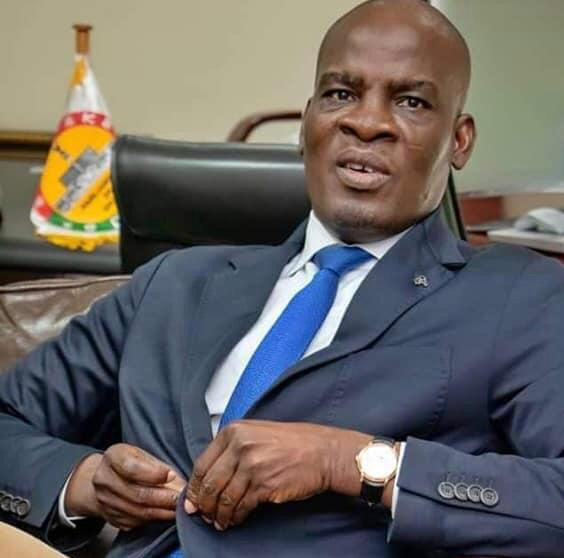
Haruna Iddrisu takes on fee-paying programmes, KNUST’s mission drift and the STEM policy gap
TNR Files
Education Minister Haruna Iddrisu, also MP for Tamale South, is moving against public universities he accuses of abandoning their core mandates for fee-paying programmes.
He has demanded detailed admissions data from the University of Ghana and instructed the Director-General of the Ghana Tertiary Education Commission (GTEC), Professor Ahmed Jinapor, to establish how many Ghanaian students are being asked to pay fees and what proportion of admissions they represent.
If the figures confirm that qualified Ghanaians are being displaced by fee-paying applicants, the universities will be called to account, he warned in a TV3 interview.
The audit begins with the University of Ghana, but Iddrisu’s broader target is the drift of public tertiary institutions away from their founding purposes. He singled out Kwame Nkrumah University of Science and Technology (KNUST), established to specialise in science and technology, for admitting more students in humanities and marketing than in science and technology.
“That’s wrong. We must correct it,” he said, adding that he has directed the new Vice Chancellor to ensure admissions reflect KNUST’s original mission and values.
The intervention puts GTEC and university councils on notice. Public universities have expanded fee-paying and parallel programmes to offset chronic underfunding, but the minister’s demand raises a politically sensitive question: whether cash-strapped institutions are rationing subsidised places while selling access to others. The outcome will test the government’s willingness to enforce regulatory limits on university autonomy.
On STEM, Iddrisu commended his predecessor, Yaw Osei Adutwum, for focusing attention and infrastructure on science, technology, engineering and mathematics, but faulted him for failing to anchor that investment in policy.
His team is drafting a comprehensive STEM policy, to be made public once finalised. The criticism is pointed: the previous administration’s STEM drive was visible in buildings and rhetoric, but lacked the policy framework needed to sustain it.
Iddrisu also moved to damp speculation over the proposed introduction of Chinese in schools. No formal decision has been taken, he said, and the matter has not been finalised by Cabinet. Arabic, by contrast, has long been part of Ghana’s education system.
He urged the media to distinguish between the two and noted that Arabic was taught at the University of Ghana when he was an undergraduate in the mid-1990s. The government’s aim, he said, is to prepare Ghanaians to compete beyond national borders. The Chinese proposal remains at the dialogue stage.
In a related development, the University of Agriculture and Engineering at Bunso in the Eastern Region is to take off before the end of the year. It is expected to admit an initial 800 students, 400 each in agriculture and engineering. Financial clearance has been requested to recruit faculty. President John Mahama, under whose first term the university was conceived, has appointed key officers, and the governing council is now constituted under the Cabinet Secretary.
Work had stalled after a US$92 million Korean loan facility could not be honoured amid the economic distress of the Akufo-Addo administration, Iddrisu said. The National Democratic Congress (NDC) government has now settled the matter. “They couldn’t. And yet, they want to take credit,” he said.
The minister’s admissions audit, if pursued, could become the most consequential regulatory intervention in Ghanaian tertiary education in years. It pits the government’s access agenda against universities’ financial autonomy and sets up a fight over who pays for public higher education, and who gets in.