

As Akosombo substation Fire Plunges Nation into Power Strain
By Prince Ahenkorah
Ghana’s Energy and Green Transition Minister, John Abdulai Jinapor, has confirmed significant progress in restoring electricity supply following the fire outbreak at the Ghana Grid Company (GRIDCo) Akosombo Substation, revealing that two generation units have now been successfully brought back online as repair works continue on remaining facilities.
The development comes amid widespread concerns over intermittent power supply disruptions across parts of the country, triggered by the devastating fire that damaged critical infrastructure at one of Ghana’s most important power transmission nodes.
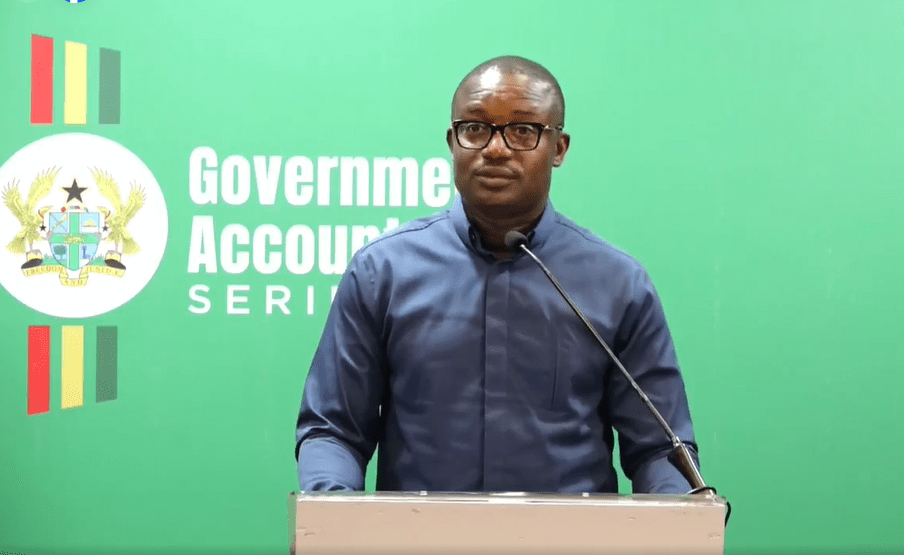
Speaking on Monday, April 27, during the Government Accountability Series, Mr. Jinapor assured Ghanaians that the situation is being actively managed by technical teams and that full restoration of power stability is expected within the shortest possible time.
According to him, the emergency response has already yielded results, with engineers managing to restore multiple generation units despite the scale of damage caused by the fire.
“Through emergency technical interventions, the first-generation unit was successfully restored yesterday. This afternoon, I received confirmation that the second unit has also been brought on and is generating power. The third unit is undergoing works and will also be brought on as soon as possible,” he stated.
The Minister added that engineers are working under challenging conditions to ensure full operational recovery, stressing that additional units are expected to be fixed in the coming days to improve stability on the national grid.
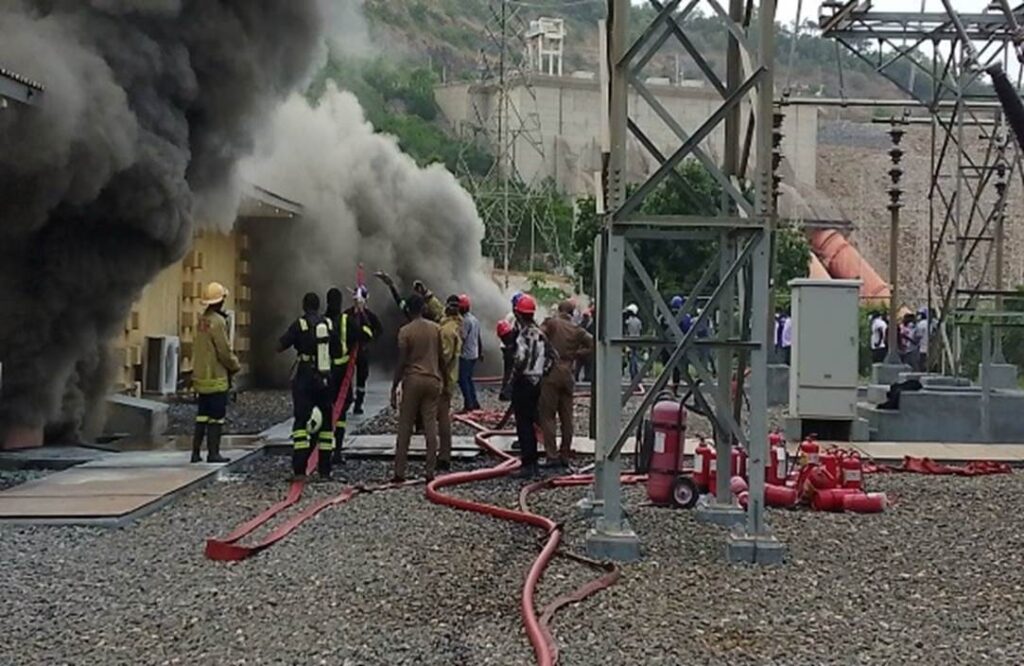
The Akosombo Substation fire, which occurred on April 23, has been described by the Energy Minister as one of the most severe disruptions to Ghana’s power transmission system in recent years.
The fire extensively damaged the control room responsible for power evacuation from the Akosombo Dam, one of the country’s primary electricity sources.
Authorities say the damage rendered key infrastructure inoperable, forcing a significant reduction in electricity transmitted into the national grid.
According to the Ministry of Energy, the incident resulted in the curtailment of approximately 1,000 megawatts of electricity, representing about 25 percent of the country’s available power capacity.
Energy officials have explained that both the switchyard and primary control systems were completely destroyed and are not salvageable in their current state, making reconstruction a complex and long-term process.
“The whole control room has to be rebuilt… it will not take a day or two, it will take a number of months,” a ministry spokesperson indicated.
Following the incident, engineers from GRIDCo, the Ministry of Energy, and other technical agencies were immediately deployed to the site to begin emergency restoration works.
The Energy Minister noted that coordinated interventions have already helped restore partial stability, with one generating unit brought back online shortly after the incident and a second now fully synchronized.
He emphasized that technical teams are prioritizing system recovery while ensuring safety standards are strictly observed in all ongoing repairs.
Mr. Jinapor commended engineers and technical staff for their commitment, describing their efforts as critical in preventing a deeper nationwide power crisis.
He also confirmed that a third unit is currently undergoing repairs and is expected to be restored soon, which will further improve supply conditions.
Beyond the immediate crisis, the Minister used the platform to highlight broader reforms undertaken by the government in the energy sector over the past 15 months.
He explained that when the administration assumed office in January 2025, the country was facing a generation deficit of over 700 megawatts, a situation that threatened economic stability and industrial productivity.
According to him, coordinated interventions across generation, transmission, and distribution have since improved reliability and reduced pressure on the grid.
Independent Power Producers (IPPs), he said, are now receiving more consistent payments, restoring investor confidence in the sector. Fuel supply, particularly natural gas from key partners such as TEN, Jubilee fields, and N-Gas, has also stabilized, with improved payment systems reducing supply interruptions.
On the distribution side, the Electricity Company of Ghana (ECG) and the Northern Electricity Distribution Company (NEDCo) have improved revenue collection, enabling better maintenance and network expansion.
Despite the ongoing challenges, the Public Utilities Regulatory Commission (PURC) has ruled out the introduction of a formal load-shedding timetable, insisting that the situation does not amount to a nationwide power crisis.
Acting Executive Secretary of PURC, Dr. Shafic Suleman, explained that current outages are temporary and are being addressed through technical interventions.
He stressed that the disruptions do not meet the threshold for “dumsor,” a term widely used in Ghana to describe prolonged and scheduled power cuts.
“It doesn’t require us to do any load shedding… we are resolving most of the problems, and I’m sure power will be fully restored as soon as possible,” he said.
However, his remarks have triggered mixed reactions, with businesses and households expressing concern over the unpredictability of power supply and calling for a structured rationing plan to reduce operational uncertainty.
Mr. Jinapor also acknowledged long-standing structural issues within Ghana’s electricity distribution network, particularly ageing transformers and overloaded infrastructure, which have contributed to intermittent outages and low voltage in several communities.
To address these challenges, the government has launched a nationwide Transformer Upgrade and Replacement Programme.
Under the initiative, about 200 transformers have already been installed in April 2026, with an additional 140 expected within the week. In total, more than 2,500 transformers are projected to be installed across ECG operational areas throughout the year.
High-capacity transformers are also being deployed at key Bulk Supply Points in areas such as Adenta, Lashibi, and Teshie-Nungua, while further reinforcement works are planned for Kumasi.
Additionally, the Ghana Grid Company is expected to begin transmission upgrade works in Kumasi in June 2026, while CENIT Energy Limited is supporting efforts to airlift critical components to boost generation capacity in the Ashanti Region.
The Minister further revealed that the government inherited significant financial challenges in the energy sector, including a debt burden of approximately GH¢80 billion.
He also disclosed that efforts to recover lost revenue and improve operational efficiency have led to the retrieval of 1,569 missing containers as part of broader sector recovery measures.
He stressed that financial stabilization is key to ensuring long-term reliability in electricity supply.
To determine the root cause of the Akosombo Substation fire, the government has established a Technical Committee chaired by Ing. William Amuna. Security agencies are also conducting parallel investigations into the incident to determine whether the fire was accidental or the result of other factors.
The Minister assured the public that findings will be made available and appropriate corrective measures implemented.
Mr. Jinapor reaffirmed government’s commitment to restoring full stability in the power sector, stating that both immediate disruptions and long-term weaknesses are being addressed simultaneously.
He expressed optimism that current challenges would be resolved in the coming days, assuring that engineers are working around the clock to restore normal electricity supply.
He further emphasised that safety remains a top priority in all restoration efforts, urging the public to remain calm and cooperative as interventions continue.
For many Ghanaians, however, the situation remains a test of confidence in the country’s power infrastructure, with households and businesses hoping that the current disruptions will be resolved swiftly and not evolve into a prolonged crisis.